Published 05/26/2026 10:54 | Edited 05/26/2026 11:15
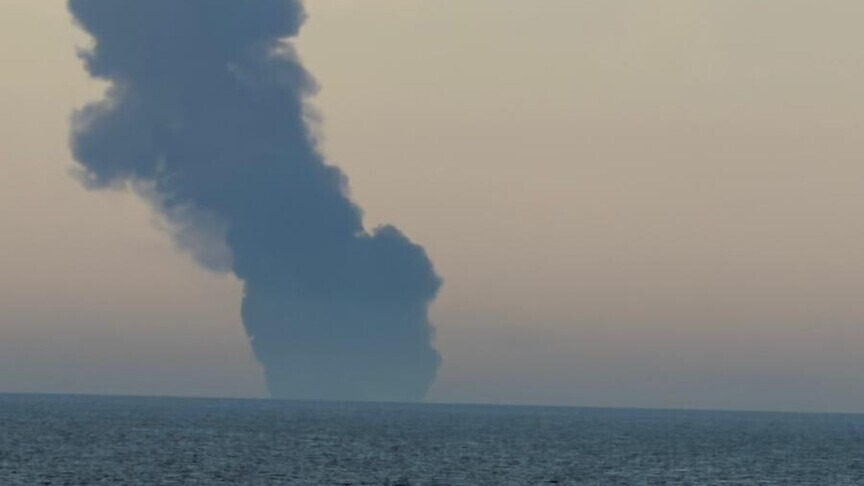
The United States carried out new military attacks against Iran on Monday night (25), hitting targets in the province of Hormozgan, in the south of the country, amid ceasefire negotiations conducted in Qatar.
The offensive led Tehran to accuse Washington of violating the terms of the truce in force since April and increased doubts about the viability of an agreement to end the war that began in February.
According to the US Central Command (Centcom), the bombings targeted Iranian vessels suspected of laying mines in the Strait of Hormuz and missile launch sites in Bandar Abbas.
Washington classified the operation as a “defensive” action to protect US troops and assets in the region.
Iran’s Foreign Ministry reacted by stating that the attacks represented a “serious violation” of the ceasefire and held the United States responsible for “all consequences” of the military actions.
The Revolutionary Guard stated that it reserves the “legitimate and definitive” right to retaliate against any further violations of Iranian territory.
Iranian state media reported that explosions were heard in Bandar Abbas during the early hours of Tuesday (26).
According to Iranian television, the US attacks hit two Revolutionary Guard speedboats in the Persian Gulf, leaving four soldiers dead.
In response, Iranian air defenses claimed to have shot down an MQ-9 Reaper drone and repelled other US aircraft operating over the Strait of Hormuz.
Negotiations remain stalled
The attacks occurred while Iranian authorities were participating, in Doha, in new talks mediated by Qatar to try to build a memorandum of understanding that could stop the war and fully reopen the Strait of Hormuz.
The main Iranian negotiator, Mohammad Baqr Qalibaf, the Iranian Foreign Minister and representatives of the country’s Central Bank met with the Qatari Prime Minister.
Despite signs of progress, both sides continue to avoid announcing an imminent agreement.
The US Secretary of State, Marco Rubio, stated this Tuesday that the negotiations could still “take a few days”, while the Iranian diplomacy spokesman declared that there had been progress on “a large part of the topics discussed”, but denied that there was a closed agreement.
Among the main impasses are the Iranian nuclear program, the unfreezing of financial assets blocked abroad and the lifting of economic sanctions imposed by Washington.
According to Iranian sources cited by Reuters, Tehran seeks the release of around US$24 billion frozen abroad as part of the preliminary agreement.
War puts pressure on global economy
The conflict between the USA, Israel and Iran has lasted more than 80 days and has had a strong impact on the international energy market.
The partial blockage of the Strait of Hormuz — through which around 20% of the world’s oil normally passes — has drastically reduced the flow of ships in the region.
According to Reuters, only a few dozen vessels have crossed the waterway daily, compared to up to 140 before the war.
After the new North American attacks, a barrel of Brent oil rose again and approached US$99.
The increase puts pressure on the prices of fuel, fertilizers and food in different parts of the world, increasing the international economic impact of the conflict.
In a publication on the Truth Social network, Donald Trump stated that negotiations with Iran were going “well”, but again threatened Tehran if there was no agreement. “There will only be one big deal for everyone or no deal at all,” wrote the US president.
In Iran, Supreme Leader Ayatollah Mojtaba Khamenei stated that “the clock cannot be turned back” and declared that countries in the region “will no longer serve as a shield for American bases”.cccccccccccc
Source: vermelho.org.br