Published 05/26/2026 14:06 | Edited 05/26/2026 14:25
Colombia’s presidential election, with the first round scheduled for next Sunday (31), became a decisive test for the political project inaugurated by Gustavo Petro in 2022, when the left came to power for the first time in the Andean country.
The dispute is also seen as strategic on the regional geopolitical board, amid pressure from the United States to contain Latin American governments that reject imperialist interference from the White House.
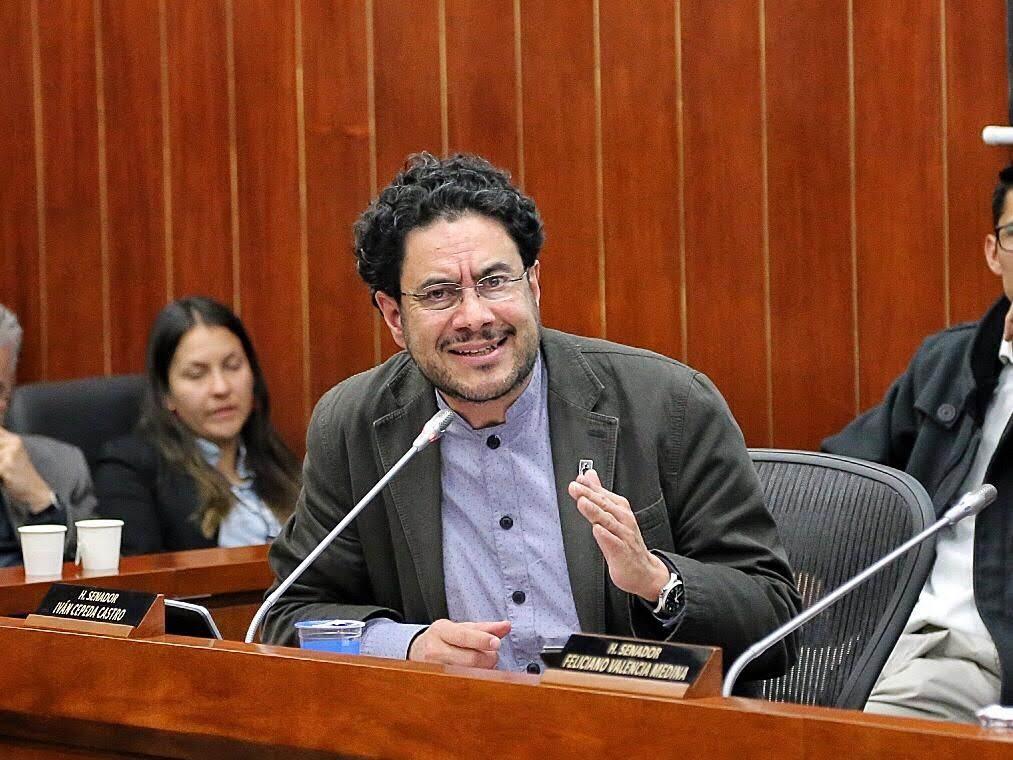
The main government name is senator Iván Cepeda, from the Historic Pact, who is leading the polls and trying to consolidate the continuity of the progressive cycle amid the reorganization of the Uribista right and the advancement of extreme right-wing candidacies.
The latest polls released in the final stretch of the campaign place Cepeda with around 44% of voting intentions, close to a victory in the first round, a scenario that still depends on reaching 50% plus one of the valid votes.
The dispute takes place in an environment marked by polarization, by the strong presence of former president Álvaro Uribe, leader of the Colombian extreme right, in the political debate.
Iván Cepeda represents the continuity of the Petro project
Iván Cepeda appears as the main favorite in the election. A historic defender of human rights and critic of Uribismo, the senator built his campaign around the continuity of the reforms initiated by Gustavo Petro.
The central axis of the government’s candidacy is the defense of social programs, agrarian reform, the expansion of labor rights and the reduction of poverty. The campaign speech attempts to directly associate recent economic advances with the Historic Pact project.
Data from the National Administrative Department of Statistics (DANE), constantly cited by the campaign, show a significant drop in poverty rates in recent years.
According to official figures presented during the campaign, the proportion of Colombians who declared themselves poor fell from 50.6% in 2022 to 37.6% in 2025, while multidimensional poverty reached a historic low.
Cepeda’s candidacy also attempts to broaden his base beyond the traditional left.
The senator began to defend an “Alliance for Life”, bringing together progressive, liberal and reformist sectors. His vice-president is Aída Quilcué, an indigenous leader who symbolizes the attempt to reach out to social movements, indigenous peoples and sectors historically excluded from Colombian politics.
Another important factor for the growth of the government candidacy was the partial unification of the progressive camp.
Former governor Carlos Caicedo withdrew his candidacy and declared support for Cepeda, a movement similar to that carried out previously by Clara López and Luis Gilberto Murillo.
Right arrives divided and extreme right grows
Opposition to the Petro government arrives at the election fragmented. The main name in the traditional conservative camp is Paloma Valencia, representative of the Uribista Centro Demático party.
Valencia is trying to recover the electorate historically linked to Álvaro Uribe, but is facing difficulties in reuniting the right.
Part of the conservative electorate migrated to the candidacy of Abelardo de la Espriella, an ultra-rightist lawyer who adopted a more radicalized speech, aligned with security issues, anti-Historic Pact rhetoric and ideological confrontation against the left.
The division between Valencia and De la Espriella reduced the capacity of the conservative camp to build a single competitive candidacy against the Historic Pact. Colombian analysts point out that this scenario favored Cepeda by preventing the consolidation of a unified anti-Petro front.
Still, the far right maintains strong influence in historically conservative regions, especially in Antioquia, Uribe’s political stronghold.
The government campaign denounces an increase in threats, political attacks and episodes of violence against activists of the Historic Pact in these areas.
Electoral debate reflects political transformation in Colombia
The 2026 dispute also highlights deeper changes in Colombian society.
For decades, national politics was dominated by conservative parties, traditional liberals and forces linked to Uribism, in a context strongly marked by internal armed conflict and the centrality of the security discourse.
Petro’s victory in 2022 opened a historic break in this pattern. The current electoral cycle would indicate that a relevant part of the electorate began to more directly evaluate issues linked to social inequality, employment, cost of living and public policies.
Analysts close to the government argue that there has been a kind of “change in collective perception”, driven both by social programs and by the expansion of political debate on social networks and alternative means of communication.
At the same time, conservative sectors continue to mobilize against Petro, accusing the government of deepening polarization and bringing the country closer to political models rejected by the Latin American right.
Security and risk of misinformation dominate final stretch
Political tension led the Colombian government to activate the so-called “Democracy Plan”, mobilizing around 228 thousand military and police personnel to guarantee the security of the election.
Authorities say the main risks involve possible attacks against candidates, electoral violence and disinformation campaigns on social media. The Colombian Ministry of Defense classified digital manipulation and fake news as one of the main threats to the electoral process.
More than 40 million Colombians are eligible to vote. If no candidate reaches an absolute majority in the first round, the dispute will be decided in a second round scheduled for June 21st.
Regardless of the result, the election is already considered one of the most important in Colombia’s recent history as it measures whether the country’s first left-wing government cycle will be able to consolidate itself politically or whether conservative forces will return to power.
Source: vermelho.org.br