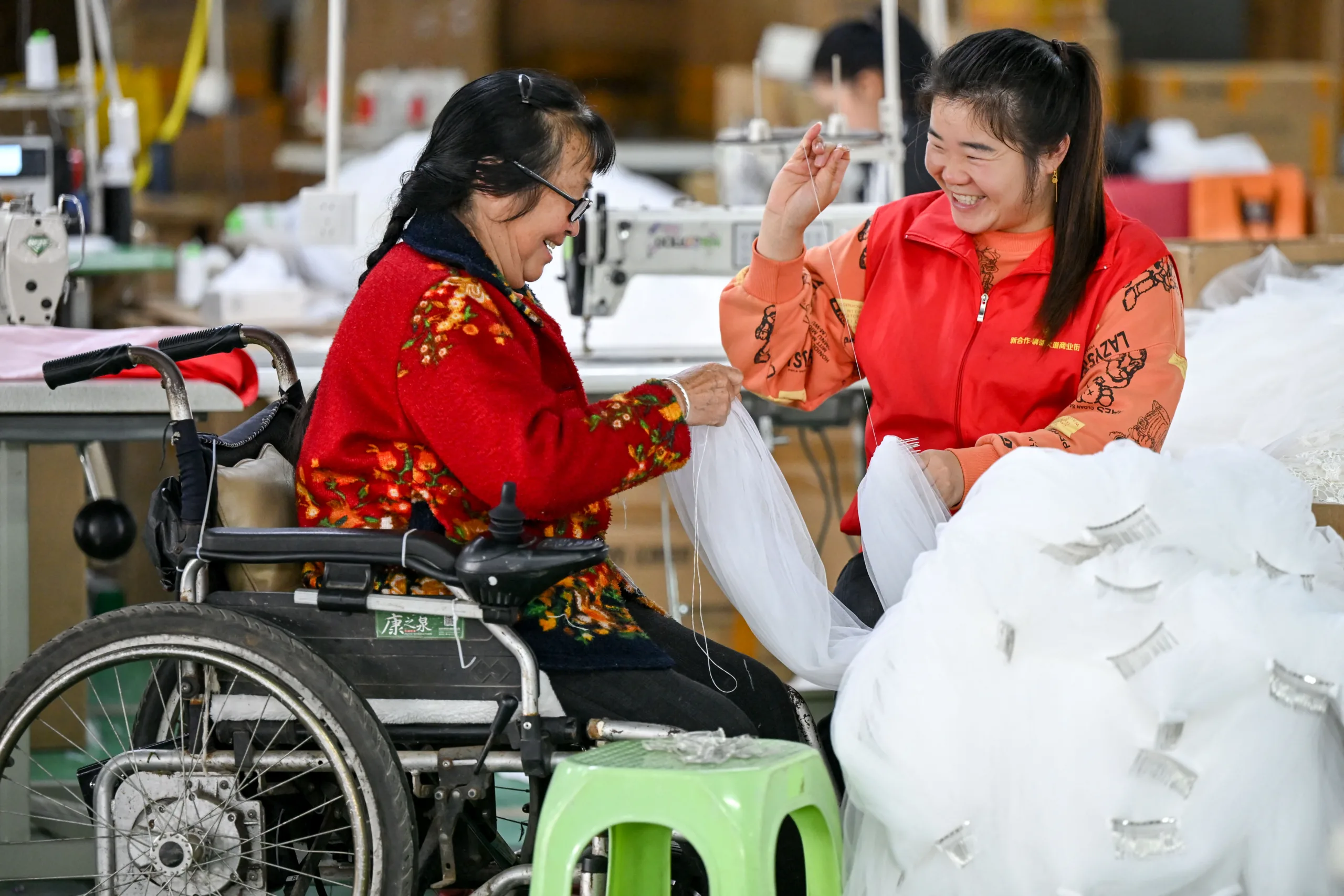
China recognized gaps in social protection when introducing the 15th Five-Year Plan (2026-2030) for the Protection and Development of People with Disabilities. The plan includes, for the first time, a specific section on autism and the goal of creating 1 million jobs for this population.
“Currently, the level of social security for people with disabilities in our country is not high, and there are still many gaps and weaknesses in obtaining balanced and accessible basic public services,” said Cheng Kai, president of the China Federation of People with Disabilities (FCPD), at a press conference at the State Council Information Office on Monday (27).
“People with disabilities remain a particularly vulnerable group and still face many obstacles in their lives,” said Zhou Changkui, secretary of the Party Leadership Group and chairman of the FCPD. “Violation of the legitimate rights and interests of people with disabilities still exists in society,” he added.
The 15th Five-Year Plan for the Protection and Development of Persons with Disabilities was approved by the State Council and published by its Working Committee on Disability. Organized into 9 main indicators, 32 key tasks in seven areas and 45 projects and service actions, the document elevates the topic to the status of special planning at national level.
In addition to the goal of creating jobs for people with disabilities in urban and rural areas, the plan stipulates an indicator of 3.5 million person-hours of care services for people with severe disabilities, as detailed by Cheng Kai.
Autism
For the first time in Chinese five-year plans for people with disabilities, the document includes a section on “Actions to Care for and Promote Autism Throughout the Life Cycle”. Zhou Changkui stated that autism was considered a rare disease in the late 1970s and, since then, has seen an increase in incidence across the world.
One of the goals is for all prefecture-level cities and densely populated municipalities (in China, these are different administrative categories) to offer rehabilitation services for children with autism by 2030, according to Zhou Changkui. Provincial capitals and large cities must build special education schools focused on autism.
For adults, the plan provides for internships and jobs in social organizations for autistic young people with good rehabilitation results, in addition to community integration programs. The plan also provides for family psychological counseling and respite care services (also known as respite carein which a professional takes over caregiving for hours or days to give the caregiver a break at home), to reduce what Zhou Changkui called “the burden of long-term care for families.”
AI: algorithmic discrimination and new vacancies
Cheng Kai cited at the press conference one of the newest challenges for disability policies: the rapid development of artificial intelligence brings “implicit and explicit discrimination inherent in algorithms” and, at the same time, opens the question of whether AI can generate more job opportunities.
The plan envisages improving the digital literacy of people with disabilities and promoting their participation in technological research and development. For those who live in rural areas and have adequate education, Cheng Kai pointed to data labeling and training AI systems as possible sources of income.
Concentration in rural areas
For families in which elderly parents care for adult children with severe disabilities, a measure has been in force since two years ago that allows children to be taken to nursing homes. “This alleviates the double economic and livelihood pressure on many families and reduces the burden of care,” said Cheng Kai.
The plan also foresees the use of logistics points from delivery companies as a source of employment: Cheng Kai cited YTO Express, a fast delivery and logistics company that, according to the president of FCPD, created tens of thousands of jobs for people with disabilities across the country.
Law update
The Law on the Protection of Persons with Disabilities, enacted in 1990 and last revised in 2008, will undergo further updating during the 15th Five-Year Plan period. “The development of society as a whole, the demands and content of protecting the rights and interests of people with disabilities, as well as the general legal environment, make it necessary to revise this law,” said Cheng Kai.
The country has more than 110 laws, 70 administrative regulations and 90 local regulations that address the protection of the rights of people with disabilities, said Cheng Kai. Only four provinces have developed local regulations for the Law on Accessible Building Environments, approved by the National People’s Congress (NPC) in 2023. “We will accelerate this process,” said Cheng Kai.
The ANP began monitoring compliance with the accessibility law in June 2026, with inspections in Shanghai and Chongqing, reported Li Dongmei. The balance was described with reservations by the vice-president of the FCPD: “We witnessed many vivid examples of successful practices, but we also identified some problems”.
Source: www.brasildefato.com.br