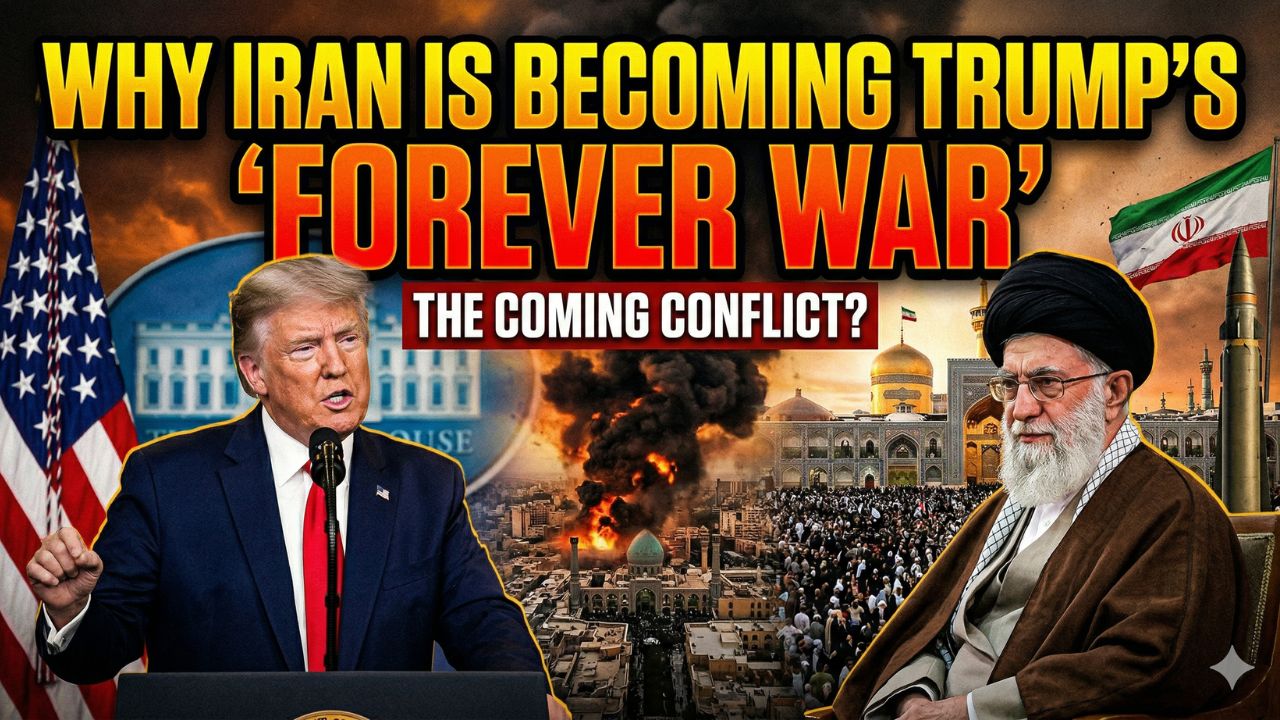
What was initially envisioned by many in the US as a brief and manageable military campaign against Iran has metastasized into a prolonged strategic nightmare. Over a month into the conflict, the Trump administration finds itself entangled in what is rapidly resembling an endless war, complete with soaring economic costs, domestic political backlash, and a fracturing international coalition.
The Economic and Political Toll The war has significantly disrupted global energy flows, driving US gasoline prices above four dollars a gallon. This economic strain has severely impacted President Donald Trump’s political standing, dragging his approval rating down to 36%, which is the lowest level of his current term. Trump, who campaigned on the promise of avoiding endless wars, now faces a scenario where his administration lacks a clean exit strategy. The frustration within the White House is palpable, highlighted by Trump’s erratic social media posts threatening to make Iran live in “Hell” and the abrupt dismissal of senior military officials, including Army Chief of Staff General Randy George, by Defense Secretary Pete Hegseth.
Iran’s Strategy of Endurance Washington’s triumphalist rhetoric often misses a crucial reality: Iran’s goal is not to win a conventional military contest against the US. Instead, Tehran is employing a strategy of “economic coercion by endurance”. By leveraging its geographical dominance over the Strait of Hormuz and targeting critical global energy infrastructure, Iran only needs to survive, keep retaliating, and deny the US a clean political settlement to achieve strategic success.
A Collapse of Cohesion Internationally, the US is finding its alliance cohesion falling apart. NATO allies like France have openly pushed back, reminding Washington that the alliance is designed for Euro-Atlantic defense and not for offensive missions in the Middle East. Furthermore, Gulf states such as Kuwait, Bahrain, and the UAE are deeply reluctant to fully support the US campaign. They are already paying a severe price, with Iranian retaliatory strikes targeting their power facilities, desalination plants, and petrochemical sites.
The Death of Diplomacy The conflict has degenerated into a “war without rules,” with both sides increasingly expanding their target lists to include civilian-critical infrastructure like bridges, universities, and power systems. In this volatile environment, diplomacy struggles to gain traction because both sides view negotiations with intense suspicion. While former Iranian Foreign Minister Mohammad Javad Zarif recently proposed a diplomatic settlement to end the war, hardliners in Tehran furiously branded him a traitor, viewing any attempt at negotiation as capitulation and espionage.
Ultimately, the war is paralyzing both nations because they hold completely incompatible definitions of victory. Trump desperately needs a quick exit that forces Iran to bend, while Iranians believe that simply refusing to bend at all is their true victory. Until this fundamental contradiction is resolved, the conflict offers no easy way out.