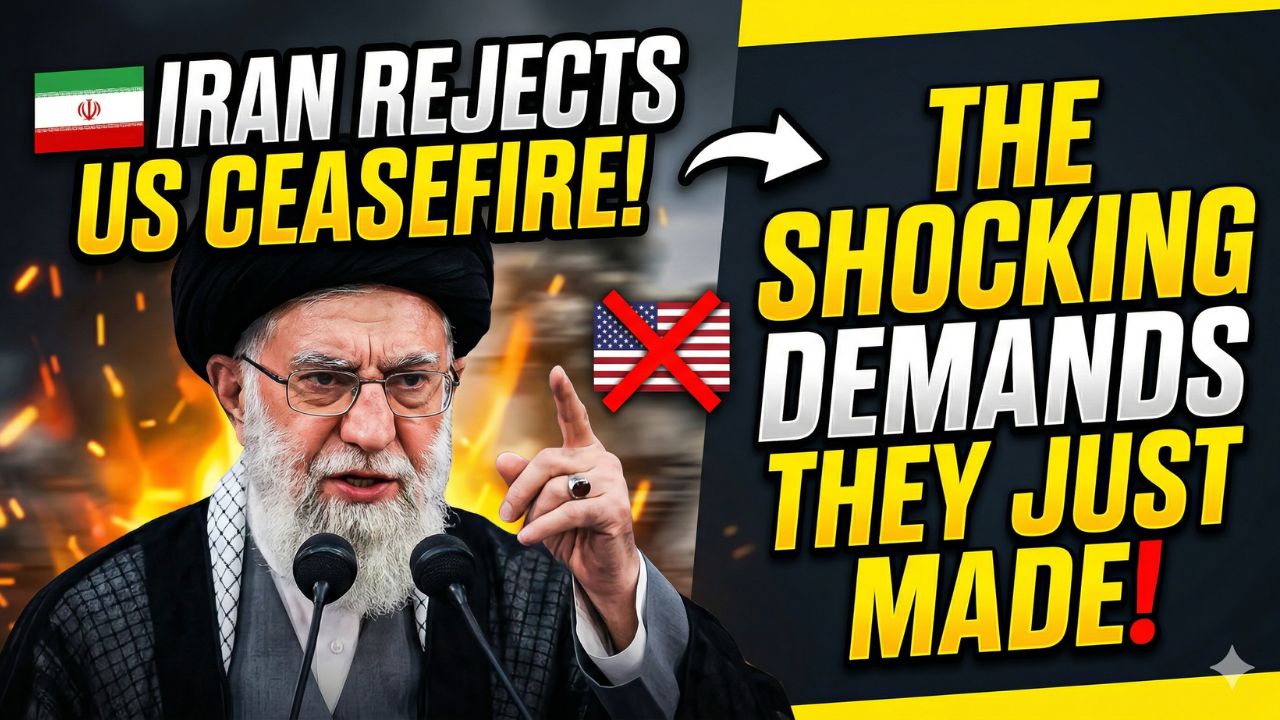
In a dramatic overnight development, diplomatic efforts to pause the escalating conflict have completely collapsed. The United States spent the entire night attempting to establish direct communication with Iran—reportedly facilitated by Pakistan between US Vice President JD Vance and Iranian Foreign Minister Abbas Araghchi—but the Iranian government officially rejected the US ceasefire proposal. From the Iranian perspective, the current US terms are not a genuine peace offer, but rather a demand for outright surrender.
The Shocking Counter-Demands Instead of a temporary truce, Iran is demanding a permanent and definitive end to the war. Their conditions for peace are absolute and sweeping. Iran insists that Israel must completely withdraw from Lebanon and cease its military operations there. Furthermore, Tehran demands an official protocol that secures safe passage in the Strait of Hormuz, establishing Iran as the primary protagonist controlling the region.
Economically, Iran’s demands are just as steep. They require the immediate suspension of all US sanctions and insist that the United States and Israel must bear the financial responsibility for reconstructing Iran following the recent bombardments. According to Iranian military spokesman Mohammed Akraminia, the country has the firepower to back up these demands and is prepared to continue the war as long as its political authorities desire, warning that the “enemy will certainly regret it”.
War Crimes and a Devastating Human Toll While diplomatic channels fail, the violence on the ground is intensifying rapidly. The US and Israel have heavily targeted Iranian energy infrastructure, most recently executing strikes on the vital South Pars and Marvdasht petrochemical complexes. Targeting these specific energy and petrochemical installations is being denounced as a blatant war crime.
The human cost of this escalation is reaching catastrophic levels. According to HRANA, a US-based human rights group, 3,540 people have been killed in Iran in just over a month of the conflict. Tragically, this staggering death toll includes 244 children, a number drastically worsened by a devastating strike on a girls’ primary school earlier in the war that killed at least 170 young students.
A Conflict Teetering on Regional War The violence is already spilling far beyond Iran’s borders. As a show of force, Iran launched overnight retaliatory strikes against military bases in Kuwait, the United Arab Emirates, and Saudi Arabia. Despite these multi-front attacks, the situation is not yet officially classified as a “regional war” only because these Gulf nations are currently limiting their response to defensive anti-aircraft maneuvers, rather than launching direct counter-attacks into Iranian territory.
However, as the strikes expand and peace talks shatter, the situation is increasingly fragile. The conflict is growing much larger than anticipated, and any further escalation could quickly transform this massive regional standoff into a global war.