Published 04/22/2026 15:08 | Edited 04/22/2026 15:37
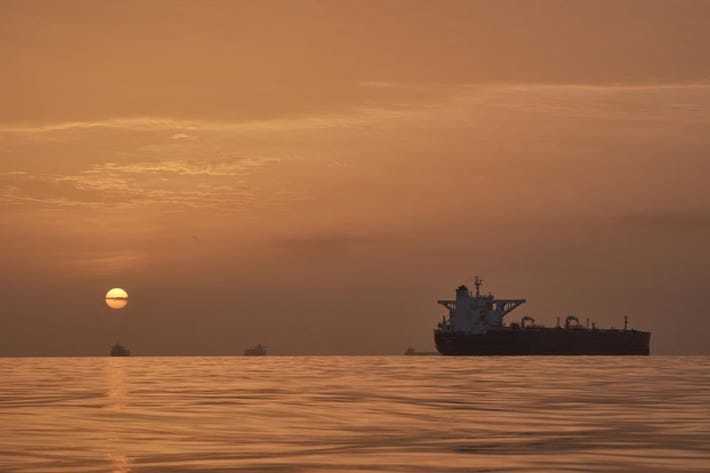
Fifty-four days after the military offensive against Iran, launched on February 28, Donald Trump’s government finds itself in a geopolitical maze. Although the military superiority of the United States and Israel has resulted in the destruction of naval assets and part of Iranian ballistic capabilities, the political objective of an “unconditional surrender” remains distant. The scenario, described by analysts as an “unstable draw”, calls into question the effectiveness of the White House strategy on the eve of a new round of negotiations in Pakistan.
Comparison with history “crass mistake” — alluding to Marcus Crassus’s disastrous campaign against the Parthians in 53 a.C. — became recurrent. Just as the Roman general underestimated resistance in the East and led his legions to disaster, Trump is seen as the architect of a combination of military arrogance and political myopia.
The gulf between missiles and results
Since the start of hostilities, Trump has set ambitious goals: neutralizing the nuclear program, destroying the missile/drone arsenal and ensuring free navigation in Hormuz. War reports reproduced in The New York Times and no Los Angeles Times confirm real damage to Iranian infrastructure. However, the “strategic submission” did not occur.
Before the first attack, on January 16, 2026, Dr. Sanam Vakil, director of the Middle East and North Africa Program at Chatham House – a British institute of international relations, considered one of the main global references in foreign policy and security analysis – warned that Trump’s central objective was to force Iran into “strategic submission”, imposing permanent limits on the nuclear program, missile capabilities and the radius of regional influence through a combination of economic sanctions, bombings and continuous diplomatic pressure. In further analysis, Vakil highlighted that the escalation of attacks, the human cost, and the blockade of the Strait of Hormuz have turned the conflict into a war “that no one is clearly winning,” in which costs are rising faster than any achievable gains.
For David Remnick, magazine editor The New Yorkerand analyst Karim Sadjadpour, a specialist in Iran, the conduct of the conflict constitutes a type of strategic “malpractice”, an expression that can be approximated, in Portuguese, to the idea of a “blunder” in war management. In the same vehicle, Danny Citrinowicza former Israeli intelligence officer, classifies the campaign as a “colossal disaster” due to the miscalculation regarding Iranian resilience, which continues to operate drones even under bombardment.
International unmasking and attrition
The journalist José Reinaldo Carvalhopresident of Cebrapazassesses that Trump’s global image was severely compromised by the untimely nature of how the war began, initiated without a formal declaration and during ongoing negotiations. “Trump unmasked himself, as he claimed to be a conflict mediator and that this qualified him for the Nobel Peace Prize. After 54 days of war, Trump brought great wear and tear; he was unable to bend Iran towards the declared objectives, he was unable to change the regime. He caused damage, but he did not destroy the military capacity, the petrochemical infrastructure, nor did he end the Iranian nuclear program”, says José Reinaldo.
He points out that the wear and tear is also internal, with the negative assessment of the government growing and the support movement for Trump divided. “His image is also compromised by accusations of war crimes. He says he will extend the ceasefire until Iran negotiates, but Iran does not accept negotiating as long as the US maintains the blockade on Hormuz”, he points out.
On the other hand, pressure to normalize navigation in the strait only increases. China exercises discreet influence and Xi Jinping has already expressed his support for the release of navigation”, he assesses.
For José Reinaldo, the scenario deepens the decline of US influence. “I don’t see the prospect of Trump sending troops to a prolonged war. The situation is one of greater wear and tear for the US and strengthening of multilateralism”, adds the journalist.
Regional resistance and multilateralism
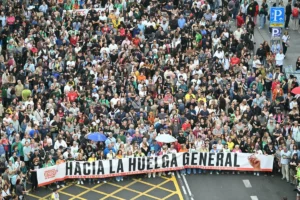
The conflict spills over into Lebanon and Palestine, where the Israeli offensive continues. Ricardo Abreu “German”director of Maurício Grabois Foundationnotes that Trump is “momentarily defeated” in the political field. “I don’t think it is definitively defeated, but there is now an Israeli offensive in southern Lebanon. What is necessary is to articulate a new wave of campaigns for peace, with an anti-imperialist sense, as is happening in the USA, where millions take to the streets to raise awareness among the people”, analyzes Abreu.
In this leadership vacuum, the strengthening of multilateralism is evident. While Washington isolates itself, Beijing defends stability in Hormuz, consolidating the decline of North American hegemony.
The impasse in Pakistan
O Washington Institute for Near East Policy, research center specializing in politics and security in the Middle East, with a strong relationship with US foreign policy makers – points out that a comprehensive agreement is unlikely in the short term, given that Tehran refuses to freeze its nuclear program for 20 years and demands the immediate lifting of the naval blockade.
The outcome in Pakistan will define whether the world heads towards a tactical armistice or an escalation of global costs. For now, Trump’s adventure resembles Crassus’s: a show of force that, instead of consolidating the empire, exposes its strategic cracks.
Source: vermelho.org.br