Published 04/23/2026 1:01 pm | Edited 04/23/2026 1:30 pm
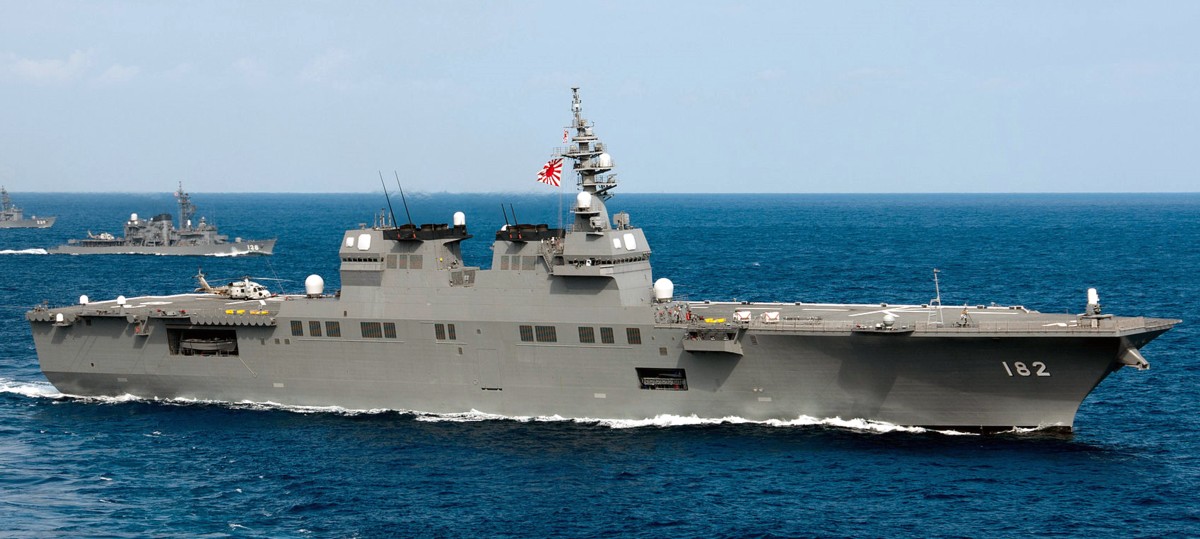
In a historic change, Japan approved on Tuesday (21) the definitive change to the rules that limited, for decades, the export of lethal weapons. The decision authorizes the sale of fighters, missiles, warships and other military equipment to allies and partners. The measure marks a departure from the pacifist model adopted after the Second World War and revives historic distrust in China, which sees the gesture as a step towards a destabilizing arms race in the region.
For Prime Minister Sanae Takaichi’s government, the new regime seeks to strengthen defense ties and the resilience of the Japanese arms industry. In a statement, Takaichi stated that no country protects its peace and security alone, and it is necessary to strengthen the capabilities of allied countries, in a clear reference that it intends to arm the region. The chief cabinet secretary, Minoru Kihara, did not fail to mention that the decision considers China and North Korea as threats.
End of the 50-year veto
Since the end of the world conflict, Japan has maintained strict restrictions on the export of lethal weapons, in line with the pacifist reading of the Japanese Constitution. The change approved this Tuesday (21) dissolves this half-century-old veto and paves the way for Tokyo to act as a supplier of combat equipment to the United States, Australia, India and other partners. The measure accompanies a budget expansion plan to increase military spending to almost 2% of GDP, expanding counterattack capacity with long-range missiles, drones and surveillance systems.
For Beijing, the change signals that Japan is once again an active military actor, capable of projecting force and coordinating operations with the North Atlantic Treaty Organization (NATO) and regional allies.
China denounces militarism
Chinese Foreign Ministry spokesman Guo Jiakun expressed serious concern about the revision of the rules in a note and warned of Japan’s growing militarization and alignment with Western blocs.
The Chinese government has denounced resurgent militarism and neo-fascism, linking the change to Tokyo’s imperialist past. China says it will monitor the case with apprehension and resist any attempt by its neighbor to return to the logic of military power. The editorial in the Global Times newspaper reinforces the tone, describing Japan as one of the countries that is accelerating its rearmament the most and warning that the intensification of military agreements is fueling serious insecurity in the Asia-Pacific.
Territorial disputes and Taiwan
At the center of the conflict is the dispute over the Senkaku Islands, administered by Japan but claimed by China as Diaoyu Dao. The archipelago in the East China Sea is a point of high tension, with frequent naval patrols on both sides. Beijing links Tokyo’s new arms policy to this conflict, arguing that the expansion of missile capabilities serves to consolidate Japanese control over sensitive maritime areas.
At the same time, Japan has taken an explicit stance on Taiwan, declaring that cross-strait stability is essential to its own security. For China, this amounts to interference in internal affairs and signals that Tokyo could participate in a possible conflict scenario on the island. The possibility of exporting weapons and cooperating in military maneuvers close to Chinese territory increases the perception of strategic siege.
Regional influence and containment
The escalation projected by Tokyo affects a wide range of countries seen by Beijing as part of a containment policy. Among the main actors is Australia, with whom Japan has signed technological cooperation agreements for missiles and drones. China sees a corridor of capabilities that runs from Japan to Oceania, making Chinese operations difficult. Strengthening ties with NATO is also read as a long-term strategy to impede Beijing’s regional influence.
The result for the Chinese is a regional imbalance where cooperation between Japan, the United States, Australia and India isolates China, while Tokyo reinforces the potential to attack strategic targets. For international analysts, the decision consolidates Japan as a pole of military power integrated into Washington’s security architecture, like Israel in the Middle East, which increases the risk of naval incidents and escalations in Southeast Asia.
Source: vermelho.org.br