Published 04/07/2026 16:00 | Edited 04/07/2026 18:53
This Tuesday (7) the world is going through one of the most dramatic moments in modern history. The conflict in the Middle East, which began in February with Operation Epic Fury, has reached a definitive breaking point if Donald Trump carries out the ultimatum to reopen the Strait of Hormuz.
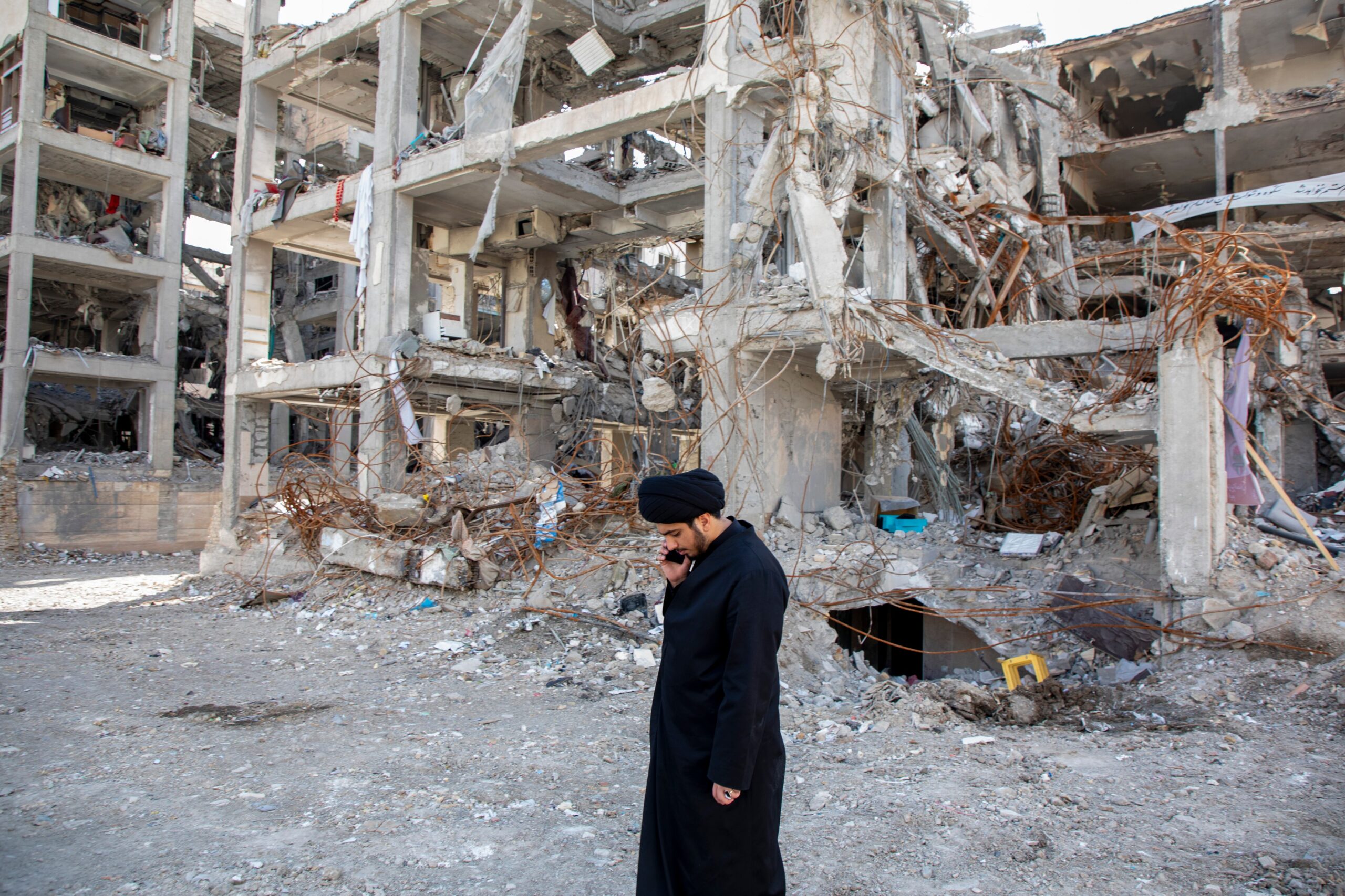
Under the threat that “an entire civilization will die tonight”, the United States and Israel are advancing a strategy of systematic destruction of Iran’s civil and energy infrastructure. More than a military development, what is observed is a forced reorganization of global geopolitics that places Brazil at a historical crossroads: remain a vulnerable spectator or assume the leading role in its own sovereignty.
The ongoing offensive has already hit petrochemical complexes responsible for half of Iran’s production and vital export terminals such as Kharg Island. For master in Geography Ronaldo Carmona and professor of Geopolitics at the Escola Superior de Guerra, this escalation is not the result of chance or a mere diplomatic bluff. This is a central piece of the project to reconstruct North American power, which aims to remove relevant competitors from the market for years, capture oil and force Europe into absolute energy dependence on Washington.
While Iran faces an existential struggle to preserve its political system, the side effects of this destruction of productive forces generate an inflationary wave that affects all global value chains. Trump’s action “reorganizes the prices and suppliers of energy and various industrial activities, such as petrochemicals, directly benefiting the United States. The moderate internal inflationary effects can possibly be absorbed in the name of structural gains. The infrastructure of the Persian Gulf will take years to recover. In 90 days, Trump captured Venezuelan oil and removed oil and gas from the Middle East from the market”, Carmona published on social media.
The reaction of Eurasian powers confirms the gravity of the scenario. China, most directly affected by the energy siege on Iran, watches the movements with apprehension, despite its large security stocks. For Professor Elias Jabbour, we are facing the maximum expression of the crisis of American hegemony. Washington uses “missile diplomacy” to try to disrupt the integration of the Global South and subjugate its economic rivals via military force. In this context, passive neutrality becomes a luxury that developing countries can no longer afford if they wish to survive the redesign of the international system.
Necessary intervention and the end of fiscal dogma
The economic impact on Brazil requires responses that deviate from the orthodox manual. In an analysis of the gravity of the moment, professor Luiz Gonzaga Belluzzo warns that the country is facing an “anomalous situation that demands exceptional measures”. According to Belluzzo, it is not possible to allow the price system to function in the face of productive destruction of this magnitude, as this would generate uncontrollable inflation that would punish the poorest. The economist argues that the Brazilian State needs to go “to the end”, intervening decisively to shield the internal economy and guarantee social stability.
This need for intervention clashes directly with the fiscal-monetarist orientation that has limited Brazilian growth for decades. Economist Paulo Nogueira Batista Jr. states that, in this context, “it is essential to abandon fiscal dogmas in order to expand the investment capacity of the national State. What is more important? Meeting primary outcome goals or guaranteeing the country’s survival? It is essential to open space for public investments, especially in military defense and energy self-sufficiency. This is what all countries jealous of their sovereignty do.”
The experts’ recommendation points to a necessary rupture: financing for development and national defense cannot be held hostage by anachronistic fiscal targets while the world burns down. The lesson emanating from the Persian Gulf is that national security and energy autonomy are the only real ballasts in a scenario of total war.
The Equatorial Margin as a national security asset
Within this new geopolitical order, Brazil has a strategic asset that can no longer be ignored: the Equatorial Margin. Identified as the largest unexplored oil and gas frontier in the world, the exploration of reserves has become an imperative for survival. With Gulf oil out of commission for an indefinite period of time, Brazil has a window of opportunity to consolidate itself as a stable supplier and use this wealth to finance a “NIB 2.0” — a New Industry Brazil on an expanded scale, focused on petrochemicals and cutting-edge technology.
The Lula government has adopted a correct diplomatic stance by condemning violations of Iranian sovereignty and seeking dialogue via BRICS and the UN, trying to protect the Brazilian consumer from the fuel shock. However, strategic analysis suggests that the moment requires internal offensive action. Unlocking Equatorial Margin licenses and investing massively in a defense industrial base with robust deterrence are the only guarantees that Brazil will not be the next target of external pressure or economic destabilization caused by third parties.
Protagonism or submission in the post-Ormuz world
The destruction of bridges and power plants in Tehran echoes a warning to the Global South. In an international system where brute force has replaced diplomacy, the only real protection is the construction of a strong, industrialized state. Brazil has the resources, the intellectual base and the historical need to lead this autonomy movement. The success of Nova Indústria Brasil will depend on the ability to read the current scenario not just as an inflationary risk, but as the definitive chance to break the ties that prevent the country from occupying its rightful place in the new multipolar order.
The federal government can transform the external crisis into an engine for national reconstruction. This involves strengthening Petrobras as a promoter of energy sovereignty and resuming large infrastructure projects that were paralyzed by market logic. The federal government can transform the external crisis into an engine for national reconstruction. This involves strengthening Petrobras as a promoter of energy sovereignty and resuming large infrastructure projects that were paralyzed by market logic. As Elias Jabbour points out, “there is no development without sovereignty and there is no sovereignty without the ability to protect our wealth and our industry”.
Source: vermelho.org.br