Published 04/07/2026 14:45 | Edited 04/07/2026 16:01
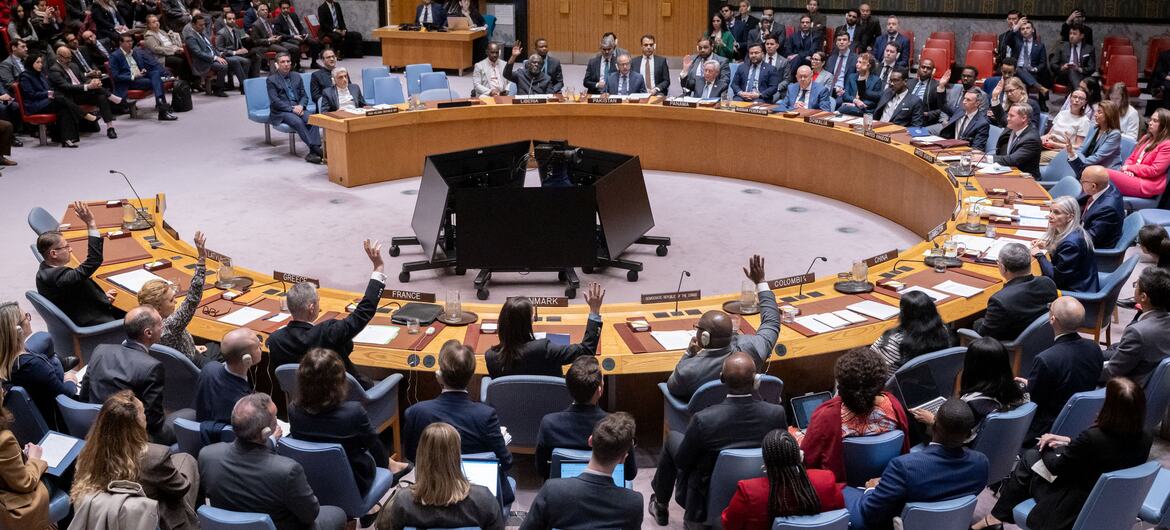
The allies of the United States and Israel tried to coerce the UN (United Nations) to release actions against Iran in the Strait of Hormuz. But, thanks to the veto power of China and Russia in the Security Council, the maneuver was rejected this Tuesday (7).
At stake was a proposal presented by Bahrain, which asked for authorization, “for at least six months”, for countries to resort to “all necessary defensive means” – which includes the use of force – in order to resume commercial navigation in Hormuz.
Transit through the strait was blocked by Iran after the start of the war, which was launched on February 28 by the governments of Donald Trump and Benjamin Netanyahu. Only ships from nations friendly to the Iranian regime have continued to transport oil in the region.
At the UN, the expression “use all necessary defensive means” is a euphemism to guarantee approval for military offensives. But such actions require the support of the United Nations Security Council. Aware that China and Russia were opposed to the measure, Bahrain still tried to soften the text and replaced the controversial expression with “strongly encourages” countries to “coordinate defensive efforts” in the Strait of Hormuz.
It was no use. A single vote against any of the permanent members of the collegiate – the United States, Russia, England, France and China – is enough to veto a resolution. Even dehydrated, Bahrain’s proposal, clearly subordinate to the White House, did not sensitize the Chinese and Russians, who are looking for diplomatic solutions to the crisis in the Middle East.
Of the total 15 members of the Security Council, 11 voted in favor of the military exit and two abstained. It was up to China and Russia to put an end to the escalation in the region and promise a more consensual resolution. Also on Tuesday, while the proposal was being debated, the United States spoke of “extinguishing an entire civilization tonight” in Iran, which further damaged the negotiations.
Behind the scenes at the UN, Bahrain’s maneuver was sold as an alternative to Trump’s threat to attack Iranian power plants and bridges if the Persian country does not reopen Hormuz by 8 pm (official US time). The defeat was announced by Abdullatif bin Rashid Al Zayani, Minister of Foreign Affairs of Bahrain: “The draft resolution was not adopted due to the dissenting vote of a permanent member of the Council.”
The Strait of Hormuz is the shipping route for around 20% of the oil and gas consumed in the world. With its closure, the entire global fuel market was affected. In the early afternoon of today, a barrel of oil was priced at US$ 109.51.
Source: vermelho.org.br