Published 04/07/2026 19:58 | Edited 04/08/2026 12:58
In a last-minute turnaround, President Donald Trump announced, on Tuesday night (7), a two-week ceasefire with Iran, retreating from the apocalyptic threats made hours earlier. The measure, mediated by Pakistan, temporarily suspends an escalation that put global stability and global energy supplies at risk, but leaves open fundamental questions about the future of the conflict that began in February.
The international news awaits with apprehension the response from the Iranian authorities. On several occasions when Trump mentioned supposed prolific negotiations, Iran vehemently denied any dialogue.
Based only on the superficial statement on social media, it is not clear whether Trump is suspending what is already in progress or extending the deadline for the definitive destruction of nuclear plants. Iranians will read this to understand between the lines, before making any response. They always talked about the lack of trust in Trump.

“Based on conversations with Prime Minister Shehbaz Sharif and Field Marshal Asim Munir of Pakistan, and upon their request that I suspend the destructive force sent tonight into Iran, and subject to approval of the COMPLETE, IMMEDIATE and SAFE opening of the Strait of Hormuz, I agree to suspend the bombing and attacking of Iran for a period of two weeks.
“This will be a double-sided Ceasefire!
“The reason for doing this is that we have already met and exceeded all military objectives, and we are a long way from a definitive Agreement on Long-Term PEACE with Iran and PEACE in the Middle East. We have received a 10-point proposal from Iran and believe it is a viable basis for negotiating. Almost all of the various points of past dispute have been agreed upon between the United States and Iran, but a two-week period will allow the Agreement to be finalized and consummated.”
“On behalf of the United States of America, as President, and also representing the Countries of the Middle East, it is an Honor to have this Long-Term problem close to resolution.”
From threat to truce: a negotiation under pressure
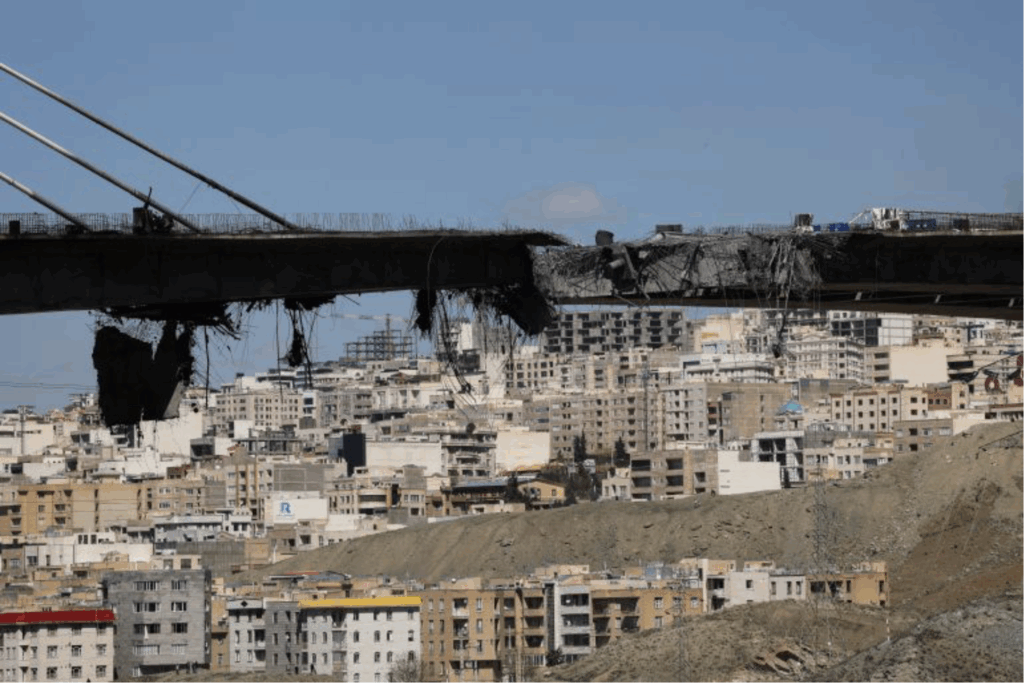
The announcement came just hours before Trump’s deadline — 8 p.m. ET — for Iran to reopen the Strait of Hormuz or face the “death of an entire civilization.” The warmongering rhetoric, which included threats to power plants, bridges and critical infrastructure (possible war crimes under international law), contrasts with the diplomatic solution achieved.
Pakistani Prime Minister Shehbaz Sharif played a central role in urging Trump to postpone the conflict and proposing that both sides observe a 14-day truce. During this period, Iran is committed to allowing the safe navigation of commercial ships through the strategic route, through which around 20% of the oil consumed in the world circulates.
Terms and justifications of the agreement
In a post on social media, Trump justified his acceptance of the proposal by stating that “we have already met and exceeded all military objectives” and that the US is “very advanced in a definitive agreement on long-term peace”. According to him, Iran sent a 10-point proposal that serves as a “viable basis for negotiation”.
The ceasefire, therefore, does not represent the end of the conflict, but a tactical pause for the parties to seek a lasting solution. For analysts heard by the New York Timesthe measure allows the US to consolidate military gains without assuming the risks of a prolonged occupation, while Iran gains momentum to reorganize defenses and exploit divisions in international public opinion.
Human cost and Iranian resistance
While diplomacy progressed behind the scenes, the Iranian population prepared for the worst. Videos and photographs showed civilians forming human chains along bridges and around power plants.
The human cost of the escalation, which began in late February, is high: according to the Human Rights Activists News Agency, at least 1,665 civilians, including 244 children, had been killed in Iran as of Monday. In Lebanon, more than 1,500 people died in clashes between Israel and Hezbollah. In Israel, at least 20 deaths were recorded and publicized, and the US counts 13 military personnel dead and hundreds injured.
Political reactions and internal wear and tear
Trump’s threat generated cross reactions in the United States. While Democrats strongly condemned the rhetoric and renewed calls for his impeachment via the 25th Amendment, sectors of the Republican right also expressed concern about the president’s potential popular erosion.
The oscillation between warmongering maximalism and diplomatic retreat exposes the contradictions of a strategy that mixes improvisation and political calculation. For critics, the approach increases global uncertainty and undermines the credibility of American institutions.
What lies ahead?
The two-week ceasefire will be a litmus test. If negotiations advance, an agreement can be envisaged that stabilizes the Middle East and guarantees global energy flow. If they fail, a resumption of hostilities could be even more devastating.
Pakistan’s role as a mediator stands out as a positive element in a polarized scenario. However, the sustainability of any agreement will depend on verifiable guarantees, monitoring mechanisms and, above all, the willingness of the parties to prioritize dialogue over force.
For now, the relief is temporary. Peace, as those involved remember, is not built with ultimatums — but with genuine commitment to diplomacy, international law and human life.
Source: vermelho.org.br