Published 04/07/2026 20:56 | Edited 04/08/2026 08:09
Iran formally accepted the two-week ceasefire proposed by Pakistan, but conditioned the suspension of its “defensive operations” on the immediate cessation of attacks on its territory. In a statement released by Foreign Minister Araghchi, on behalf of the Supreme National Security Council, Tehran reaffirms that the truce does not mean surrender — and that any “error” by the enemy will be responded to with “full force”.
The announcement marks a diplomatic turning point in a conflict that, hours before, seemed headed for a catastrophic escalation. However, the language used by the Iranian government reveals that acceptance of the agreement is tactical, not strategic: a pause for negotiations, not the end of the right to defend oneself if attacked again.
Conditionalities and structural distrust

On behalf of the Islamic Republic of Iran, I express my gratitude and appreciation to my dear brothers, His Excellency the Prime Minister of Pakistan, Sharif, and His Excellency Field Marshal Munir, for their tireless efforts to bring an end to the war in the region.
In response to Prime Minister Sharif’s fraternal request in his tweet, and considering the US request for negotiations based on its 15-point proposal, as well as the US President’s announcement regarding the acceptance of the general framework of Iran’s 10-point proposal as a basis for negotiations, I declare, on behalf of Iran’s Supreme National Security Council:
If attacks against Iran are stopped, our Mighty Military will cease its defensive operations.
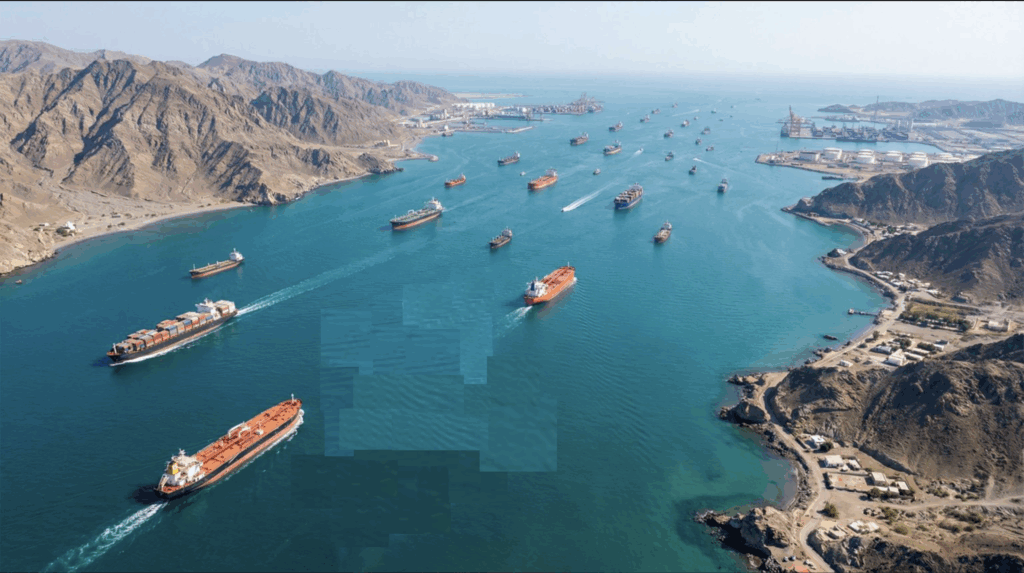
For a period of two weeks, safe passage through the Strait of Hormuz will be possible through coordination with the Iranian Armed Forces and taking into account technical limitations.
Seyed Abbas Araghchi Minister of Foreign Affairs
Islamic Republic of Iran
The Iranian statement is clear in establishing that the negotiations in Islamabad will begin with “total distrust towards the American side”. The two-week deadline for the diplomatic process may be extended “by agreement between the parties”, but there is no guarantee that a lasting understanding will be reached.
Furthermore, Iran links the safe opening of the Strait of Hormuz to “coordination with Iran’s armed forces and taking into account technical limitations.” In other words: Tehran maintains operational control over the strategic path.
Approval of the new Supreme Leader
A relevant fact is that the agreement was approved by the new Supreme Leader of Iran, Ayatollah Mojtaba Khamenei. This indicates that the decision has the approval of the highest authority in the Iranian political system, giving internal legitimacy to the diplomatic maneuver.
The Council classified the ceasefire as a “victory for Iran”, signaling that the truce is not a retreat, but an achievement achieved under military pressure and through resistance.
Israel and the USA: membership still nebulous
As Iran formalized its position, the American broadcaster CNN reported — citing an unidentified White House source — that Israel also agreed to the ceasefire. According to the report, the truce would come into effect when Iran opens the Strait of Hormuz.
However, there was no official confirmation from Israeli or American authorities, and reports indicate that there was, to date, no formal directive from defense structures to suspend operations. This communication asymmetry reinforces the fragility of the agreement and the risk of operational misunderstandings.
Trump steps back from the cliff
For analysts, the announcement represents a retreat by Donald Trump in relation to the apocalyptic rhetoric he delivered hours earlier, when he threatened that “an entire civilization would die”. Pakistani mediation — led by Prime Minister Shehbaz Sharif and Field Marshal Asim Munir — would have been decisive in preventing the conflict from going beyond the point of no return.
In a post on TruthSocial, Trump stated that he agreed to “suspend bombings and attacks on Iran for two weeks” after receiving a “feasible” 10-point proposal from Tehran. According to him, the period will allow “finalizing and consummating” a definitive agreement, bringing the solution of the “long-term problem” closer.
What’s at stake in the next two weeks
The ceasefire is, above all, a test of trust. If the negotiations in Islamabad advance, an agreement can be envisaged that stabilizes the Middle East and guarantees global energy flow. If they fail, a resumption of hostilities could be even more devastating.
The Iranian statement makes it clear: “If the enemy’s surrender on the field becomes a decisive political achievement in the negotiations, we will celebrate this great historic victory together; otherwise, we will fight side by side on the field until all the demands of the Iranian nation are met.”
Diplomacy will have two weeks to prove that it can do more than war.
Source: vermelho.org.br