Published 11/05/2026 19:46 | Edited 05/12/2026 08:14
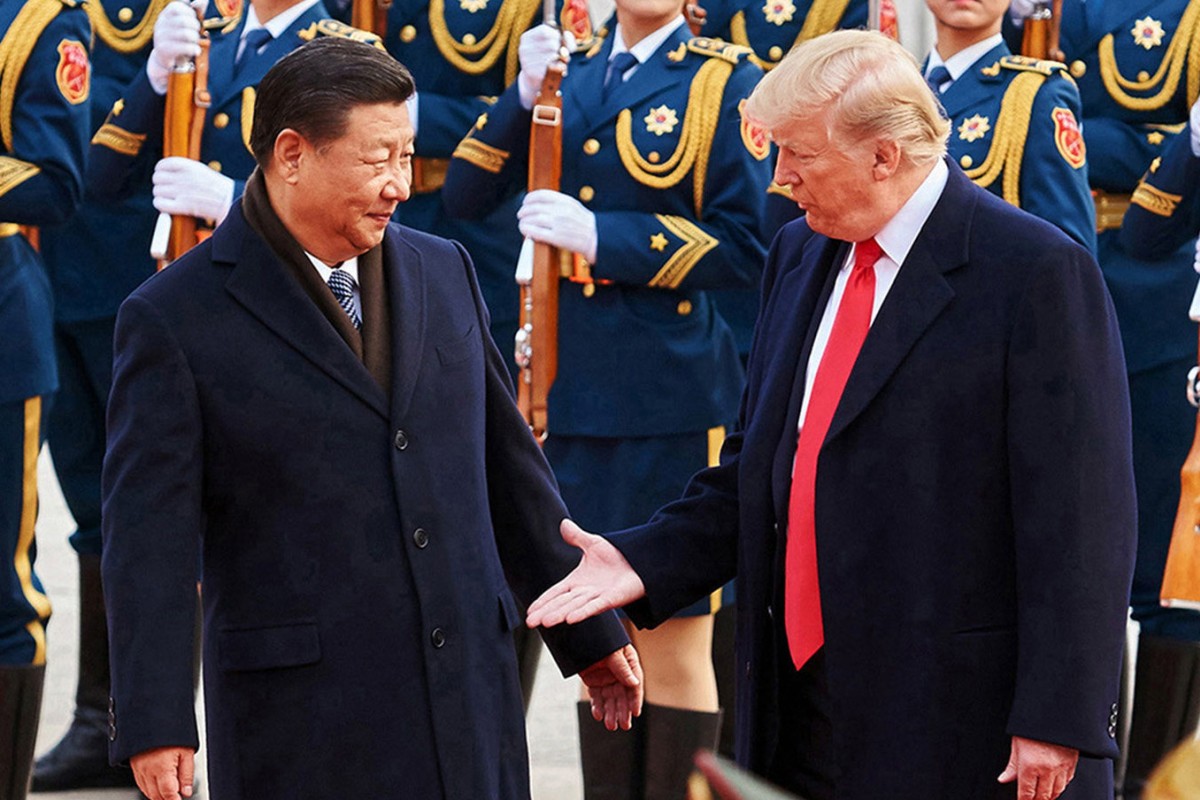
United States President Donald Trump arrives in China this Thursday (14) for a two-day state visit to President Xi Jinping. The meeting in Beijing marks the Republican’s first official trip to the country since 2017 and takes place at a time of extreme geopolitical volatility. The summit, initially scheduled for the beginning of the year, was postponed due to the military escalation by the United States and Israel against Iran, which began in February, which altered the balance of forces in the Middle East and posed new challenges to global diplomacy.
According to the White House press secretary, Karoline Leavitt, the meeting seeks to stabilize the relationship between the world’s two largest economies. However, the scenario is one of strong pressure. Washington intends to demand a tougher stance from Beijing in relation to Tehran. Currently, China is Iran’s main trading partner, absorbing around 90% of Iranian oil exports. Within the policy of energy hegemony, the US government wants to stifle Iran’s financial flow from China, alleging that it supports military activities in the region. Beijing, on the other hand, defends the legitimacy of commercial exchanges and energy sovereignty.
In recent demonstrations, Trump raised the tone by stating that China will face reprisals if it sends weapons to Iran, reinforcing the strategy of maximum pressure on the Beijing-Tehran-Moscow axis. In contrast, Chinese Foreign Minister Wang Yi maintains the directive that the Chinese position is impartial and objective. Xi Jinping’s government reaffirmed its support for Iran’s right to the peaceful use of nuclear energy and signaled that it will not accept impositions that compromise its strategic partners to serve Washington’s interests.
Chinese military power bothers the White House
Chinese military modernization and control of nuclear arsenals are also on the priority agenda. US Undersecretary of Arms Control, Thomas DiNanno, recently stated at the United Nations that explosive tests had been detected by China and criticized the supposed lack of transparency about Beijing’s arsenal. Sector reports indicate the development of a new generation of weapons with advanced maneuver capabilities. However, China refuses to participate in trilateral negotiations with the US and Russia, arguing that its power is significantly inferior to that of the United States and that unilateral limits would unbalance security in Asia.
In the technological field, the advancement of Artificial Intelligence (AI) is another point of friction. The launch of the Chinese DeepSeek-V4 model in April 2026 demonstrated high efficiency at reduced costs, which is interpreted by US national security advisors as a strategic risk. Trump and Xi are expected to announce the creation of a technical group to discuss security protocols in defense systems, aiming to prevent the use of algorithms in weapons from leading to fatal military miscalculations.
Despite structural differences, economic pragmatism guides negotiations involving Boeing and the agricultural sector. Beijing is studying the acquisition of up to 600 aircraft from the American manufacturer, including the 737 MAX and 787 Dreamliner models, a gesture that could be announced as a sign of commercial goodwill. Furthermore, the creation of a Trade Council and an Investment Council is being discussed to institutionalize dialogue and avoid new tariff wars. Such mechanisms aim to guarantee stability in the supply of rare earth minerals, controlled mainly by China and essential for the US high-tech industry.
Taiwan remains the most sensitive issue and the main “red line” for Beijing. While Secretary of State Marco Rubio reinforces Washington’s commitment to the island from the perspective of defense cooperation, the Chinese government reiterates that the territory is inalienable and that any solution must occur without external interference. Analysts highlight that, in addition to sovereignty, control of semiconductor production in Taiwan constitutes the epicenter of the dispute, directly affecting technological competitiveness and global hegemony in the 21st century.
Source: vermelho.org.br