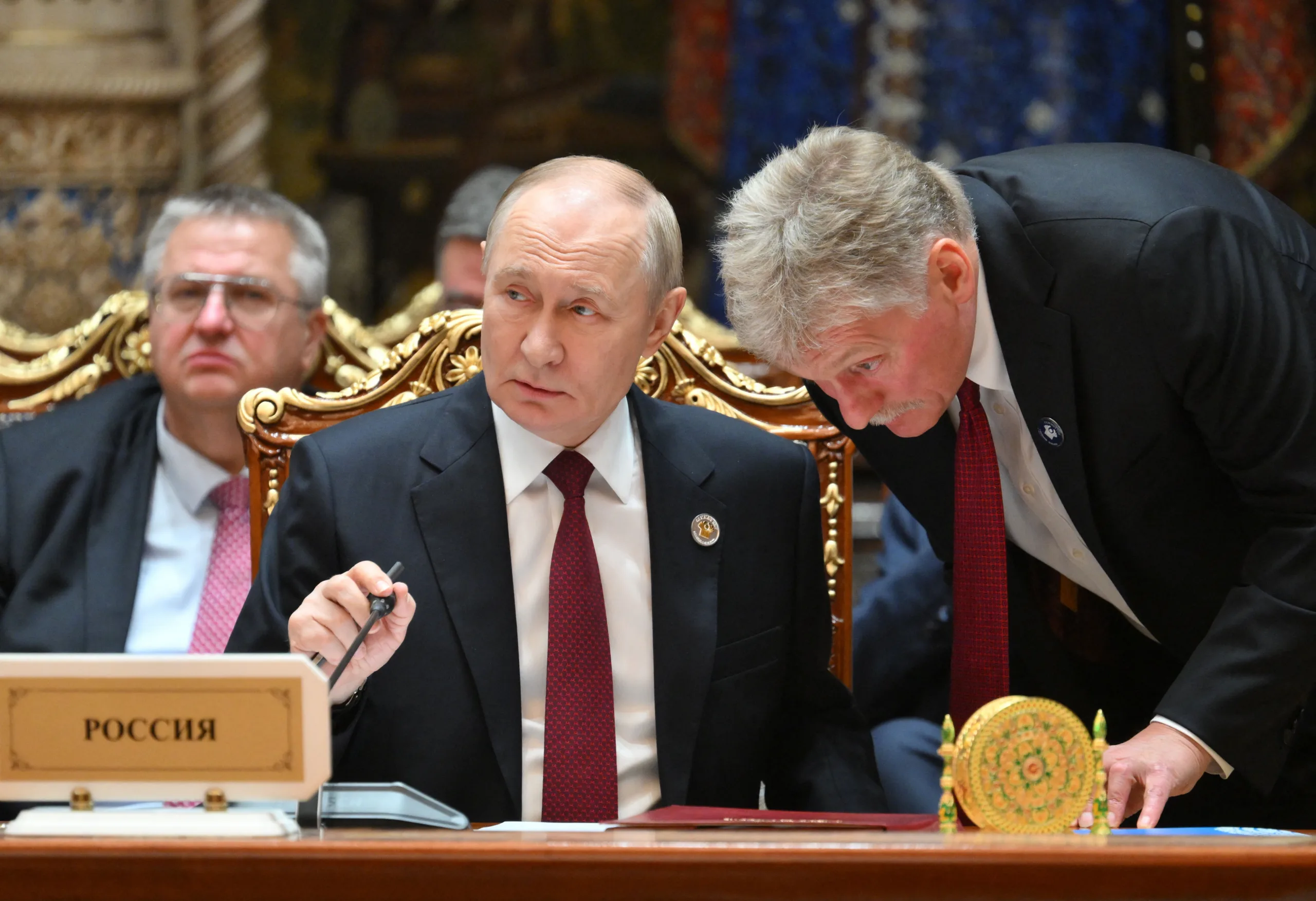
“Without a doubt, Russia supports Cuba’s aspirations to join the work within the BRICS,” said Kremlin spokesman Dmitri Peskov this Monday (14).
The statements were made during his daily press conference, when commenting on the results of the 18th BRICS Summit, held over the weekend in New Delhi. Peskov, however, clarified that, during the meeting, “candidacies from countries for expansion” of the bloc were not specifically discussed.
In January 2025, during Russia’s rotating presidency, Cuba was incorporated into the BRICS as a partner country, a condition that allows economies from the Global South to be integrated into economic, commercial and financial cooperation projects, without implying immediate full membership.
Currently, the BRICS are made up of 11 full members and 10 partner countries, among which Bolivia and Cuba are the only two Latin American countries.
In a context in which the Caribbean island suffers constant aggression from the United States, Havana seeks that its presence in the BRICS allows it to facilitate alternative payment mechanisms to those controlled by the United States, in addition to promoting bilateral trade and investment agreements, in the midst of serious energy asphyxiation and the blockade imposed by the American government.
The possibility of Cuba joining the bloc as a full member, with the support of Russia, would expand the Caribbean island’s possibilities of facing current challenges.
BRICS final statement supports Cuba
In the final declaration of the summit, the bloc’s member countries expressed their “deep concern” about the situation in Cuba and the effects of the tightening of the United States blockade on the Cuban economy, energy supplies and the humanitarian conditions of the population.
The document, made up of 140 points, included a specific reference to Cuba and reiterated the need to put an end to the economic, commercial and financial measures applied against the island.
Likewise, the Brics expressed their rejection of the unilateral lists drawn up outside the United Nations and, in particular, the arbitrary inclusion of countries in the US list of “States Sponsors of Terrorism”, in which Cuba appears.
The statement pointed out that these designations deepen financial difficulties and make bank transfers difficult, worsening the socioeconomic situation of the affected countries.
The document also reaffirmed that Latin America and the Caribbean must be considered a zone of peace, based on mutual respect, the peaceful resolution of disputes and the principle of non-intervention.
Bruno Rodríguez denounces the blockade
After the summit, Cuban Foreign Minister Bruno Rodríguez once again denounced the United States blockade through his social networks. The minister stated that the Brics declaration recognizes Washington’s hostile policy measures and “their adverse effects on the Cuban economy, energy supplies and the worrying humanitarian impact” on the population.
During his intervention at the summit, Rodríguez once again classified the economic, commercial and financial blockade against Cuba as a “collective punishment” against the Cuban people and stated that this policy had been intensified to unprecedented levels.
The chancellor stated that its indiscriminate and humanitarian effects cause deep suffering among Cuban families and maintained that the blockade constitutes the instrument chosen by the United States to try to promote “regime change” on the island.
Source: www.brasildefato.com.br