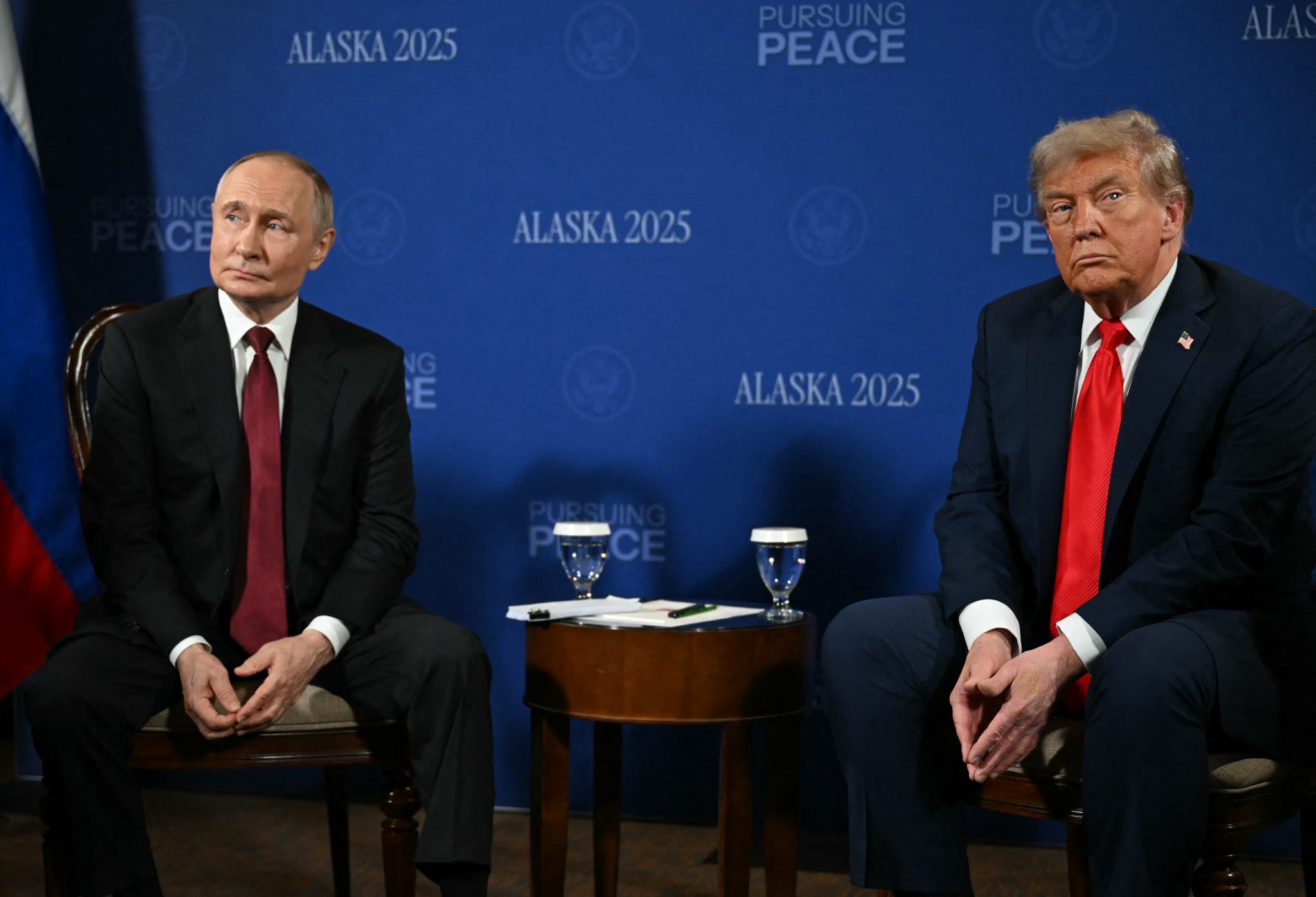
Russia’s Deputy Minister of Foreign Affairs, Serguei Ryabkov, declared this Tuesday (13) that the result of the telephone conversation between Presidents Vladimir Putin and Donald Trump is “unprecedented”. According to him, the agreement on the supply of Russian diesel surprised the “war party”.
“It is clear that the effectiveness — the absolutely unprecedented result of the telephone conversation between the presidents [russo e americano]which occurred two days ago — surprised many in the war party,” said the deputy minister.
At the same time, Ryabkov rejected suggestions that Moscow made some kind of concession on Ukraine war negotiations by agreeing to the diesel deal with the US.
The Vice Chancellor also highlighted that Moscow, on diesel, is convincing those who have not yet realized that the Russian side will achieve its goals regarding the war in Ukraine.
“We have always defended and continue to defend a solution [política]. If the other side is not prepared for this, its objectives will be achieved militarily, which will weaken the other side’s negotiating position. The sooner they realize this, the better. I think the so-called diesel agreement is doing a great job of convincing those who haven’t yet understood this”, he stressed.
The presidents of Russia and the USA, Vladimir Putin and Donald Trump, announced an agreement on the supply of Russian diesel last Friday (9). Following the announcement, Russian Deputy Prime Minister Alexander Novak announced Russia’s readiness to export 300 thousand tons of diesel in October, 500 thousand tons in November and 1 million tons in December. Subsequently, the volume of deliveries could reach 3 million tons per month.
Russian Finance Minister Anton Siluanov, in turn, declared that the diesel supply agreement with the US is beneficial for Russia. According to him, the agreement will allow national companies to increase their revenue and will have a positive impact on the country’s balance of payments.
“Our companies will have the opportunity to export diesel, earn income and foreign exchange from this. This is important for our balance of payments and for companies, first of all, of course,” Siluanov said during a meeting with journalists in the State Duma.
The spokesman for the Russian presidency, Dmitry Peskov, declared this Tuesday (13) that the “diesel agreement” was in the interests of both Russia and the USA, as well as global energy markets.
Understand the diesel agreement
The agreement announced by Donald Trump provides for the resumption of exports of Russian diesel to international markets, including the United States, after Washington temporarily eases sanctions against the fuel.
The measure comes amid rising fuel prices in the United States, ahead of the November legislative elections. Trump presents the release of Russian diesel as an alternative to expand supply and alleviate costs for consumers, farmers and transporters. However, analyzes published by The Washington Post and by Financial Times point out that the immediate economic impact tends to be limited.
According to the publications, the announced volume is equivalent to approximately 74 thousand barrels per day, around 2% of US diesel production, estimated at 3.6 million barrels per day. The reduced scale makes a significant drop in prices in the United States unlikely, especially given the international shortage of refining capacity and the instability caused by the war in the Middle East.
The agreement also has political implications that go beyond the energy market. The easing of sanctions opens up a revenue opportunity for Russian companies and weakens the West’s strategy of economic isolation over Moscow. At the same time, the initiative exposes differences between Washington and its European allies, who continue to expand restrictions against Russia.
EU sanctions
While Washington and Moscow celebrate an unprecedented agreement on the supply of diesel, the European Union adopts more sanctions against Russia. On October 10, the head of European diplomacy, Kaja Kallas, announced the 22nd package of EU sanctions against Russia. According to her, this will be the biggest since the start of the conflict in Ukraine.
Kallas clarified that the new restrictions target the Russian military industry. The package provides for sanctions against ballistic missile manufacturers and companies that produce special fabrics, synthetic fibers and carbon fibers for missile systems. The lists will include more than 1,600 individuals and organizations.
The sanctions policy occurs in parallel with a specific rapprochement between Moscow and Washington in the energy sector, highlighting the difference in approach between the United States and European countries towards Russia. While the Trump administration negotiates the supply of Russian diesel, the EU maintains its strategy of increasing economic and technological restrictions against Moscow.
Commenting on the new package, Russian Vice Chancellor Serguei Ryabkov stated that Russia’s relations with the European Union are at a critical point, but attributed responsibility for the situation to the Europeans.
“We, of course, understand that relations with the European Union, with the West as a whole, are currently at a critical point. But we are not responsible for that,” he said.
Ryabkov also criticized the succession of restrictive measures adopted by the European bloc and stated that the sanctions packages end up contradicting each other.
The vice chancellor added that Moscow does not consider European measures capable of changing the direction of Russian politics. “Let them continue presenting their packages. These packages have no meaning whatsoever”, he concluded.
Source: www.brasildefato.com.br