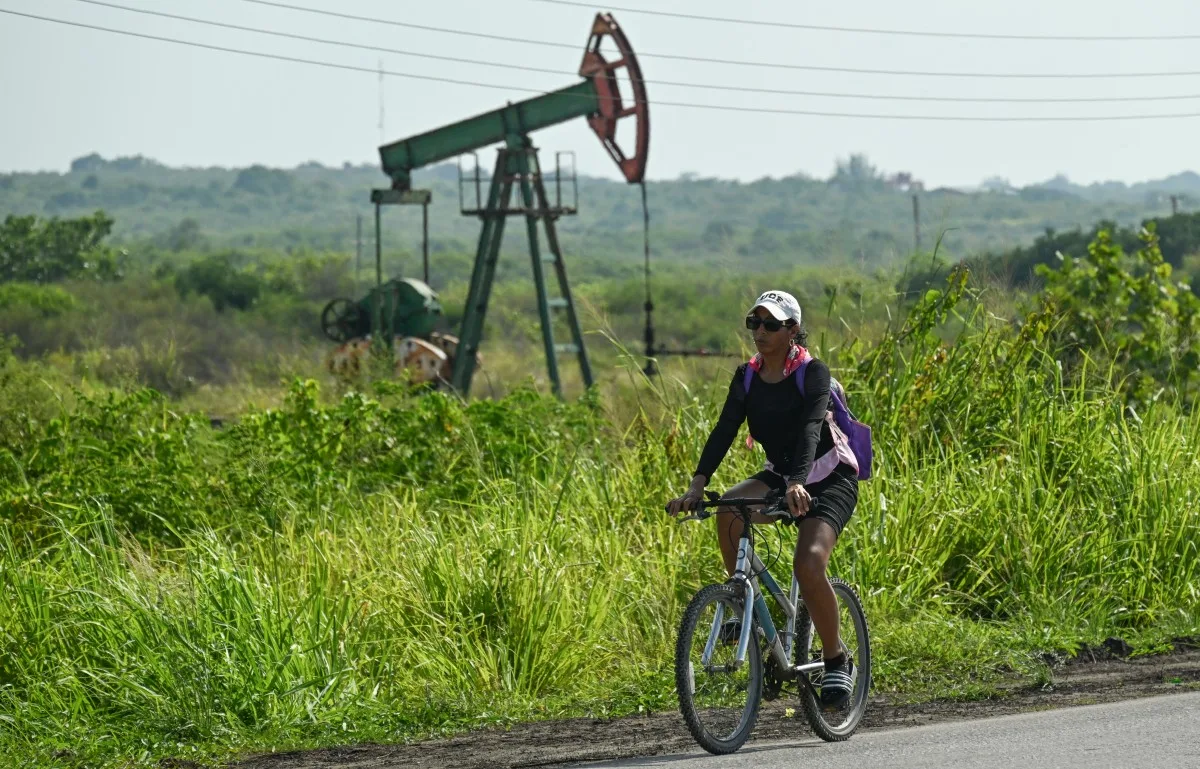
The Cuban government announced this Monday (12) new legislation that updates the standards for the exploration, production and development of hydrocarbons and expands the possibilities for participation of foreign investors and national private economic actors at different stages of the sector’s value chain.
One of the main new features is the inclusion of oil concessions that can extend for up to 40 years. This modality allows a foreign or private company to assume the investments and financial risks of the activity and, in return, become the owner of the extracted hydrocarbons, with the obligation to pay taxes and other compensation to the Cuban State.
This is an important change in a strategic sector of the Cuban economy. The initiative is part of 176 economic transformation measures aimed at expanding private sector participation on the island, whose implementation began in June this year.
The legislation also provides for shared production contracts between the Cuban State and private foreign companies, lasting up to 50 years. This modality has existed on the island since the 1990s, especially in hydrocarbon exploration and production activities, after the fall of socialism in Europe, which left Cuba without its main economic partner.
Cuban micro, small and medium-sized companies (mipymes) will also be able to participate in different stages of the value chain, from the exploration and extraction of hydrocarbons to the supply of goods, the provision of services and marketing. Furthermore, the legislation establishes priority for Cuban capital over foreign alternatives.
When presenting the initiative, Pedro Abigantus León, director of Investments and Oil and Gas Business at the Ministry of Energy and Mines (MINEM), highlighted that the decree reaffirms that “the deposits of oil, gas and substances that accompany them, found in the subsoil of the national territory, whatever their physical state, are the socialist property of the entire people and are subject to the principles of inalienability, imprescriptibility and unseizability”.
The change comes at a time of deep difficulties for the island. Since the beginning of the year, Cuba has faced an energy blockade imposed by the United States, which UN human rights experts classified as a “colonial practice”. Energy asphyxiation affects the population’s daily life and worsens the country’s economic difficulties. According to registered complaints, in recent months there has been a significant increase in infant mortality and deaths of people with chronic illnesses. Several human rights experts also warned that these measures could constitute a “genocidal” act, considering them a form of “collective punishment” against the entire population.
Cuba produces around 35% of the oil needed to meet national demand. The remaining 65% needs to be imported, but this possibility has been seriously hampered since January by Washington’s measures, which threaten to sanction any non-US country or entity that “sells or supplies oil to the island”.
In this context, the new legislation seeks to create the necessary legal conditions to progressively increase the national production of crude oil and natural gas and alleviate the demand for fuels and their derivatives, while the Cuban State advances its energy transition strategy towards clean sources.
Source: www.brasildefato.com.br