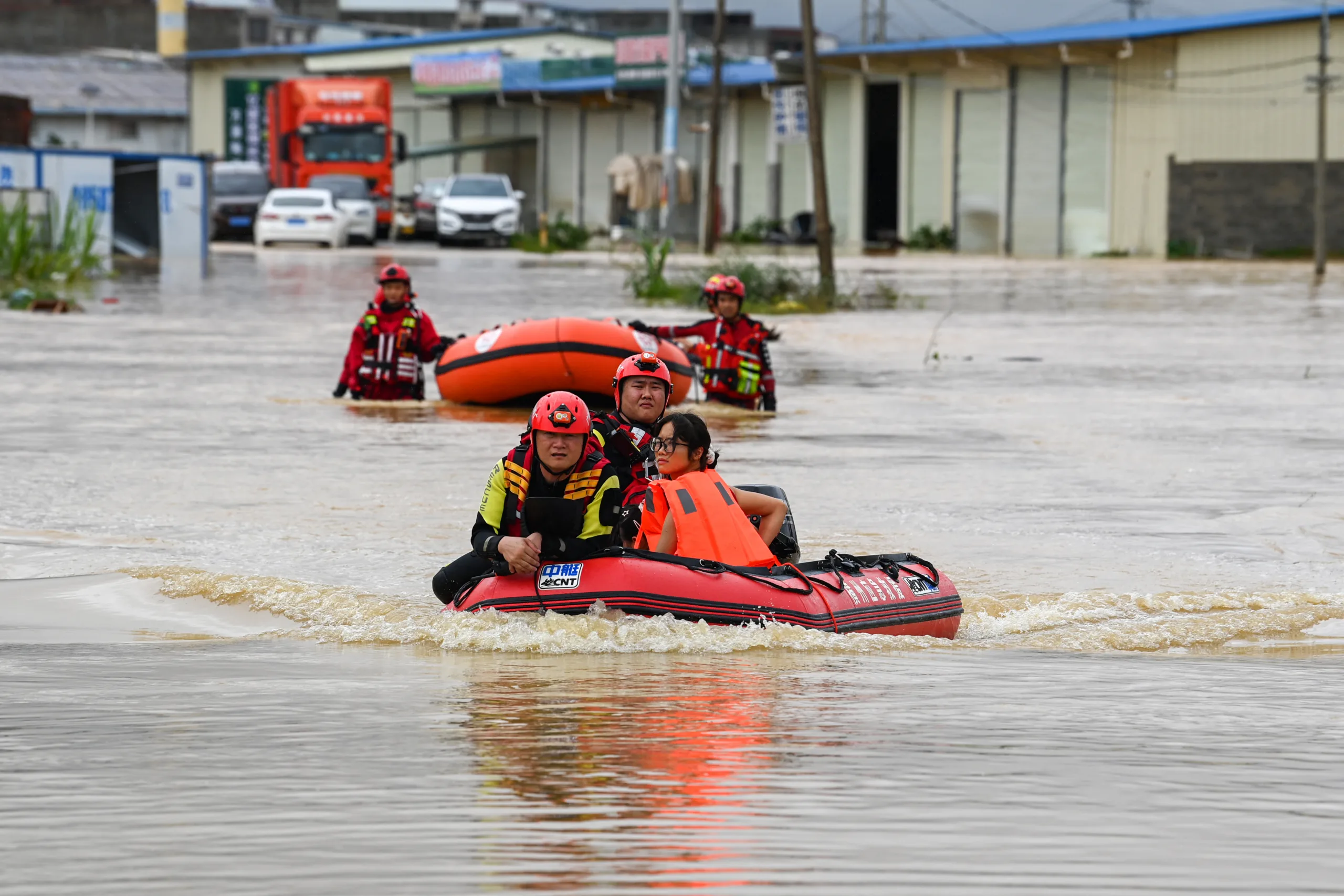
Rescue teams remain mobilized in Hengzhouna, the Chinese autonomous region of Guangxi Zhuang, in southern China, where Typhoon Maysak caused at least four deaths and left eight people missing, according to the agency. China News Service (CNS). Hengzhou — which belongs to the capital of Guangxi, Nanning — bears the biggest impact of the disaster so far: 84,700 residents were affected by the rains and more than 53,800 had to leave their homes. In neighboring Binyang County, another 8,606 people were also evacuated from risk areas.
This Tuesday morning (7), the Guangxi Hydrology Center issued a red flood alert, the highest level in the Chinese alert system, for eight municipalities in the region. The agency reported that this is the second flood of the Xi River this year and pointed out that 55 rivers with 70 monitoring stations remain above the alert level, with some stations 7.46 meters above the limit. For the next 24 hours, the section of the Yujiang River that passes through Nanning must exceed the limit level for which the containment works were built by 1.5 meters; the section in the city of Guigang is expected to exceed the alert by 6.3 meters.
In Hengzhou, rescue work with boats continues. Elderly people, children and people with special needs were prioritized by emergency teams in the first operations.
The Liulan and Yunbiao reservoirs, in Hengzhou, suffered ruptures on Monday (6) with the increase in water levels caused by Typhoon Maysak, according to the CCTV.
Of the 55,000 people affected downstream of reservoirs across the city, 48,000 were evacuated through early warnings, targeted notifications and emergency evacuations, Nanning vice-mayor Wei Jiang said at a press conference on Monday night (6).
On Sunday night, the Ministry of Emergency Management deployed two Wing Loong drones to establish temporary cellular network coverage. On Monday morning (6), heavy-lift drones began transporting food and drinking water to locations without road access.
The National Development and Reform Commission had released 100 million yuan (about R$76 million) on Monday for the reconstruction of infrastructure damaged by the floods. In the autonomous region, 150,000 humanitarian aid items have already been distributed to Guangxi, such as tents, folding beds, blankets and emergency kits.
Other regions on alert
In Jiande, in Zhejiang province, in the east of the country, sudden rains on Saturday afternoon (5) triggered landslides in multiple locations. Rural roads, water supplies and power supplies suffered damage. Authorities completed the evacuation of 290 residents overnight, before the waters rose even further, according to the CCTV.
In the northeast, Jilin province activated level IV emergency response for flood control on Saturday (5). Rivers in the central and eastern regions of the province exceeded alert limits and 24 reservoirs exceeded their maximum flood control capacity. The local weather forecast indicates heavy rain with thunderstorms in the coming days in several cities, including the capital Changchun.
Extreme weather events
In Guangxi, conditions were already critical before Typhoon Maysak arrived. According to the Climate Center of the Autonomous Region, the average temperature in the pre-season period reached 25.6 degrees Celsius, the highest since 1961. The region has recorded 11 rounds of intense rain and eight strong storms since the beginning of the season, saturating the soil even before the typhoon arrived.
With Maysak over the territory, records increased. Between July 3 and 5, 61 monitoring stations in Guangxi recorded rates above local historical maximums, according to the same center. In 24 hours, Luqui station in Binyang County accumulated 713.3 millimeters of rain, breaking Nanning’s historical record and ranking as the second highest daily rainfall ever recorded in the entire history of Guangxi.
Source: www.brasildefato.com.br