Published 11/05/2026 12:46 | Edited 11/05/2026 13:27
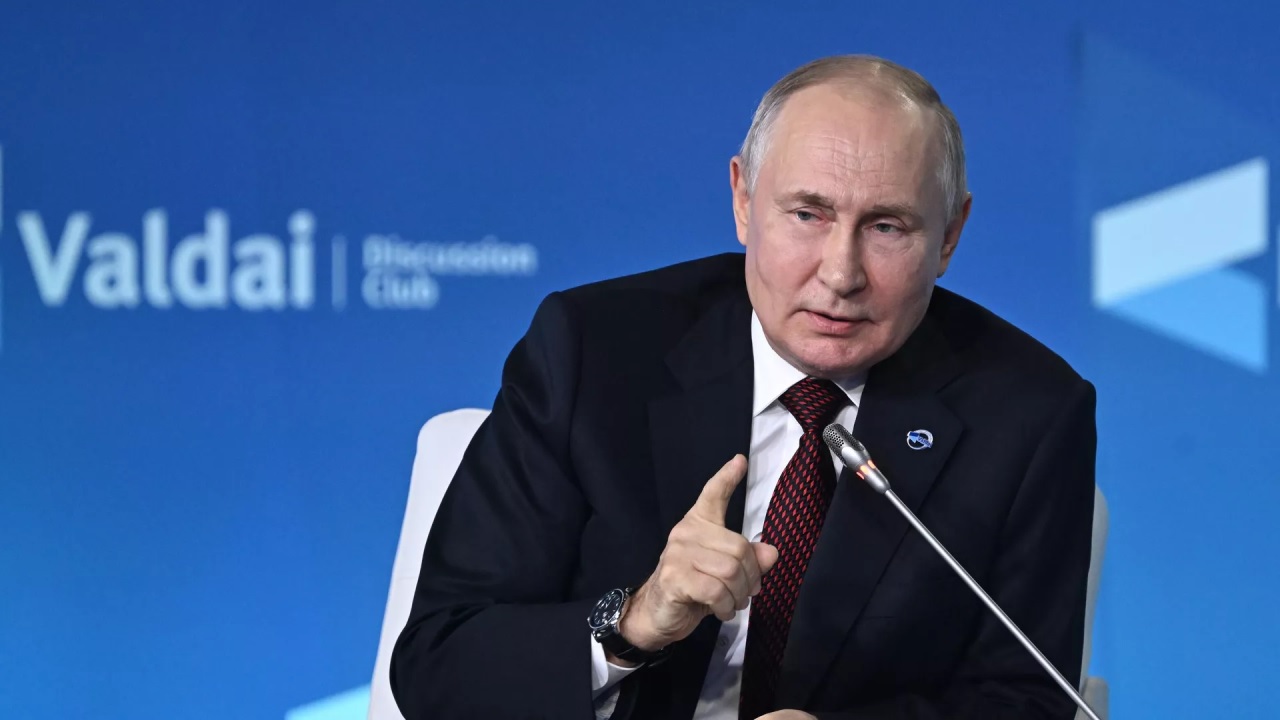
Russian President Vladimir Putin said this Saturday (9) that he believes the war in Ukraine “is coming to an end” and appointed former German Chancellor Gerhard Schröder as his preferred European interlocutor for future peace negotiations.
The statements took place in the Kremlin after celebrations for Victory Day, the date that marks the defeat of Nazi Germany by the Soviet Union in the Second World War.
Commenting on the conflict that began after the escalation of the crisis between Russia, NATO and Ukraine, Putin stated that “the issue is coming to an end” and once again defended a negotiated solution based on long-term guarantees for Moscow.
The Russian president also said he was willing to meet with Ukrainian President Volodymyr Zelensky.
“A meeting in a third country would be possible, but only if there is a definitive agreement on a peace treaty with a long-term perspective,” Putin declared, according to the Russian state agency TASS.
The Kremlin has insisted that any negotiations must take into account what Moscow calls the “root causes of the conflict”, including NATO’s expansion into Eastern Europe and Western military support for Kiev.
When asked about the possibility of negotiations with European leaders, Putin replied that his preference would be to talk to Gerhard Schröder, Chancellor of Germany between 1998 and 2005 and one of the few European leaders who maintained political relations with Moscow even after the conflict worsened.
“Of all European politicians, I would prefer to talk to Schröder,” he said.
Schröder became an isolated figure after rapprochement with Moscow
Schröder has had a close relationship with Putin for more than two decades and was one of the main supporters of energy cooperation between Germany and Russia.
During his government, he supported the Nord Stream gas pipeline projects and deepened economic ties between Berlin and Moscow. After leaving office, he held positions in Russian companies such as Gazprom, Rosneft and Nord Stream AG.
His proximity to the Kremlin made the former Social Democratic leader a constant target of criticism in Germany and other European countries after the start of the war in 2022.
The German Parliament withdrew privileges granted to former chancellors, while leaders of the Social Democratic Party (SPD) tried to expel him from the party.
Even so, Schröder continued to advocate a diplomatic solution to the conflict. In recent interviews with the German press, he stated that direct negotiations with Putin would be “the only way” to end the war and argued that a total defeat for either side would not be viable.
He also criticized the attempt to transform Russia into Europe’s “eternal enemy”.
Putin’s choice of Schröder comes amid signs of diplomatic movement in Europe. The newspaper Financial Times reported this week that European governments are discussing possible scenarios for future negotiations, while the Kremlin declared that it is up to European countries to resume interrupted diplomatic contacts after 2022.
Celebration of Victory Day reinforces Russian discourse on confrontation with NATO
Putin’s statements came after the Victory Day parade in Moscow, the main civic-military date in contemporary Russia. The event honors the Soviet victory over Nazism and has been used by the Kremlin to reinforce the narrative that the country is once again facing a strategic confrontation with the West.
In his official speech, Putin once again stated that Russia faces “the entire NATO bloc” in the Ukrainian conflict and praised Russian forces for the military “advances” made in recent months. Moscow maintains that the war is no longer just a bilateral confrontation with Kiev and has now directly involved the military and political structure of the Atlantic alliance.
Despite the enormous human and economic cost of the war, Russia has expanded its military industrial capacity in recent years and deepened relations with countries in the Global South, including China, India and members of the BRICS. The Kremlin is also seeking to break the diplomatic isolation imposed by Western powers since 2022.
The possibility of negotiation remains surrounded by impasses. Moscow demands territorial recognition of the annexed regions and guarantees of Ukraine’s neutrality, while Kiev continues to defend Russia’s withdrawal from occupied territories and the maintenance of Western military support.
Source: vermelho.org.br