Published 04/28/2026 11:58 | Edited 04/28/2026 20:17
Marked by political instability and technical incidents that made vote counting slow, the 2026 Peruvian elections represent a challenging moment for progressive and left-wing forces. With the second round scheduled for June 7, these forces face the difficult task of mobilizing a skeptical electorate and circumventing the logistical obstacles and risks of fraud registered on the day of the first round, on April 12, to ensure their relevance in the country’s political future. These elections take place after a severe political crisis. Since the last election, in 2021, Peru has experienced a severe political crisis that resulted in the formation of four governments.
At the time we write this article (April 28), the count in Peru keeps the right-wing Keiko Fujimori, daughter of former dictator Alberto Fujimori (1938-2024), in the lead. The scenario, marked by fragmentation and low percentage advantage, raises warnings about the risks of a conservative turn, at the same time as it opens up a perspective for the left.
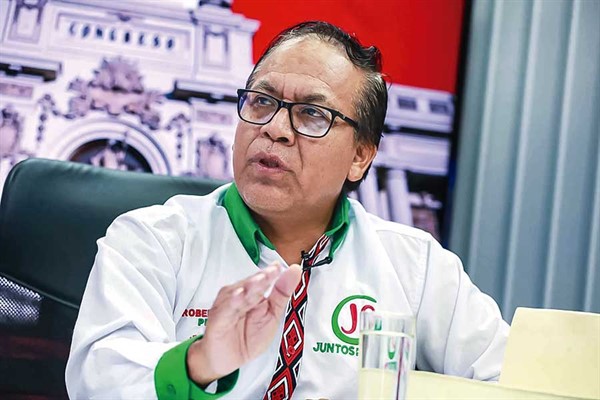
According to official data from the National Office of Electoral Processes (ONPE), around 96% of the minutes have already been counted, with Keiko ahead with approximately 17% of valid votes. The dispute for the second place remains tight, with Roberto Sánchez, from Juntos por el Perú, on the left, slightly ahead of Rafael López Aliaga, ultra-rightist, known as the Peruvian Bolsonaro. Both orbit around the 12% and 11.9% range, respectively, which keeps the final composition of the second round undefined.
Keiko’s advance, even without a significant majority, places the risk of a resumption of right-wing policies at the center of the debate, in a context of strong social dissatisfaction and economic deterioration. The fragmentation of the vote highlights a divided electorate, but also opens space for decisive rearrangements in the final stage.
In this scenario, a possible trip by Roberto Sánchez to the second round could represent a concrete opportunity for the consolidation of a broader progressive field. The ability to unify dispersed sectors and capture the rejection vote on the right will be decisive.
The region’s recent experience indicates that polarized disputes tend to be defined in the second round. If Sánchez advances and manages to expand alliances, expectations of a progressive victory gain strength, especially given the lack of hegemony of any candidate in the first round.
With the final totalization still in progress, Peru is approaching a decision that goes beyond the choice of names and reflects a political crossroads. The second round, scheduled for June, will be a confrontation between opposing country projects.
Colombia: polls indicate an advantage for Iván Cepeda, from the progressive Historic Pact
Iván Cepeda’s leadership in the polls for the Colombian presidential election indicates a possible continuity of Gustavo Petro’s government. With 36% of voting intentions and an advantage of 15 percentage points over the two main right-wing candidates – Abelardo la Espriella and Paloma Valencia, who is linked to former president Álvaro Uribe, the Historic Pact candidate emerges as the protagonist of an increasingly fierce dispute.
The most relevant data is not just the lead in the first round, but the projected advantage in scenarios of the second round, on June 21, when a fierce dispute is expected between Cepeda and one of the two right-wingers who advances to that stage.
The Colombian election reflects not only a struggle between personalities, but a broader clash over the political direction of the country, which finds itself at a historic crossroads, between maintaining the progressive cycle inaugurated with Gustavo Petro’s government or going back to dark times under the leadership of anti-democratic and pro-imperialist right-wing forces.
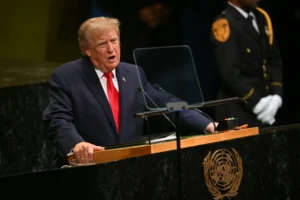
The people of Latin America and the Caribbean are not indifferent to what could happen in Peru and Colombia. An electoral victory for right-wing forces increases the risks of neocolonialism, neoliberalism and authoritarianism, especially considering the United States national security strategy announced by Donald Trump in November last year, in which he proclaims a new version of the infamous Monroe Doctrine. On the other hand, a progressive victory opens up the prospect of a new role for Celac, the Community of Latin American and Caribbean States, and accumulates strength to develop the anti-imperialist struggle in better conditions.
Source: vermelho.org.br