Published 04/28/2026 11:30 | Edited 04/28/2026 11:38
From listening to the body, from memory to the future, from culture to politics. The 7th Latin American and Caribbean Congress of Community Living Culture, held in Colombia, revealed more than a cultural meeting. It demonstrates that there is a political-cultural project underway on the Latin American continent, based on culture, from a perspective of social transformation.
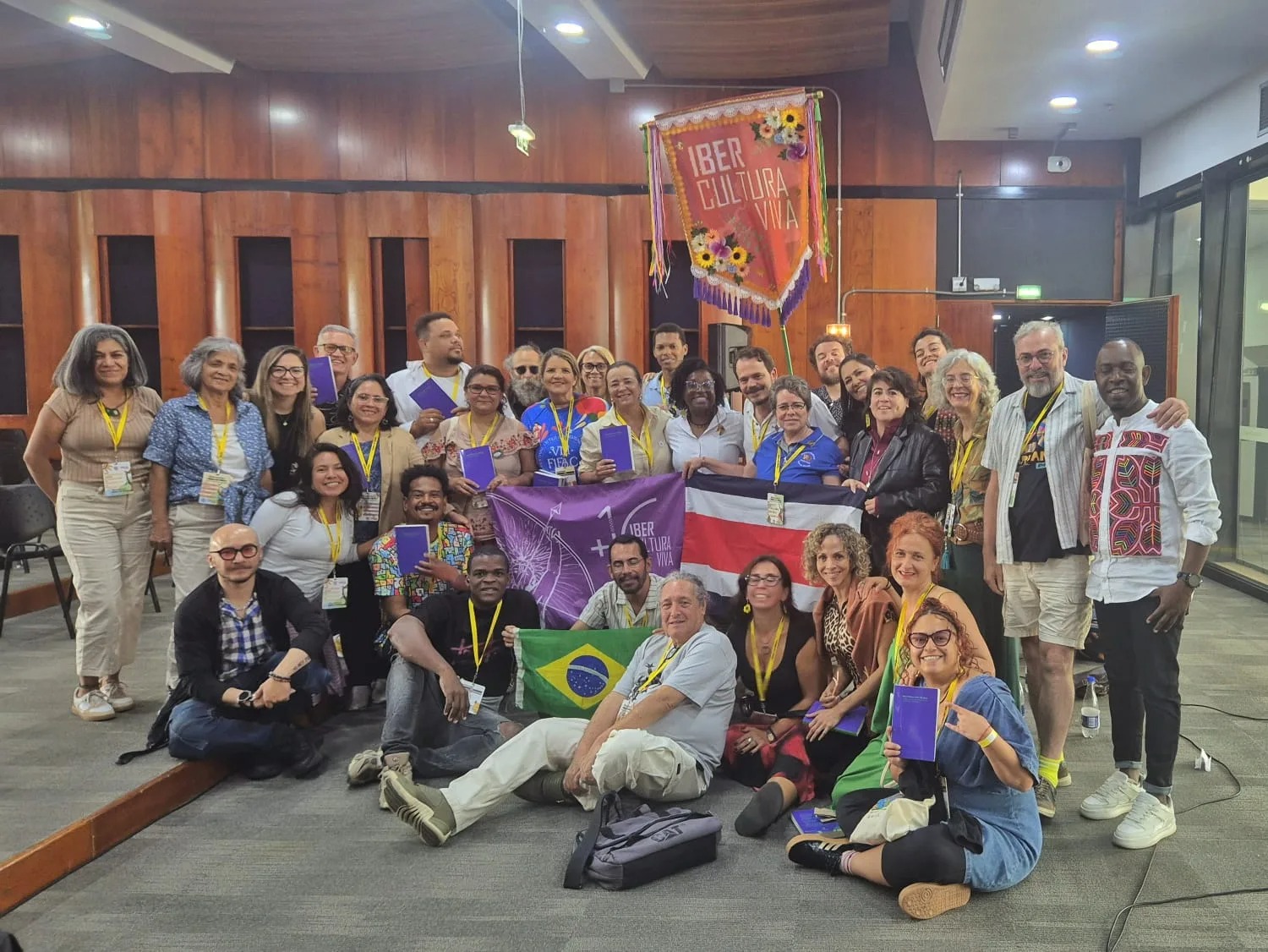
Bringing together around 400 representatives from 23 countries, the congress covered territories such as Nariño, Putumayo, Valle del Cauca, Cáli and Medellín, connecting community experiences, cultural networks and public policies in a journey that synthesizes more than two decades of collective construction.
“Getting to this Congress was a journey that has already taken more than two decades, in which the National Policy for Living Culture and Brazil’s Culture Points inspired community cultural organizations, local governments and cultural movements in several countries”, says Alexandre Santini, current president of the Casa de Rui Barbosa Foundation, linked to the Ministry of Culture, and a historical activist of the Latin American Community Living Culture movement, having participated in all editions of the meeting.
The speech was recorded during one of the congress panels, in a space for collective debate that brings together representatives from different countries. For him, the current moment requires a clear political position. “At a time when Latin America is under attack and a strong offensive, affirming culture as a powerful tool for social transformation and building new utopias is possible and necessary”, he adds (https://www.instagram.com/reel/DXZTlpbjfYo/).
The choice of Colombia as the headquarters is not accidental. The country occupies a vanguard position in the formulation of public policies on community culture in Latin America, with experiences that articulate territory, participation and state action. In Medellín, culture has consolidated itself as a strategic axis of public policy, with a direct impact on social organization and the reduction of inequalities. This accumulation dialogues directly with the trajectory of the movement itself, which has been structured since 2011, from the Puente Platform, in Medellín, and gained a continental dimension in the first congress held in La Paz, in 2013.
Since then, Cultura Viva Comunitária has expanded as a network, coordinating community-based initiatives in different countries and consolidating itself as one of the main cultural organization experiences on the continent. In Cali, the CaminAndar seminar, the word in movement, highlighted the method that supports this process, based on listening, the exchange of experiences and direct participation, bringing together representatives from different countries in debates that start from the concrete practices of the territories.
This dynamic is deepened in the Circles of the Word and in the work of the IberCultura Viva Educational Network, which connects universities, collectives and popular knowledge. “Community knowledge teaches us that the most important thing is not always in the protocols, but in the living experience of the people”, stated João Pontes, Director of the National Policy for Living Culture at the Ministry of Culture, highlighting that it is in territories that cultural policy gains consistency and capacity for transformation.
In the final stage, Medellín brought together political articulation activities and cultural expressions on the streets, connecting institutional debate with living cultural practices. The congress also revisited its trajectory and consolidated its accumulations. The screening of the documentary “Fantasma Dressed as a Clown”, by filmmaker Alessandra Stropp, recovered the origins of the movement from the experiences of Pontos de Cultura and is available online (https://youtu.be/pCTOb8zbFuY?si=eShVhmjwO7C5s7if). The launch of the book marking the 10th anniversary of IberCultura Viva brought together data, analyzes and experiences that systematize a decade of community cultural policies on the continent, transforming this accumulation into a reference for new formulations.
The General Assembly of Congress also approved documents of solidarity and support for Cuba and Venezuela. The approved texts state that “sovereignty is our master collective work”, and denounce external interventions in Latin American countries, reinforcing that “culture cannot be neutral. The art that does not denounce is complicit”. When dealing with Venezuela, the text points out that “it is not a legacy solely in Venezuelan soil; it is a legacy in the heart of the entire continent”, placing the episode as part of a broader geopolitical dispute.
Regarding Cuba, the document takes on an even more direct tone by classifying the blockade as “a silent genocide disguised as sanctions” and stating that “Cuba is not alone, because Cuba is the moral reserve of humanity”. This scenario was detailed by the Cuban delegation present at Congress, with reports of food shortages, lack of fuel, difficulties in accessing medicines and limitations on cultural circulation, directly impacting the functioning of communities and their projects.
Even in the face of these conditions, Cultura Viva Comunitária understands celebration and encounter as forms of organization and resistance. In this context, the final Plenary of the 7th Congress, held at the Teatro Popular Comandante Camilo Torres, at the University of Antioquia, in Medellín, ratified the proposal to hold the next Latin American Congress on Community Living Culture in Cuba, in the year 2028. Holding the Congress in Cuba represents a bet on the future of the country, and its construction will be the result of a cooperative and supportive process on the part of the Community Living Culture Movement.
Likewise, the proposal presented by Brazil to host the 9th Congress in 2030 was accepted. The country that inspired the Latin American continent with Cultura Viva and Pontos de Cultura will be the host of the continental meeting for the first time.
Throughout its trajectory, the Latin American Community Living Culture Movement consolidated its own form of articulation between culture, politics and territory, structured based on concrete experiences and cooperation between different actors. The Congress held in Colombia reaffirms this path by highlighting that Cultura Viva Comunitária does not only operate as a cultural policy, but as an instrument of social organization that understands culture as a strategic element for the construction of civilizing alternatives and social transformation on the Latin American continent.
Source: vermelho.org.br