Published 04/06/2026 14:02 | Edited 04/06/2026 14:06
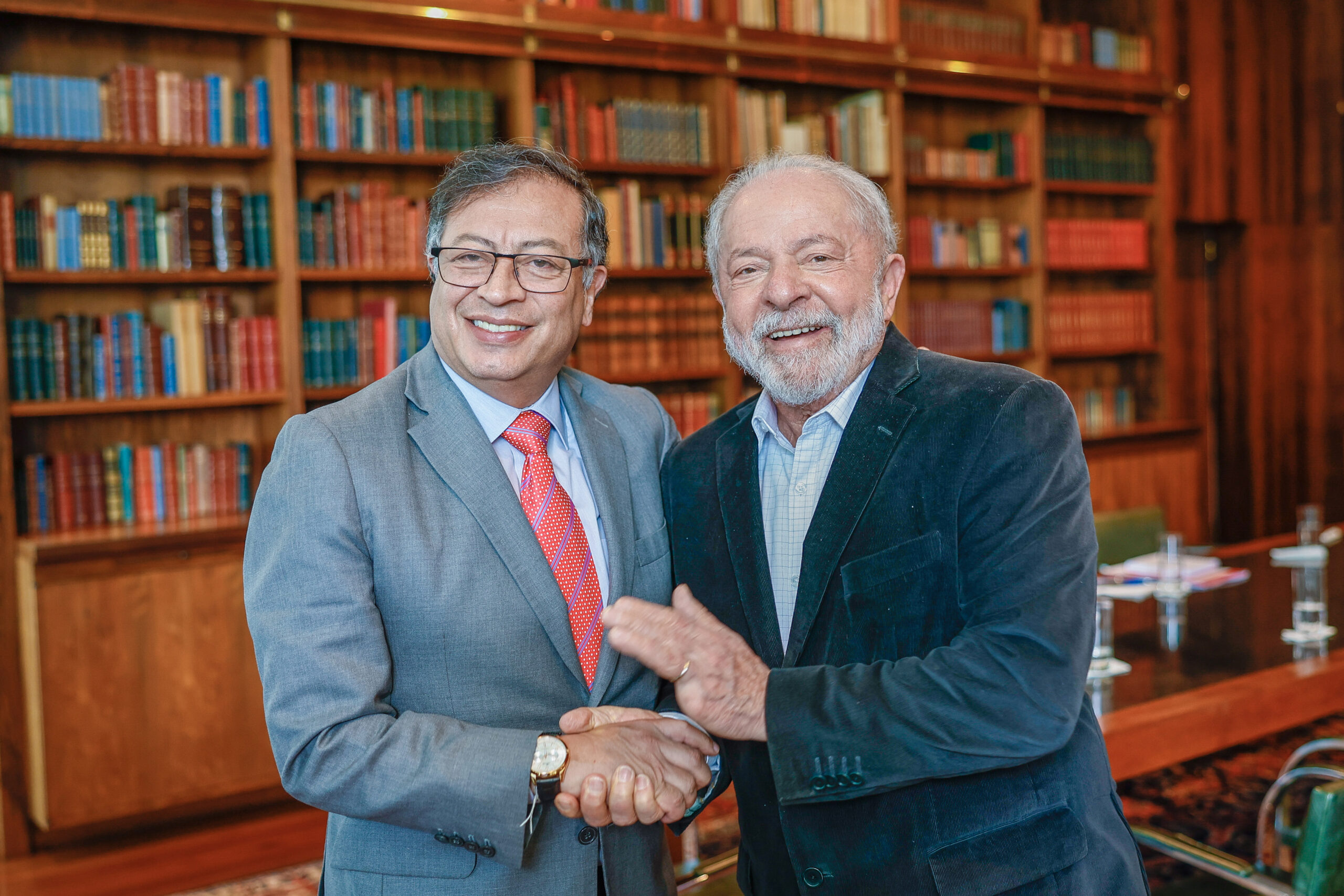
The President of Colombia, Gustavo Petro, defended this Saturday (4) the Brazilian instant payments system Pix as a more efficient alternative and condemned the report released by the Office of the United States Trade Representative – a body linked to the Trump administration – that the mechanism would represent a trade barrier.
The White House’s claim is that the system, created and operated by the Central Bank, could favor the public platform to the detriment of private foreign companies, such as Visa and Mastercard.
In December, Pix broke a record with more than 300 million operations in a single day, which reinforces its importance “as a public digital infrastructure, for the functioning of the national economy”, explained the BC. In addition to the absolute supremacy in the number of operations, the ceiling in the volume of money moved was also recorded, with R$179.9 billion in 24 hours, being used by more than 170 million individuals, which corresponds to 80% of our population.
As a demonstration of the system’s success, PIX has found favor with establishments on different continents, especially in countries where there is a huge flow of Brazilians, such as Argentina, Uruguay, Portugal, France and the United States itself.
“I ask Brazil to extend the Pix system to Colombia, and to stop considering the list of sanctions from the Office of Foreign Assets Control (Ofac), which is no longer useful”, maintained Petro, for whom the tool “is no longer a weapon against drug trafficking”. In a blunt statement, the president stated that the body only serves to “persecute and subjugate political opposition around the world”.
In short, the president exemplified, Ofac is “an aberrant system of political control”, as leaders of international trafficking, who should be punished by the body, manage to circumvent it. “The traffickers ridicule her and stay in Dubai, where they buy homes for four million dollars and start living in luxury,” he highlighted.
Stifling increase in interest rates
In a blunt statement, Gustavo Petro rejected the “extortionate” increase in interest rates decreed last week by the Bank of the Republic (Central Bank), and defended the need to hold a National Constituent Assembly to put an end to the institution’s alleged “autonomy and independence”.
Petro emphasized that he “will not allow himself to be extorted” by a BC Board of Directors that has been acting as an instrument of neoliberalism and the extreme right. They are people who try to “increase the profits of the owners of public debt, who are the same bankers”. These gentlemen, he said, are enriching themselves with the devaluation of the peso, with the increase in financial costs and exports, “putting the standard of living and employment of the Colombian population at risk”.
Due to the fact that there is an institutional impasse – which currently foresees the independence of the BC -, maintained the Colombian leader, it is necessary for the government to be the catalyst for an in-depth discussion and mobilize society, which “must culminate in a Popular Constituent Assembly” that breaks once and for all with submission to bankers. After all, “by constitutional mandate, the Central Bank is subject to popular sovereignty”.
The statement in favor of the State’s action in this strategic sector of the economy reinforces the role of the executive and the mobilization of militancy two months before the presidential elections, when Iván Cepeda, candidate of the Historic Pact (Petro’s party), is considered the favorite.
Custom research from the far right
The president considers that the successive interest rate increases – which are ridiculously technically based on a “survey” with 26 key figures who are the bank owners themselves – are the “worst mistake in the nation’s history”. After all, he warned, it is nothing more than a setup aimed at “asphyxiating”, “slowing down the economy”, causing “artificial stagflation” and blaming the government, “killing the economy”. Obviously, “they are economists at the service of the extreme right”.
This was the reason why the Minister of Finance and Public Credit, Germán Ávila, explained the representative, for leaving the last meeting of the BC Board of Directors, not being an accomplice in the ongoing sabotage. The president announced that his government had withdrawn from the Council due to the fact that the BC had assumed a “suicidal opposition”, openly opposed to the national economy.
Group linked to the scum of Iván Duque
Most of the BC’s directors are made up of scum linked to former presidents Iván Duque Márquez (2018-2022) and Álvaro Uribe (2002-2010), and vassals of the financial system. Therefore, the increase to 11.25% in the interest rate when the economy needs to develop, reveals a “stupid alliance” between rentier and ultra-neoliberal sectors to maintain Colombia as one of the most unequal countries in the world, protested Petro.
In practice, he argued, this means a political agenda inherited from the previous administration, “an electoral act, not a scientific one”, as it has no support. And he reiterated: “the BC is trying to increase the profits of the owners of public debt, who are the same bankers”.
For the president, raising interest rates while the US Federal Reserve (Fed) keeps them unchanged is an “absurdity” that exclusively benefits public debt holders, to the detriment of the work of Colombian families.
“The distribution of national income prioritizes workers”
“The Colombian establishment wants an immediate end to the progressive period because it distributes national income prioritizing workers; therefore, through the Duque faction in the council, they want their economic model to be imposed again on the country, disregarding the popular mandate of the 2022 elections,” explained Petro.
The confrontation between the executive and the BC board takes place two months before the presidential elections, in which Iván Cepeda, candidate of the Historic Pact (Petro’s party), is considered the favorite.
The policy that the BC Council seeks to implement, warned Gustavo Petro, “is nothing more than conservative Uribism, addicted to neoliberal ideas that have already failed around the world”.
“BC Board of Directors has lost its independence”
“The Board of Directors of the Central Bank has lost its independence. The majority of the board disregarded the 1991 Constitution, which requires coordination with the government. It subjugated it with its ignorant decision,” the president emphasized.
Furthermore, the representative pointed out direct conflicts of interest, mentioning that the presence of Bibiana Taobada, daughter of former minister Alicia Arango on the council (appointed by Iván Duque), links the BC’s decisions to the opposition’s electoral campaign, specifically to that of senator Paloma Valencia, Uribista candidate for the “Democratic Center”. “It is not independent of the electoral politics of mother Alicia, who is now the campaign coordinator for candidate Paloma Valencia”, he recalled.
In 2025, the Colombian Gross Domestic Product (GDP) grew 2.6%, but “experts” and “columnists” from the mainstream media – marked letters from the USA and the opposition – shouted that this would cause a “high fiscal deficit” due to “increased public spending” and “significant investments in social programs”.
Another supposed “concern” of the far right is that Petro decreed a historic 23.7% increase in the minimum wage in 2026, a measure that, according to its “analysts”, “could put upward pressure on inflation”. In fact, what they fear is that by raising the minimum wage to 2 million Colombian pesos (around R$2,819), the “living wage” has significantly increased purchasing power, generated employment and contributed to reducing inequality. The increase far exceeds projected inflation (5.1%) and is the largest since 1997.
In a letter of support to the government, economists, academics, social movements, unions and community organizations argue that the abusive increase in the interest rate imposed by the BC throughout the year has been “a direct reaction to the increase in the minimum wage”, which penalizes families and small businesses.
Source: vermelho.org.br