Published 05/04/2026 14:45 | Edited 05/04/2026 15:11
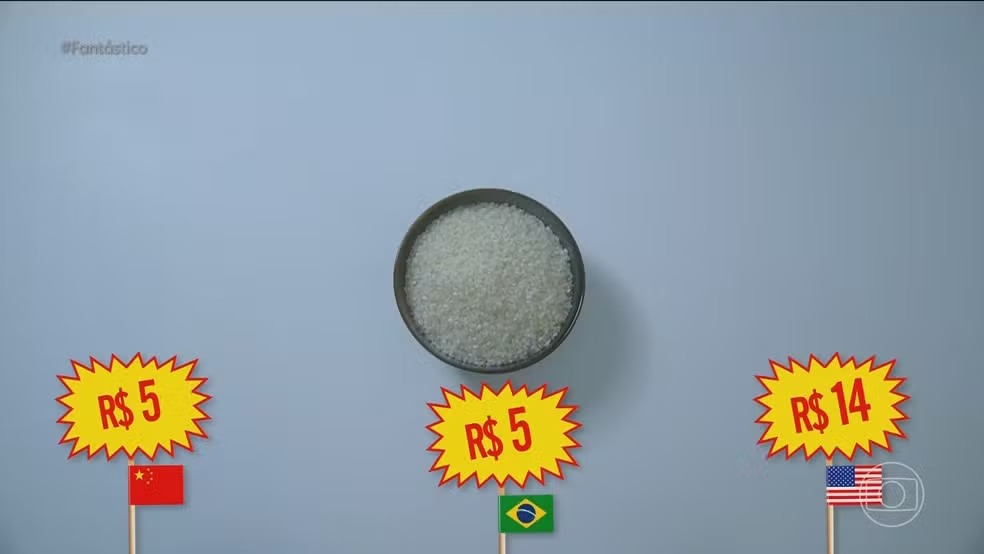
O Fantastic This Sunday (3) aired a new episode of the series “Between Two Worlds”, this time comparing China and the United States based on access to food and cost of living.
Not even TV Globo, historically aligned with the exaltation of the North American model, was able to avoid the material contrast when bringing the comparison between Chinese and North Americans into the daily lives of the population.
In the new episode of the series, it becomes clear that Chinese superiority is not limited to infrastructure — it appears directly in access to food, with fresher and cheaper food than in the USA.
If the previous week the broadcaster had already been led to recognize Chinese efficiency in public works, now the focus shifts to the population’s plate. And the result is even clearer.
The report shows that the Asian country has built an integrated food production, distribution and consumption strategy that reduces costs and expands access, while in the United States millions of people live with expensive or ultra-processed foods.
The contrast begins in the countryside — or rather, within the cities. In Shanghai, the Fantastic visited a 100,000 square meter greenhouse, where food is produced using technology and state subsidies.
“For each new vegetable they manage to produce here, they receive a subsidy from the government”, reports the report. The logic is clear: stimulate innovation to increase supply and reduce prices.
The report shows that “20% of the entire city area must be farmland”, a decision taken directly by the State. As all land is public, the government organizes the use of the territory, structures production and rents the areas to farmers. The result is a short chain: “the food comes out of the ground, goes straight to the refrigerator”, without the presence of private intermediaries that make the product more expensive.
The impact of this organization appears in the price. Under the program, wholesalers in China operate with a profit margin of about 3%, compared to 15% in the United States.
Furthermore, the State acts directly to stabilize the market, purchasing and releasing stocks according to price variations. “The more supply on the market, the cheaper it becomes”, summarizes the report.
The strategy also includes the formation of public reserves. In 2024, China harvested 700 million tons of grain, and more than half was purchased by the government, guaranteeing supply and price control.
It is a large-scale food security policy, built after the historical trauma of the 20th century hunger crises.
On the other side, the Fantastic shows an opposite scenario in the United States. In several regions, millions of people live in areas where the only option is fast food or ultra-processed foods, with direct impacts on health and life expectancy.
Food insecurity is compounded by rising prices, aggravated by international crises and dependence on long production chains.
Given this scenario, the report itself shows that initiatives in the United States are beginning to seek solutions similar to those adopted in China.
In New York, the new elected mayor, Zohran Mamdani, proposes creating popular markets with public subsidies to reduce food prices — an initiative that, in practice, is inspired by the Chinese model.
At the same time, the series shows that access to cheap food in China is not the result of the market, but of deliberate policy.
Production subsidies, technological investment, logistical control and the use of real-time data allow the State to monitor and influence prices.
“China solves the food price problem with a great State strategy”, summarizes the report.
Even the comparison with social programs reinforces the contrast. While the United States spends billions to help populations that are unable to buy food, China acts at the source of the problem, reducing the final price for consumers.
The result, as shown in the images of the Fantasticis a population with wider access to fresh food on a daily basis.
Source: vermelho.org.br