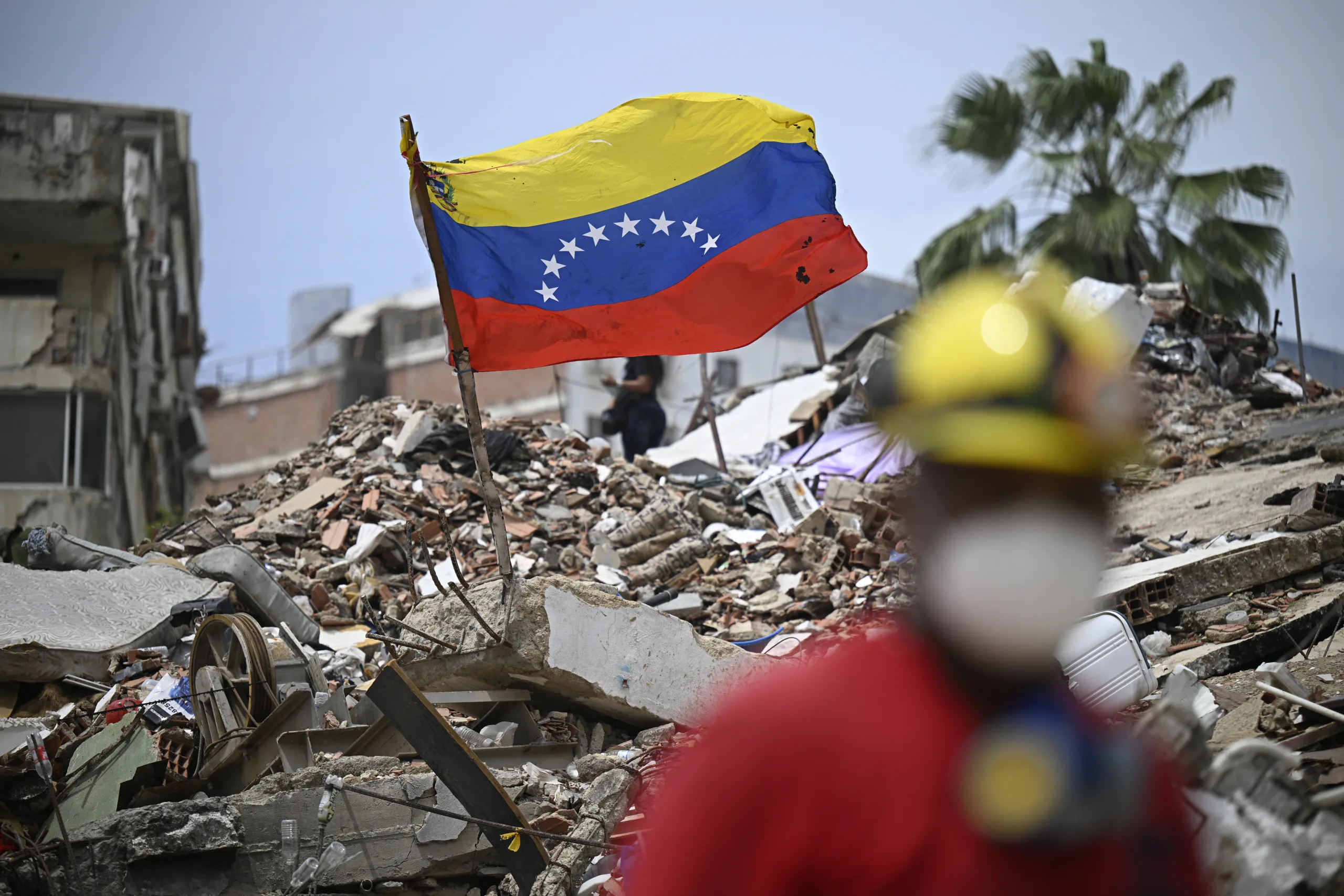
The sound of the grinder and the concrete mixer is the sound of Caracas, which little by little is coming back to life, after the double earthquake that shook the country on June 24th. In the Venezuelan capital, dozens of buildings suffered structural damage, especially in the city’s upscale areas. And at least ten of them came crashing down.
Crossing the mountain that separates the Venezuelan capital from the Caribbean Sea, the landscape is one of devastation. La Guaira was the hardest hit region and, a month after the earthquake, there is still a lot of rubble to be removed. Rescue work continues, especially to locate those who are still missing.
The historic and tourist city, full of happy and hard-working people, disappeared in a matter of seconds. For the survivors, there is a whole life to rebuild.
Adriana Solís is with her family in a shelter, near Caracas, coordinated by the Ministry of Communes. Now safe, she remembers with amazement the experience of living through an earthquake of that magnitude.
“At the time of the double earthquake, I was at home making food, looking after my children and I thought that what we were experiencing was what had happened on January 3, again the bombing and things like that. The impression was because the buildings were shaking to the sides”, says the resident of La Guaira.
“Minutes before, I had sent my son to the buildings in front to get water. And those buildings completely collapsed. God gave him one day, a second opportunity to be here”, he says.
Efrain Muñoz also experienced moments of terror. He says he was at home with his daughter and grandchildren, and that everyone was able to leave the house, thanks to the help of neighbors. For him, it is necessary to move forward. That’s why he decided to give boxing classes to the children at the shelter.
“I try to help the children. I started with my grandson, who trained with me there. I started with him alone here on the court and children started joining us. And now I have a lot of children who are starting to practice boxing”, says the sports combat instructor.
“I hope that everyone here can get decent housing and continue helping children at school. It’s not just investing in sport, but that sport goes hand in hand with studies and also creates discipline, responsibility and education, so that in the future they will be men of tomorrow”, he adds, emotionally.
After the storm, Maria Alejandra now hopes that the calm means having a new roof to call her own. “What I want most is my home, my house, where I can get to. And for my children to have a home again,” said the survivor.
The double earthquake that hit the north-central region of Venezuela on June 24 left almost 18,000 people homeless. To date, the death toll exceeds 5,000. The government delivered the first 200 new homes to the homeless last week and promises to deliver another 4,000 by December.
For the Minister of Communes, Ángel Prado, the unprecedented magnitude of this tragedy forces the State and the organized people to unite around the recovery of the affected areas, without losing sight of the country’s popular development project.
“We will accompany the national government, we will defend the Bolivarian revolution, which is the legacy of commander Hugo Chávez, and we will not surrender. We will overcome together this terrible situation that we have experienced this year, especially in 2026, when two very negative events shook our country. First the bombing against Venezuela, the kidnapping of President Nicolás Maduro and the first combatant Cilia Flores. And now these terrible earthquakes that ended thousands of lives”, said the minister to the Brazil in fact.
“The popular movement in Venezuela is very active and the people affected are really appreciating that communes from all over the country come to offer this hug and this helping hand. These are our principles and this will not change”, adds the minister.
In order to guarantee the integrity of families, the Venezuelan government announced, this Thursday, the beginning of the Single Dwelling Registry, in the temporary camps in Caracas, the country’s capital, where hundreds of people displaced by the earthquakes are sheltering.
The program will be extended to the state of Miranda starting this Saturday (25). Assistance will be provided in phases: it will start in the camps and then extend to families relocated to other parts of the country or staying with friends.
Source: www.brasildefato.com.br