Published 04/10/2026 15:28 | Edited 04/10/2026 16:01
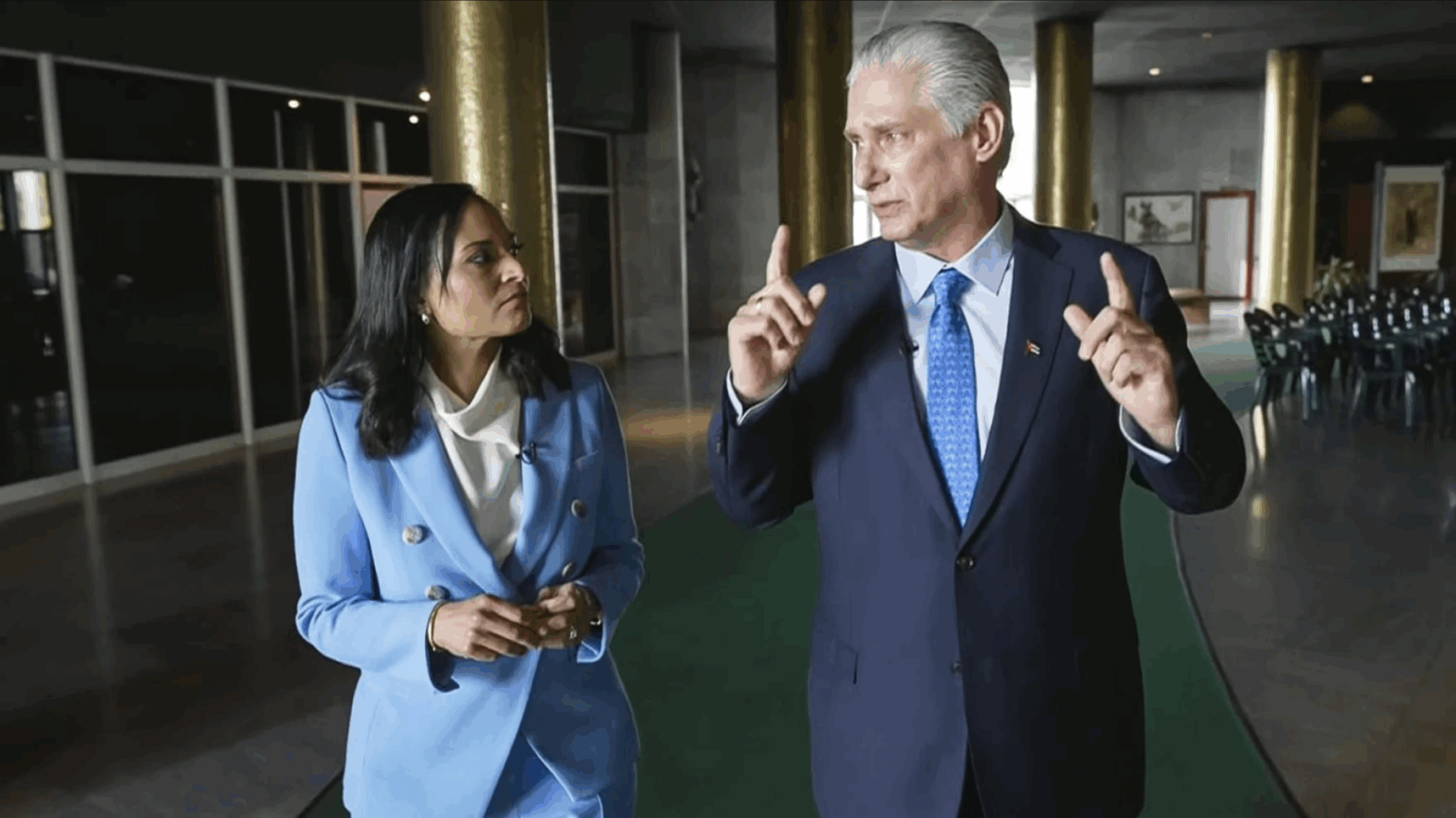
In his first interview with a United States television network, the president of Cuba, Miguel Díaz-Canel, drew a red line: he will not resign under pressure from Washington. In a conversation with NBC this Thursday (9), the Cuban leader not only rejected the Trump administration’s demands for political changes on the island, but also reversed the burden of the humanitarian crisis affecting Cuba, attributing it entirely to the “criminal siege” imposed by the United States.
“If the Cuban people understand that I am not qualified for the position, that I am not up to the circumstances, then I should not occupy the position of president. I will be accountable to them. But it is not the United States that can impose anything on us”, said Díaz-Canel, in a defiant tone. “The United States government, which has pursued this hostile policy against Cuba, lacks the moral authority to demand anything from Cuba.”
Trump’s maximum offensive
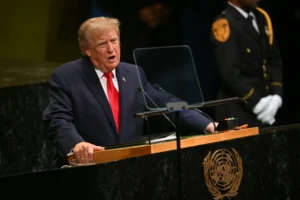
Díaz-Canel’s statements come at a time of greatest tension between the two countries since the end of the Cold War. Donald Trump not only tightened the economic blockade in force since 1962, but also established a specific naval blockade against the supply of oil to the island, classifying the Cuban regime as a “threat to the national security” of the USA.
The White House’s rhetoric escalated to explicit threats of military intervention. Last month, Trump declared that he would have “the honor of taking Cuba” and suggested that he could attack the island with military force after the end of the conflict in Iran. Such a stance represents a dangerous turn in American foreign policy, replacing economic pressure with direct military threats against a sovereign country in the Caribbean.
On the diplomatic front, Secretary of State Marco Rubio, of Cuban origin and known critic of the Havana regime, personally took over the negotiations. Rubio has demanded “profound political changes” and classified Cuban leaders as “incompetent leaders”, although he recently denied formally asking Díaz-Canel to resign.
The humanitarian crisis as a political weapon
The strategy of economic suffocation is already having devastating effects on the Cuban population. With the oil blockade in force since January, the island faces blackouts lasting up to 18 hours a day. The lack of energy compromises essential services: hospitals operate at their limit, choosing between performing surgeries in the dark or keeping neonatal incubators running; the cold chain for food and medicine is broken; and garbage accumulates on the streets of Havana, as collection trucks do not run without fuel.
For Díaz-Canel, however, attributing the crisis to the “incompetence” of the Cuban government is a deliberate distortion of reality. “They do not even have the moral authority to say that they are concerned about the situation of the Cuban people and that the Cuban government led Cuba to this situation, when all the responsibility falls on their shoulders”, fired the president.
Cuban authorities recognize that internal factors – such as the low productivity of the state economy and the collapse of post-pandemic tourism – worsen the scenario. But they maintain that the determining element is the tightening of the embargo, now transformed into an explicit energy siege, configuring what human rights organizations and the UN itself classify as a crime against the civilian population.
The Russian Oil Paradox
Amid maximum tension, an episode reveals the contradictions of American policy: ten days ago, the US allowed the landing of a Russian tanker with 700,000 barrels of oil in Havana. The shipment, which arrived after three months without receiving fuel, guarantees the island a few weeks of energy autonomy, according to analysts.
It is not clear why the White House authorized the operation or whether it will allow future shipments. Moscow has already announced that it intends to continue sending aid, which could turn Cuba into a new chessboard in the geopolitical dispute between Washington and Moscow, with the Cuban population as hostage.
Dialogue “between equals” or submission?
Díaz-Canel made clear his condition for negotiations: a dialogue “between equals”, without prior demands for regime change. “We ask to hold a dialogue and debate on any topic without any conditions, without demanding changes in our political system, just as we do not demand changes in the North American system,” he stated.
Cuban Vice Foreign Minister Josefina Vidal classified the current talks as “very preliminary”, indicating that there is still a long way to go. Havana’s position reflects a historical reading: Cuba has resisted ten American administrations since the 1959 Revolution and must not capitulate to the eleventh, even under Trump.
The question of moral authority
The core of Díaz-Canel’s argument lies in the denunciation of American hypocrisy. While demanding “democracy” and “human rights” from Cuba, the US maintains an embargo lasting more than six decades that the UN General Assembly annually condemns with a large majority. At the same time as it talks about “humanitarian concerns”, Washington imposes a siege that deprives hospitals of energy and families of refrigerated food.
For the Cuban leader, this contradiction morally disqualifies any American demand. “They lack the moral authority to demand anything,” he repeated, echoing a sentiment widely shared in Latin America and the Global South, where the policy of unilateral sanctions is seen as an instrument of imperial domination, not democratic promotion.
The endurance test
The interview with NBC marks Díaz-Canel’s entry into the battle of narratives. Until then, the communications offensive was predominantly American, with Trump and Rubio occupying the spotlight to announce punitive measures. Now, the Cuban president seeks to speak directly to the American public, bypassing the hostility of the White House.
The challenge is monumental. Díaz-Canel needs to demonstrate that Cuban resistance is not ideological stubbornness, but legitimate defense of national sovereignty; that the crisis is not the failure of socialism, but the result of an unprecedented external siege; and that dialogue is possible, as long as it is based on mutual respect, not submission.
Meanwhile, the clock ticks. Oil reserves only guarantee a few weeks of autonomy. The population suffers from endless blackouts. And Trump continues to publicly consider the military option. Díaz-Canel has made it clear: he will not resign – and the US will have to assume historical responsibility for this policy of genocide.
Source: vermelho.org.br