Published 05/21/2026 08:53 | Edited 05/21/2026 09:17
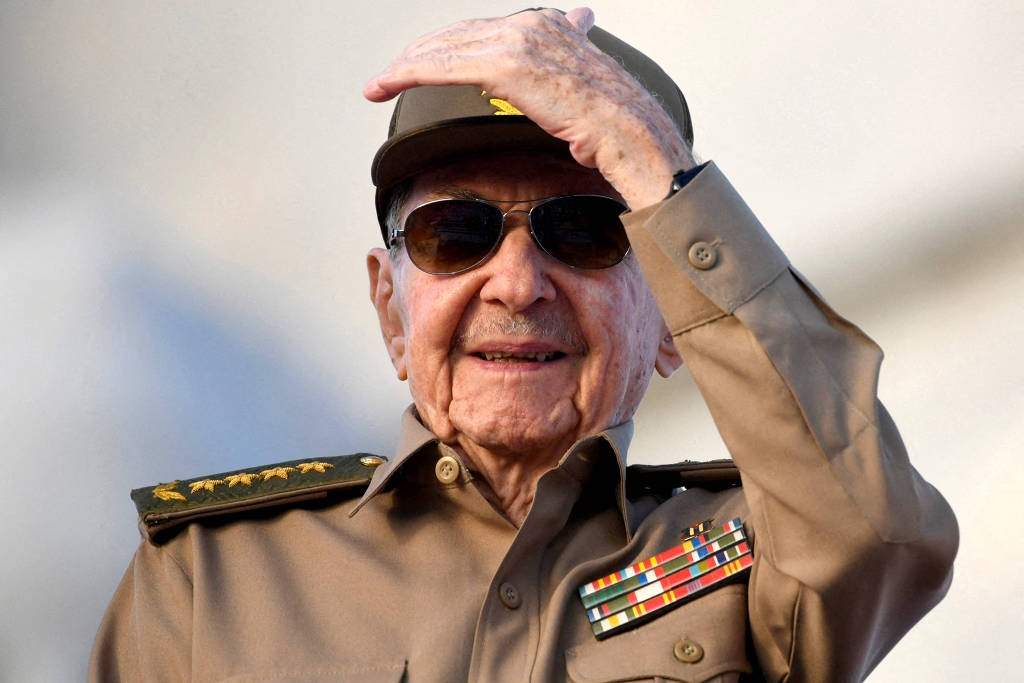
This Wednesday (20), the United States took a new step in the escalation of aggression against Cuba by indicting former president and revolutionary leader Raúl Castro, 94, for the Cuban military response to the incursions of the anti-Castro organization Hermanos al Rescate into the island’s airspace in 1996.
The decision by the Donald Trump administration’s Department of Justice reopens an episode that occurred 30 years ago and is denounced by Havana as part of an offensive aimed at criminalizing the Cuban Revolution and increasing pressure against the country.
The Cuban government claims that Washington is judicially manipulating the case to criminalize its sovereignty, erase the repeated violations of its airspace by groups based in Miami and construct a narrative favorable to new aggressions against the country.
Cuban President Miguel Díaz-Canel classified the indictment as “a political maneuver, devoid of any legal basis” and stated that the measure appears intended to justify military actions against the island.
The alleged accusation against Army General Raúl Castro Ruz, which the US Government has just communicated, only demonstrates the arrogance and frustration that it provokes in the representatives of the empire, the unbreakable firmness of the Cuban Revolution and the unity and… pic.twitter.com/0r0wV0kUX9
— Miguel Díaz-Canel Bermúdez (@DiazCanelB) May 20, 2026
Vice Chancellor Carlos Fernández de Cossío classified the accusations as a “scoundrel act” and stated that the movement “must be seen as part of the aggressive, growing escalation that we have seen throughout this year on the part of the USA against Cuba”.
China also reacted to the offensive against Cuba. Chinese Foreign Ministry spokesman Guo Jiakun said Beijing “firmly opposes” the United States “abusing judicial means” to pressure Cuba.
According to him, Washington must “stop using sanctions and the judicial apparatus as tools of oppression against Cuba” and “refrain from making threats of force at any time.”
In a statement released this Wednesday, the Communist Party of Brazil also condemned what it called a “persecutory act” against Raúl Castro and stated that the measure has a “provocative, revanchist and interventionist character”.
According to the party, Washington seeks to “criminalize the history of the Cuban Revolution” and “reasons to justify an invasion”, amid the tightening of the economic blockade imposed on the island for more than six decades.
The movement also raised alerts in Havana as it occurred just a few months after the capture of Venezuelan President Nicolás Maduro by the United States in January this year.
For Cuba and its allies, the Venezuelan precedent reinforces the fear that judicial accusations are being used by Washington as an instrument of political pressure and possible justification for more aggressive actions against Latin American governments considered adversaries of North American interests.
Cuba says it acted to protect its sovereignty
The Cuban government maintains that the episode now used by the United States to indict Raúl Castro occurred after years of violations of the island’s airspace by the anti-Castro organization Hermanos al Rescate, based in Miami and led by former CIA agent José Basulto.
According to Havana, the incursions were not secret and were often publicly disclosed by the organizers themselves, who claimed to act with total impunity before the US authorities.
According to Cuban Vice Chancellor Carlos Fernández de Cossío, between 1994 and 1996 Cuba presented at least 25 formal warnings to the US State Department, the US Federal Aviation Administration and the International Civil Aviation Organization denouncing the incursions and warning of the risk of a confrontation.
Havana claims that it repeatedly requested that Washington withdraw the licenses of the pilots involved in the operations, but received no effective response.
Fernández de Cossío also stated that, in January 1996, weeks before the incident, the Cuban government officially announced that any aircraft entering the country’s airspace without authorization could be intercepted and neutralized.
According to the diplomat, the White House was fully aware of the situation and the consequences that the provocations could generate. “The White House knew this and did not act,” he declared.
For Havana, the military response of February 1996 occurred within the right to defend national sovereignty provided for by the United Nations Charter and international civil aviation treaties.
The Cuban government claims that Hermanos al Rescate aircraft carried out recurring provocative actions over the island’s territory amid a history of hostility, sabotage and operations organized from Florida against the Cuban Revolution.
The Cuban government also claims that documents later declassified in the United States demonstrated that US authorities recognized the illegal nature of the incursions and the concrete possibility of a defensive reaction from Cuba.
For Havana, the attempt to now transform the episode into a criminal case against Raúl Castro seeks to erase this context and present as a crime an action that the country considers part of the protection of its territorial integrity.
Source: vermelho.org.br