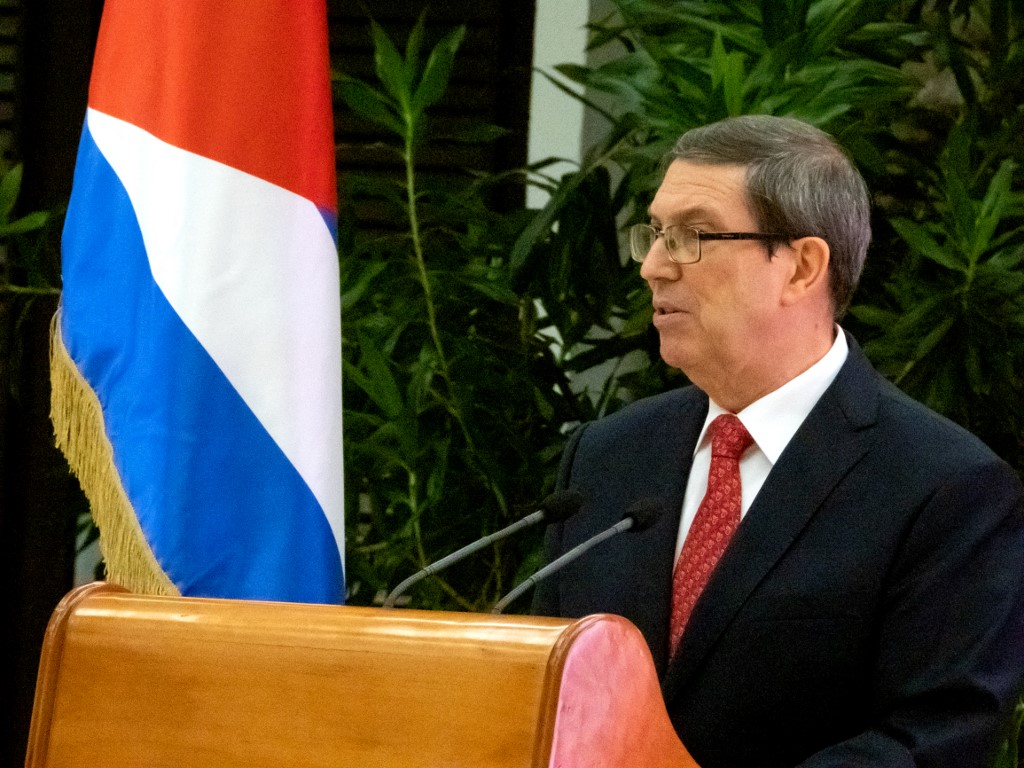
The Cuban government criticized the decision of Colombia’s elected president, Abelardo de la Espriella, to break diplomatic relations with the island. In a statement released last Tuesday (28), the Cuban Ministry of Foreign Affairs called the decision “clear subordination” to the “policy of division and confrontation” of the United States.
“If this decision takes place, without the slightest justification and without meeting Colombian national interests, the clear subordination of the next Colombian government to the policy of division and confrontation between our nations, always promoted by the United States, will become evident, as well as its connections with the most infamous and vulgar sectors of anti-Cuban politics in that country”, assessed the ministry.
This week, the future president, who will take power on the 7th, confirmed that Colombia must break relations not only with Havana, but also with Nicaragua. Furthermore, De la Espriella announced the closure of several diplomatic representation posts, citing the need to reduce costs. On the other hand, according to the next president, the country will reopen the Colombian embassy in Israel, which should operate in Jerusalem.
The rupture of diplomatic relations with Cuba is symbolic as it expresses the treatment that the De la Espriella government will give to relations with the country’s criminal organizations. In 2016, Havana hosted negotiations between the Colombian government and the Revolutionary Armed Forces of Colombia (FARC) that led to the current peace agreement.
De la Espriella has been defending a hard line against armed groups, promising to end the Gustavo Petro government’s “Total Peace” plan. Supporting the future Colombian president’s platform is the role of the United States: the inspiration for combating criminal groups is based on the Donald Trump government’s National Security Strategy, released at the end of 2025.
Furthermore, Washington has shaped the initiative through the creation of the Shield of the Americas, a coalition of countries that already includes countries such as Argentina, El Salvador, Chile and Ecuador, governed by figures ideologically close to Trump. De la Espriella has already said that he wants Colombia to be part of the group.
When commenting on the rupture of diplomatic relations with Cuba, the Cuban ministry stated that “nothing could be further from the ideal of Latin American and Caribbean unity defended by the national heroes of both countries and to which the people of the region have dedicated so much commitment and sacrifice”.
“Cuba knows that this hostile and unfounded action does not represent the feelings of the brotherly Colombian people, whom we have tirelessly supported for decades in the search for peace, through a negotiated political solution to their internal armed conflict,” stated the Cuban government. “Fraternity between both peoples and nations will prevail over any attempt to weaken it”, he concluded.
Source: www.brasildefato.com.br