In Argentina, the Mother of the Nation is black. María Remedios del Valle, born in Buenos Aires in the second half of the 18th century, was one of the main figures behind the country’s independence and became known for her bravery and solidarity with her fellow fighters. In 2024, in a gesture of recognition, the country printed the image of Remedios del Valle’s face on 10,000 peso bills. Before that, she became the first woman represented on a board in the Chamber of Deputies.
With such symbolism, one would think that the issue of racism, especially against black women, would be at the center of the political agenda in the neighboring country. This is not the reality, even though the agenda has advanced in recent years.
“Racism is a delicate and difficult topic. In our society, it was practically not debated until very recently. Even now, the discussion tends to happen in a dichotomous way, without leading to deeper reflection. ‘Argentina is a racist country’ or ‘Argentina is not racist’. But the image that many people have of a racist country does not correspond to the reality experienced by people of African descent in Argentina”, he explains, in conversation with the Brazil in factprofessor Miriam Gomes Lima, Afro-Argentine of Cape Verdean origin, intellectual, activist and creator of the Africa Chair in Latin America, at the Universidad Nacional de las Artes (UNA).
For her, racism is structural in Argentina. “It manifests itself in institutions, in the almost non-existent black presence in the media, in the educational system and in the three Powers of the State. Furthermore, we face different forms of microracism on a daily basis”, he highlights.
Nothing very different from Brazil, although the proportions must be kept, due to the different historical processes, there and here. According to the most recent Brazilian Public Security Yearbook, released by the Brazilian Public Security Forum (FBSP) on July 23, Brazil experienced an increase of 13% in cases of racism and 9.2% in cases of racial insults, between 2024 and 2025. This is a minimal sample, but an example, of a practice that has permeated Brazilian society since its very constitution.
The framework of black women’s movements in Argentina
In the neighboring country, the myth of “White Argentina” contributed and continues to contribute to the dissemination of a certain idea of a country in which its elites are, roughly speaking, the mirror of European elites, only residing on the western side of the River Plate. With some frequency – such as the 2026 World Cup – the debate about racism in Argentina takes on broader contours.
In the case of black Argentine women, the example of Maria Remedios is far from lost in time. “Historically, it was women who created and directed most black organizations in our country. Since centuries ago, with brotherhoods, nations or nation houses, mutual aid societies and, more recently, NGOs, these initiatives were, for the most part, created and led by black women”, says Miriam Gomes.
Some important achievements took time, but they arrived. In 2010, the country began to include questions about Afro-descendance in the census for sampling. The issue only began to be applied universally in 2022. In 2023, the Argentine Legislature approved Law 26,852, which established November 8 (the day of Maria Remedios del Valle’s death) as the National Day of Afro-Argentines and Afro Culture.
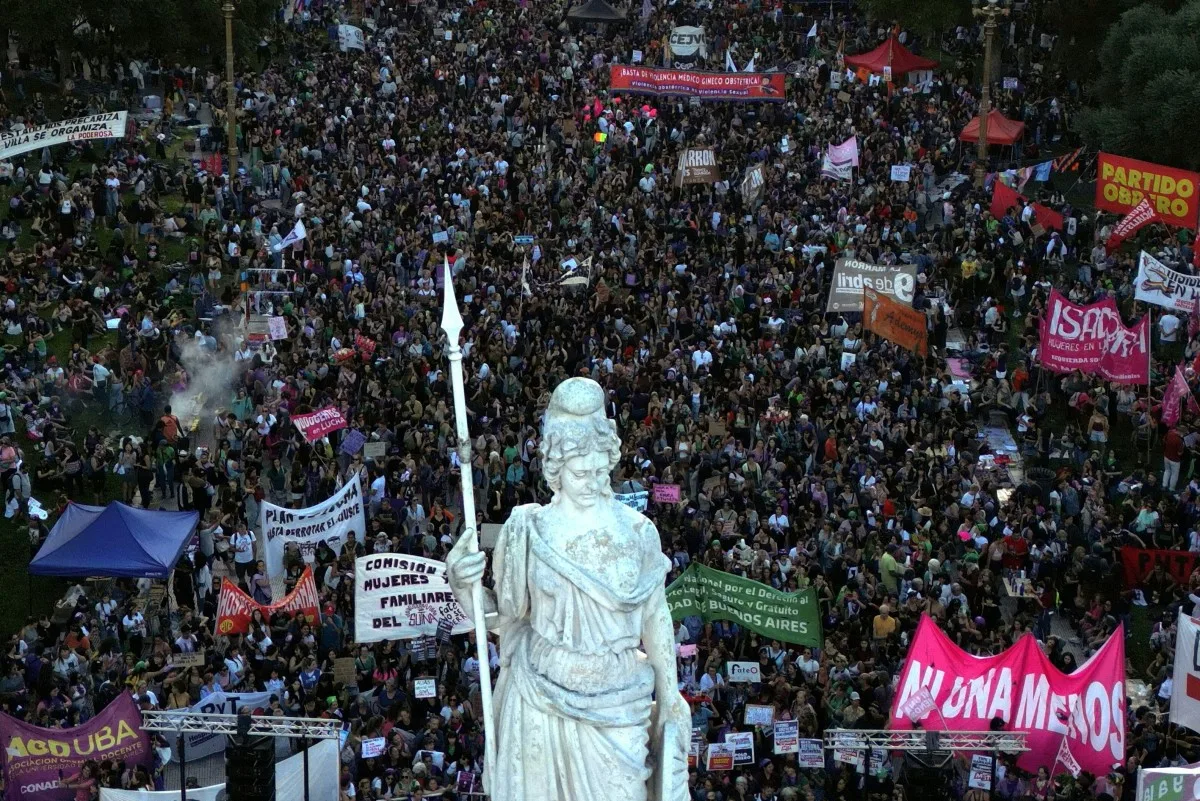
In relation to gender-based violence, Argentina is one of the pioneers in criminalizing the practice, with a law that dates back to 2012. Shortly afterwards, in 2015, the “Ni Una Menos” movement emerged in the country, in the wake of protests held that same year, when half a million people took to the streets in protest against the feminicide of Chiara Páez, a pregnant teenager murdered by her boyfriend.
Furthermore, in 2025, the country recorded 200 direct cases of femicide, according to data from the National Registry of Femicides of the Argentine Judiciary System (RNFJA), prepared by the Women’s Secretariat of the country’s Supreme Court. This figure, which corresponds to one femicide every 44 hours, is the lowest in the entire historical series. Meanwhile, in Brazil, there were 1,517 victims of the same crime last year, according to the Yearbook. The number is 4% higher than last year, and cases of femicide continue to break records, year after year.
How then can we articulate the agendas of black women’s movements in Argentina with the demands of non-black feminist movements? The question is especially sensitive, given the differences in conditions between white, middle-class Argentine feminists and black migrants when it comes to participating in strikes and movements.
Miriam Gomes highlights what is common. “This articulation occurs, above all, through the National Meeting of Women, held over 30 years ago in Argentina. In 2017, in Rosario, a specific space for women of African descent was created for the first time in the history of this meeting”, he says.
Black women’s movements in Argentina share common agendas, although they are diverse in their activities. They are often inserted within the scope of actions of broader black movements. These are the cases of África Vive (founded by the historic leader ‘Pocha’ Lamadrid), Afro Mujeres y Disidencias Rosario, Associación Misibamba, Agrupación Xangô and Sociedad Caboverdiana, which had Miriam Gomes as its first president.
Interlocution with Brazil
“Here, people always ask me: ‘What did you do in Brazil to achieve this? [a institucionalização brasileira do combate ao racismo]?”, he tells Brazil in fact Brazilian historian Danielle Santana, Afrofeminist activist and resident in Buenos Aires for almost a decade.
According to Santanna, there is an important connection between Brazilian and Argentine activists. She cites the mobilizations on July 25th (International Day of Latin American and Caribbean Black Women) and November 8th. In the last case, black Brazilian women participated in the process of creating the law that established the symbolic milestone of the date.
“There is an openness to being invited to participate in institutional spaces, such as the National Assembly”, says Santana, which presents a difference: in general, Argentine black women tend to be more regionalist than those in Brazil, in terms of activism.
“They can look for references in Lélia Gonzalez, Marielle Franco and Brazilian public policies. They try to understand what worked in Brazil and what hasn’t happened here yet”, he explains. Marielle Franco, in fact, is an emblematic case. In 2021, a plaque in honor of the Rio councilwoman, murdered in 2018, was inaugurated at the “Rio de Janeiro” station of the Buenos Aires metro, in the Caballito neighborhood.
In terms of comparison, an additional difficulty for black Argentine women has to do with the lack of consolidated census data, when compared with Brazil. “Throughout Argentine history, there has been an erasure of the Afro-descendant population. Organizations here estimate that there are around two million Afro-descendant people, precisely because of the issue of colorism”, says Santanna.
The Javier Milei government helped make the situation worse. The ultra-rightist came up with the idea of dismantling the National Institute against Discrimination, Xenophobia and Racism (Inadi), created in 1996 by the Discriminatory Acts Law. The Argentine president argued that the body would be a “job hanger” and that it was useless.
“When there is no longer a body in which people can report discrimination, they are left without institutional reference. If the president himself states that this issue does not matter, the feeling is precisely this: there is nowhere to take these complaints”, explains Danielle Santana, pointing out that she has noticed an increase in xenophobia since the beginning of the Milei government.
Although Milei extinguished the body (something that not even previous right-wing governments, such as Mauricio Macri’s, managed), the Argentine president did not repeal the law that gave rise to Inadi.
What, then, was left for black Argentine women? “We started to coordinate with supranational organizations, such as the United Nations and UN Women. These are organizations with which we have an interesting dialogue, but which cannot interfere in the country’s internal policies. Even so, we try some actions together”, explains Miriam Gomes.
These actions, concludes Gomes, aim to increase the resistance and mobilization capacity of Argentine black women’s movements, which, year after year, continue to exist and be present in the country’s public debate.
Source: www.brasildefato.com.br