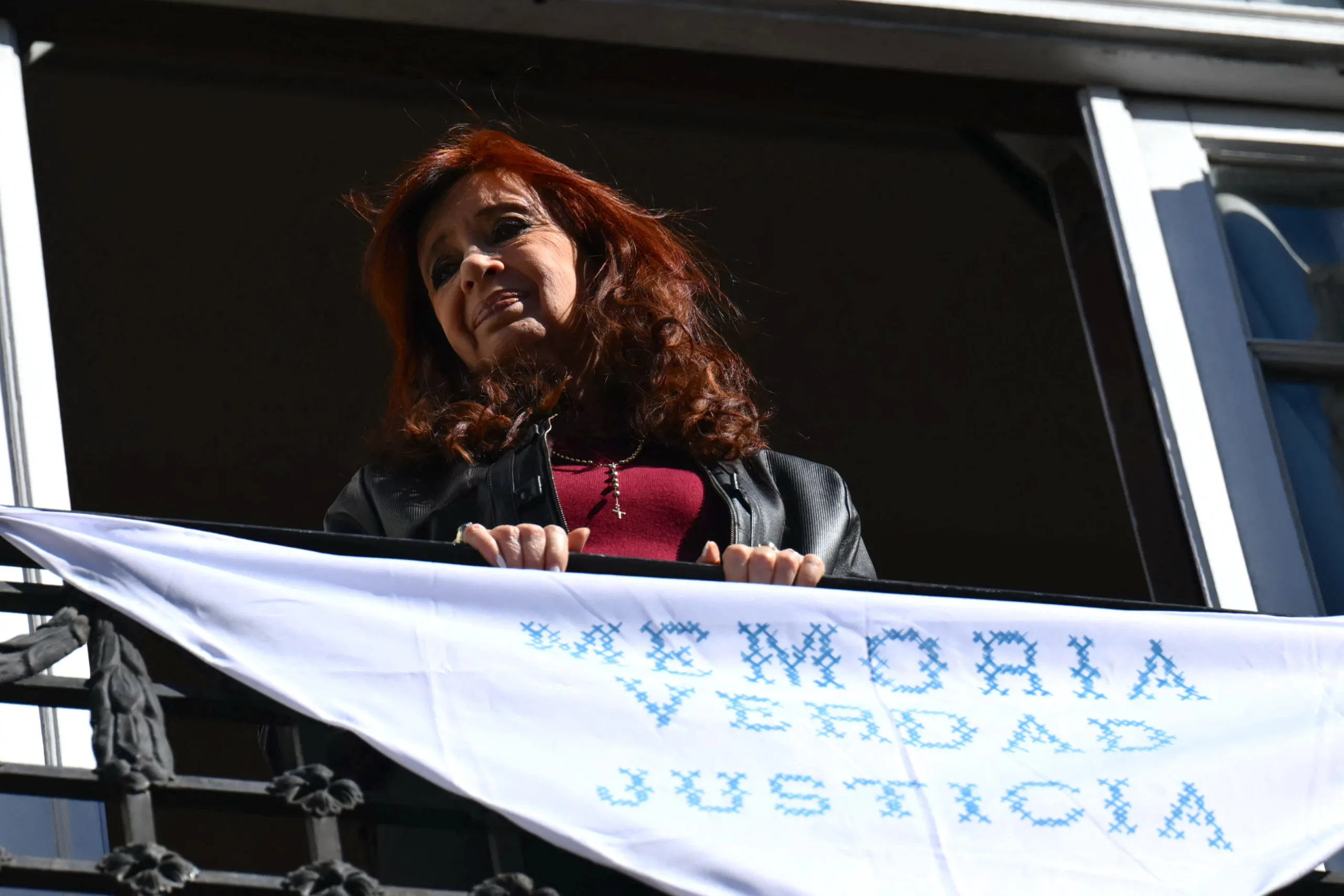
The defense of former Argentine president Cristina Fernández de Kirchner announced this Tuesday (15) the incorporation of new evidence that, according to her, questions the basis of the conviction against her.
The announcement was made during a press conference by lawyers Carlos Alberto Beraldi, Rafael Valim (Brazilian jurist and former defender of Luiz Inácio Lula da Silva) and former Spanish magistrate Javier Borrego.
The “new evidence” arises from material that was not available during the process that resulted in the conviction — and perpetual disqualification from holding public office — of Cristina Kirchner for the crime of fraudulent administration to the detriment of the State.
The conviction became final in June 2025, when the Supreme Court rejected the last appeal presented by the defense. At the trial, the Argentine Judiciary maintained that, during the former president’s government, a public works financing mechanism was used to benefit businessman Lázaro Báez, close to the Kirchner family.
Supposedly, the mechanism worked through a legal device called “trust”, financed by a tax on fuel. The resources were intended to pay for public works. According to the Court, Cristina Kirchner would have systematically benefited companies linked to Báez, including Austral Construcciones.
Argentine legislation determines that the direct administration of the trust, as well as tenders, are approved by the National Congress and executed by the National Transport Directorate, an autonomous body not controlled by the Executive Branch. However, the court’s decision — without presenting evidence in this regard — states that the Executive Branch had built a circuit to direct bids to the Austral Construcciones group.
The defense, however, maintains that the new evidence shows that Báez’s companies received only 0.85% of the resources administered by this trust. The rest of the resources were allocated to other companies that also participated in public works, including Iecsa, owned by Angelo Calcaterra, cousin of former president Mauricio Macri.
The presentation made by Cristina Kirchner’s defense is based on the testimony of a witness presented by the Prosecutor’s Office: Darío Andrés Levy, a former employee of the Budget Department of the National Directorate of Transport, who presented a spreadsheet showing payments made to construction companies across the country.
For the defense, this information questions the hypothesis that the financing mechanism was used to unduly benefit the businessman.
According to the defense, the “new evidence” only appears now because its members did not have prior access to this information due to the refusal of the Courts — both the Federal Oral Court No. 2 and the appellate courts and the Supreme Court itself — to carry out full accounting examinations. The material constitutes a collateral discovery obtained within the scope of another process, Causa Cadernos.
According to Rafael Valim, this new element represents a “decisive turnaround”, because it would demonstrate that there is no “factual basis” for the conviction. The lawyer stated that the sentence has a political component and that it seeks to “proscribe” one of Argentina’s main political figures.
“This is not just a legal issue. We are talking about the health of democracy. In a healthy democracy, this conviction is unsustainable,” he said.
A new attempt to review the conviction
“The fundamental purpose is for this conviction to fall, for Cristina to recover her freedom, of which she was unjustly deprived, and for her to resume her political activities,” said lawyer Carlos Alberto Beraldi during the press conference.
At the end of July this year, the defense presented a communication to the United Nations Human Rights Committee, a body that monitors compliance with the International Covenant on Civil and Political Rights. The defense denounces that the conviction against Cristina Kirchner constitutes a case of lawfare and that perpetual disqualification has the effects of political “proscription”.
Although the procedure before the Committee does not constitute a criminal appeal, the defense seeks that the international body assess whether, during the judicial process, rights protected by the Covenant were violated, including judicial guarantees, the right to defense and political rights.
The defense hopes that the case will be analyzed during the sessions scheduled by the Committee for October. With next year’s general elections as a backdrop, a possible statement by the Human Rights Committee would have considerable political significance, although there are controversies regarding the judicial scope of a decision in the Argentine courts.
Source: www.brasildefato.com.br