Published 05/08/2026 10:01 | Edited 05/08/2026 10:24
The meeting between President Luiz Inácio Lula da Silva and Donald Trump at the White House had repercussions in the international press this Friday (8), with emphasis on the Chinese media’s reaction to the Brazilian position on critical minerals and rare earths.
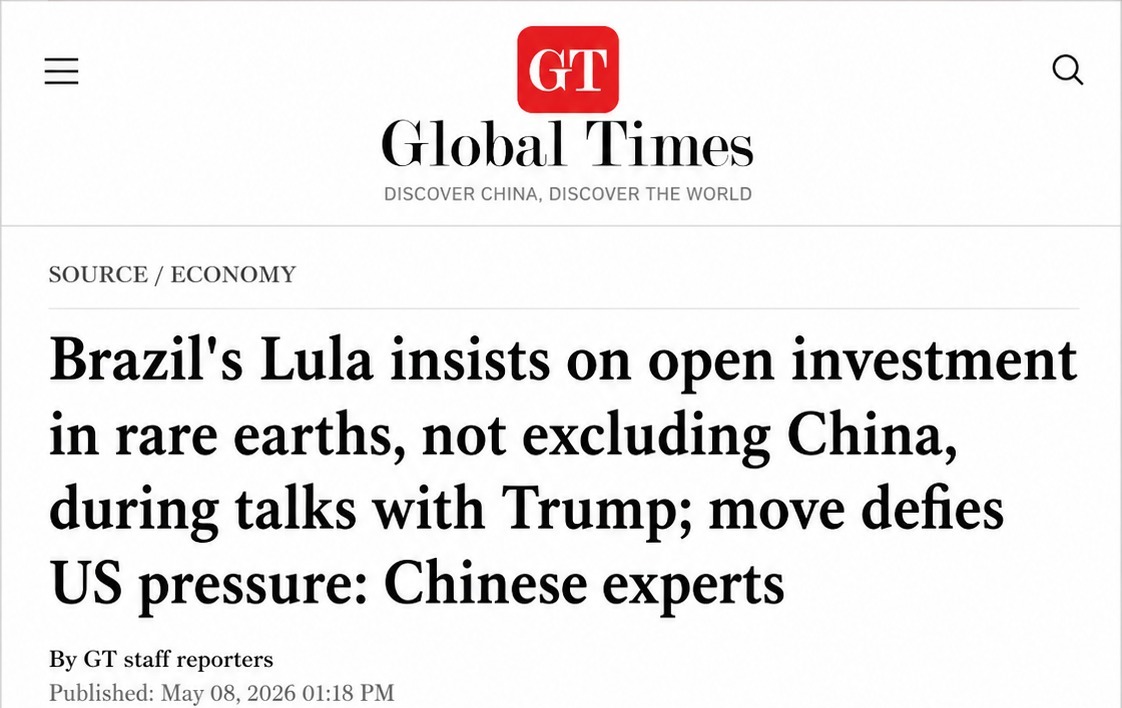
The Chinese newspaper Global Times published a long report praising Lula’s stance during the more than three-hour meeting with Trump, stating that the Brazilian president resisted pressure from the United States to remove China from global chains of strategic minerals.
According to the vehicle, Lula made it clear that Brazil will keep open the possibility of Chinese investments in the sector.
“Brazil wants to share its potential in critical minerals with anyone who wants to invest in the country — be it the USA, China, Germany, Japan or France,” said Lula, in a report reproduced by the Global Times, the BBC and the South China Morning Post.
The Chinese publication interpreted the speech as a gesture of “strategic autonomy” in the face of the dispute between Washington and Beijing for control of global rare earth chains, essential for sectors such as electric cars, wind turbines, semiconductors and armaments.
The Global Times highlighted that Lula rejected joining a US-led “exclusive alliance” to reorganize the global supply of critical minerals without Chinese participation.
Researcher Zhang Xiaorong, interviewed by the Chinese newspaper, stated that the Brazilian position demonstrates the intention to “go beyond the traditional role of passive exporter of raw materials”.
Zhou Mi, a researcher at the Chinese Academy of International Trade, told the Global Times that Brazil “did not change its position under American pressure”.
According to Bloomberg, cited by the Chinese newspaper, Brazil has the world’s second largest reserves of rare earths and graphite, in addition to occupying third place in nickel reserves.
The topic gained strategic weight at the meeting because the G7 countries have been intensifying efforts to reduce dependence on China in processing these minerals.
The Global Times also highlighted that Lula linked Chinese commercial advances in Latin America to the “abandonment” of the region by the United States after 2008.
The Brazilian president argued that China became Brazil’s main trading partner because North American companies stopped competing for contracts on the continent.
While the Chinese press highlighted the defense of Brazilian economic sovereignty, Western vehicles focused their coverage on the diplomatic backstage and political symbolism of the meeting between Lula and Trump.
The New York Times described the meeting as an attempt to stabilize a “fragile truce” after months of tension between the two countries, marked by tariff disputes and political differences. The vehicle highlighted that the joint press conference scheduled after the meeting ended up cancelled.
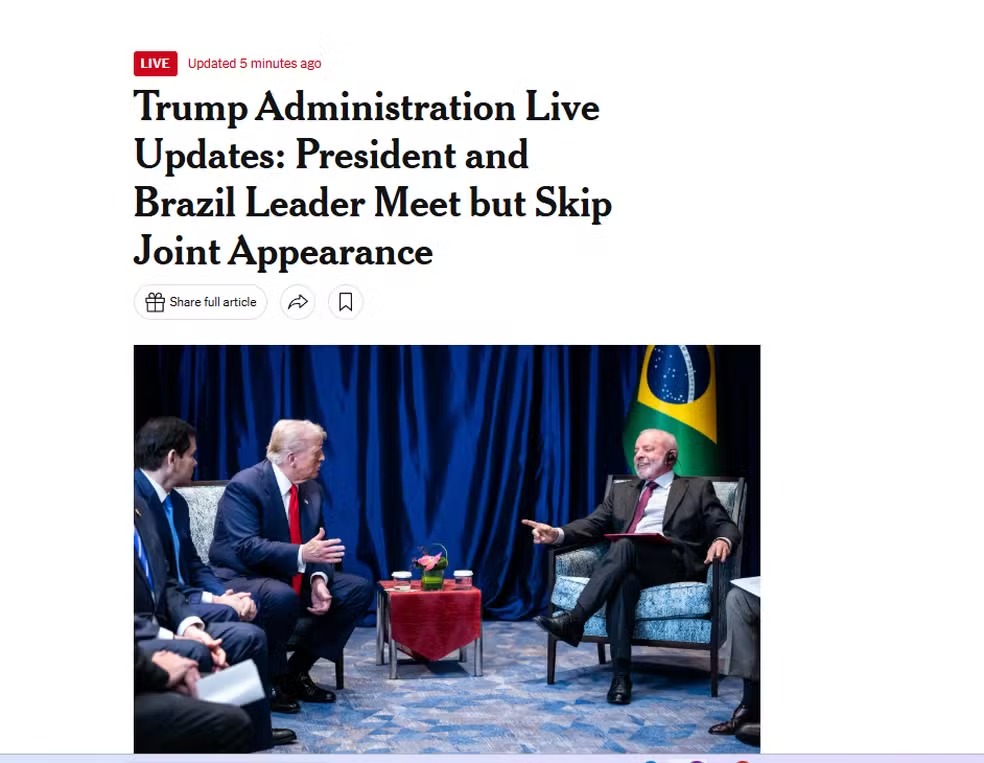
BBC News highlighted journalists’ surprise at the absence of the traditional public appearance of the two presidents in the Oval Office. According to the British broadcaster, reporters remained for hours waiting for a press conference before being informed that Lula would leave the White House without speaking alongside Trump.
The Reuters agency stated that members of Brazilian diplomacy assessed that the visit could help reduce commercial tensions between the two countries.
The report quoted a Brazilian official who, on condition of anonymity, said: “We don’t know if the visit will help, but it is more likely to help than doing nothing.”
The broadcaster Al Jazeera classified Lula and Trump as “two of the most prominent populist figures in the world”, emphasizing the ideological differences between the two leaders. NBC News recalled the tariff imposed by Trump against Brazilian products in 2025.
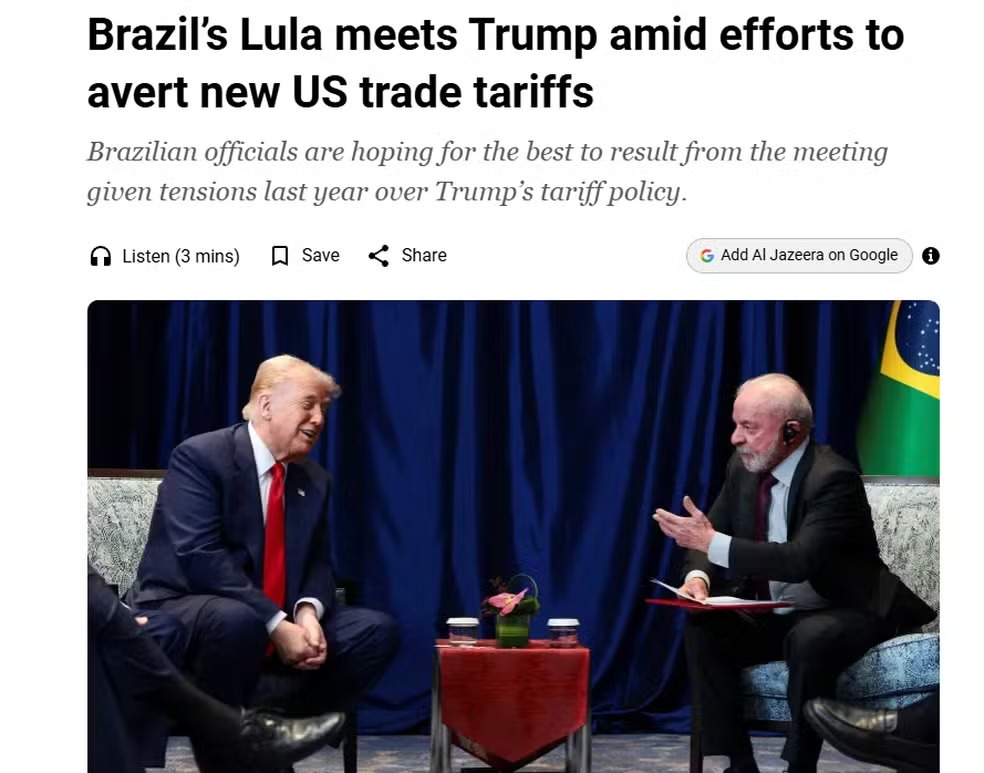
After the meeting, Trump stated on his Truth Social network that the meeting was “very good” and said that the two countries would continue negotiating topics considered strategic. The Brazilian government published a message on social media stating that Brazil and the United States maintain a relationship based on “dialogue and respect”.
Source: vermelho.org.br