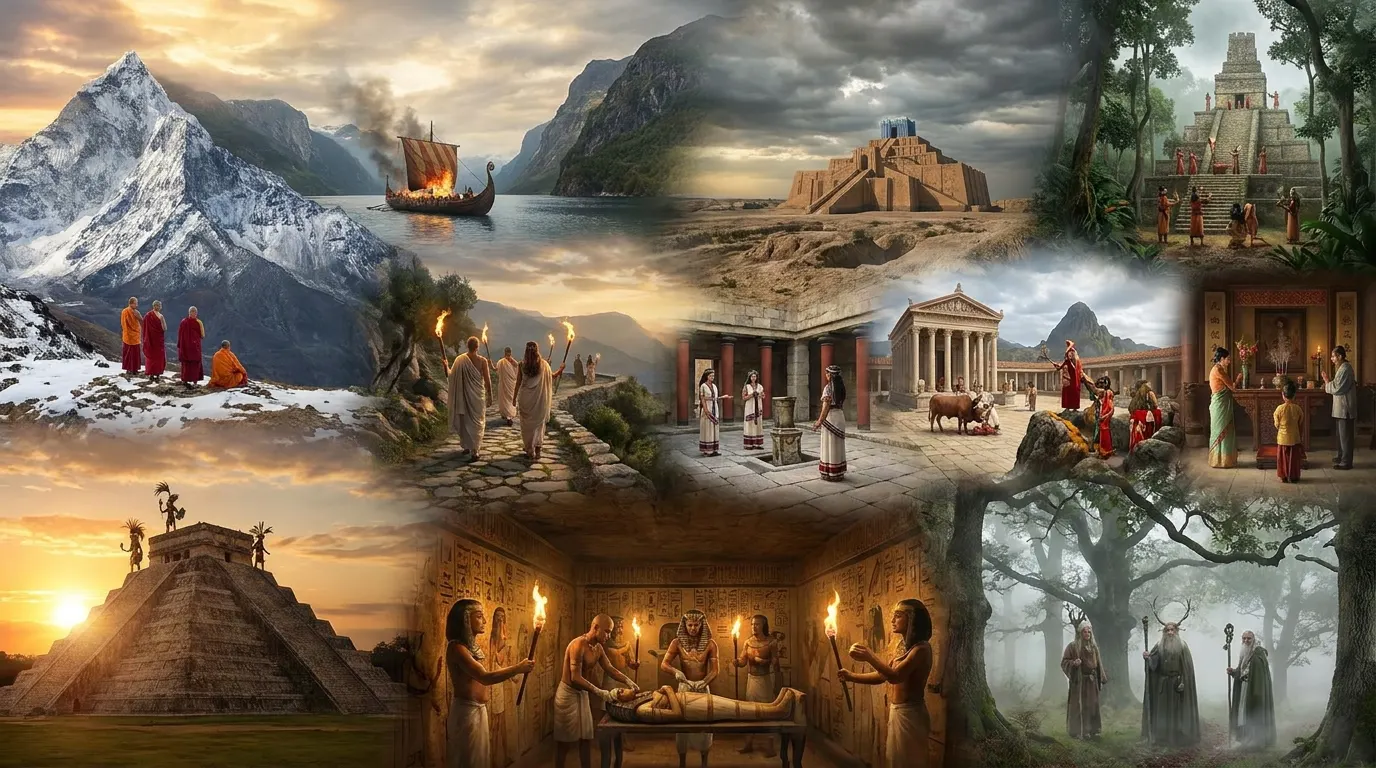
From dramatic coming of age traditions to mysterious ceremonies meant to communicate with the gods, ancient civilizations developed rituals that can seem shocking, bizarre, or even unbelievable by modern standards. Yet each of these customs reflected deep cultural values, religious beliefs, and attempts to understand the mysteries of life, death, and the natural world.
Human civilization has always been filled with rituals. Long before science explained natural disasters, diseases, or the changing seasons, people created ceremonies to seek protection, ensure prosperity, and honor powerful deities. While some traditions involved peaceful offerings and symbolic acts, others required extraordinary physical endurance or even human sacrifice.
Today, archaeologists continue to uncover evidence of these remarkable practices, allowing us to better understand the beliefs of civilizations that flourished thousands of years ago. Here are 12 of the strangest rituals ever recorded.
🏺 1. Egyptian Mummification: Preparing for Eternal Life
Ancient Egyptians believed death was only the beginning of another journey. To ensure the soul could recognize its body in the afterlife, they perfected the complex art of mummification.
The process lasted around 70 days. Priests carefully removed internal organs, dried the body using natron salt, wrapped it in hundreds of linen strips, and placed protective amulets between the layers.
The heart was usually left inside because it was believed to be the center of intelligence and morality. During the afterlife, the heart would be weighed against the feather of Ma’at, the goddess of truth.
Only wealthy individuals could afford elaborate mummification, making it both a religious ceremony and a symbol of social status.
🔥 2. Aztec Human Sacrifice to the Sun
Among the most controversial rituals in history were the human sacrifices performed by the Aztec Empire.
The Aztecs believed the sun required nourishment in the form of human blood to continue its daily journey across the sky. Without these offerings, they feared darkness would consume the world.
Captured warriors were often chosen for the ceremonies. Atop massive pyramids, priests performed sacrifices before large crowds during important religious festivals.
Although modern perspectives view these practices with horror, within Aztec society they represented sacred acts intended to preserve cosmic balance.
🌿 3. Celtic Sacred Tree Worship
For the ancient Celts, forests were living temples.
Druids believed certain trees, especially oak trees, possessed spiritual power and served as bridges between humans and the divine world.
Ceremonies were held in sacred groves rather than inside buildings. Mistletoe growing on oak branches was considered especially magical and was harvested using golden sickles during elaborate rituals.
Many historians believe these nature based ceremonies inspired later European folklore involving enchanted forests and mystical plants.
🦅 4. Sky Burials in Ancient Tibet
In the harsh mountains of Tibet, traditional burial practices evolved in a unique way.
Rather than burying or cremating the deceased, specialized monks placed bodies on mountain peaks where vultures consumed the remains.
This ritual reflected Buddhist beliefs about impermanence. Once the soul departed, the physical body became an empty vessel that could nourish other living creatures.
Known as “sky burials,” these ceremonies symbolized generosity and the endless cycle of life.
🌊 5. Viking Ship Funerals
The Vikings honored important leaders with dramatic funeral ceremonies that have become legendary.
The deceased was placed inside a ship alongside weapons, jewelry, food, clothing, and sometimes sacrificed animals believed to accompany them into the next world.
Some historical accounts describe ships being set ablaze before drifting into open water, although archaeological evidence suggests many ships were actually buried beneath large earthen mounds.
These impressive funerals celebrated bravery and prepared warriors for Valhalla, the legendary hall of the god Odin.
🩸 6. Maya Bloodletting Ceremonies
The Maya believed rulers could communicate directly with gods and ancestors through ritual blood offerings.
Kings and queens pierced their tongues, ears, or other body parts using sharp obsidian blades or stingray spines.
The collected blood was burned on ceremonial paper, with the rising smoke believed to open a spiritual gateway connecting the earthly and supernatural worlds.
These ceremonies reinforced the divine authority of rulers and demonstrated their willingness to suffer for their people.
🎭 7. Greek Mysteries of Eleusis
For nearly 2,000 years, one of ancient Greece’s greatest religious secrets remained hidden.
The Eleusinian Mysteries honored Demeter and Persephone through ceremonies whose details were never written down. Participants swore lifelong oaths of secrecy.
Initiates believed the rituals granted spiritual enlightenment and reduced fear of death.
Because revealing the ceremonies carried severe punishment, historians still debate exactly what occurred during these famous initiations.
🐍 8. Snake Ceremonies of Ancient Minoans
The civilization that flourished on the island of Crete held snakes in particularly high regard.
Priestesses were often depicted holding serpents in both hands during religious ceremonies.
Rather than representing danger, snakes symbolized fertility, renewal, healing, and protection because they shed their skin throughout life.
These rituals reflected the Minoans’ close connection to nature and the cycles of rebirth.
🌙 9. Babylonian New Year Festival
Every spring, ancient Babylon celebrated Akitu, an elaborate festival lasting several days.
The ceremony renewed the king’s divine authority and symbolically recreated the creation of the universe.
One remarkable tradition required the high priest to temporarily strip the king of his royal insignia before striking him across the face. If the king shed tears, it was interpreted as a favorable sign from the gods.
The ritual emphasized that even rulers remained subject to divine power.
🐂 10. Roman Taurobolium
Some followers of the Roman goddess Cybele participated in an extraordinary purification ritual called the Taurobolium.
During the ceremony, a bull was sacrificed on a platform above the initiate.
As blood flowed through specially designed openings, the participant below believed they were spiritually cleansed and symbolically reborn.
Although historians continue debating exactly how widespread this ritual was, ancient writings describe it as a powerful act of religious renewal.
🦜 11. Inca Child Offerings on Mountain Peaks
The Inca Empire practiced ceremonies known today as capacocha.
Children chosen for these rituals were often treated with exceptional honor before traveling with priests to high mountain summits.
Archaeological discoveries have revealed remarkably preserved remains due to freezing temperatures.
Researchers believe these ceremonies were intended to honor the gods, seek protection during natural disasters, celebrate important political events, or ensure agricultural prosperity.
These discoveries have provided valuable insight into Inca religion while also raising profound ethical and historical questions.
🌾 12. Chinese Ancestor Worship
For thousands of years, ancestor worship has played a central role in Chinese civilization.
Families honored deceased relatives through offerings of food, incense, and ceremonial objects believed to assist spirits in the afterlife.
Many households maintained ancestral tablets where regular prayers and commemorations took place.
This enduring tradition reinforced family loyalty, respect for elders, and the belief that ancestors continued watching over future generations.
Why These Rituals Still Fascinate Us
Ancient rituals often appear strange through the lens of modern society, but they reveal something universal about humanity. Across continents and centuries, people searched for ways to understand death, explain natural forces, strengthen communities, and connect with powers beyond ordinary experience.
Many ceremonies reflected practical realities as well as spiritual beliefs. Environmental conditions shaped burial customs, political systems influenced religious traditions, and agricultural societies developed seasonal festivals tied to harvest cycles. Even practices that now seem shocking were often viewed by participants as sacred duties essential to maintaining harmony between humans and the cosmos.
Modern archaeology continues to transform our understanding of these civilizations. Sophisticated excavation techniques, DNA analysis, chemical testing, and advanced imaging technologies have uncovered new details about ancient ceremonies that were once lost to history. Every discovery adds another piece to the puzzle of how early societies understood their place in the world.
Some rituals have disappeared entirely, while others evolved into traditions that survive in modified forms today. Ancestor remembrance ceremonies, seasonal celebrations, symbolic purification rites, and coming of age traditions remain important in many cultures around the globe, demonstrating that humanity’s desire for meaningful rituals has never truly faded.
Studying these extraordinary customs also reminds us to avoid judging the past solely by present day standards. Ancient civilizations operated within vastly different religious, political, and environmental contexts. Their rituals reflected complex worldviews that helped people cope with uncertainty, strengthen social bonds, and find purpose in lives often marked by hardship and limited scientific knowledge.
Ultimately, these 12 strange rituals offer more than fascinating stories. They provide a window into the creativity, spirituality, fears, hopes, and resilience of our ancestors. While the ceremonies themselves may seem mysterious or unsettling, they highlight a timeless human quest to understand life, honor the dead, seek protection, and find meaning in the unknown.