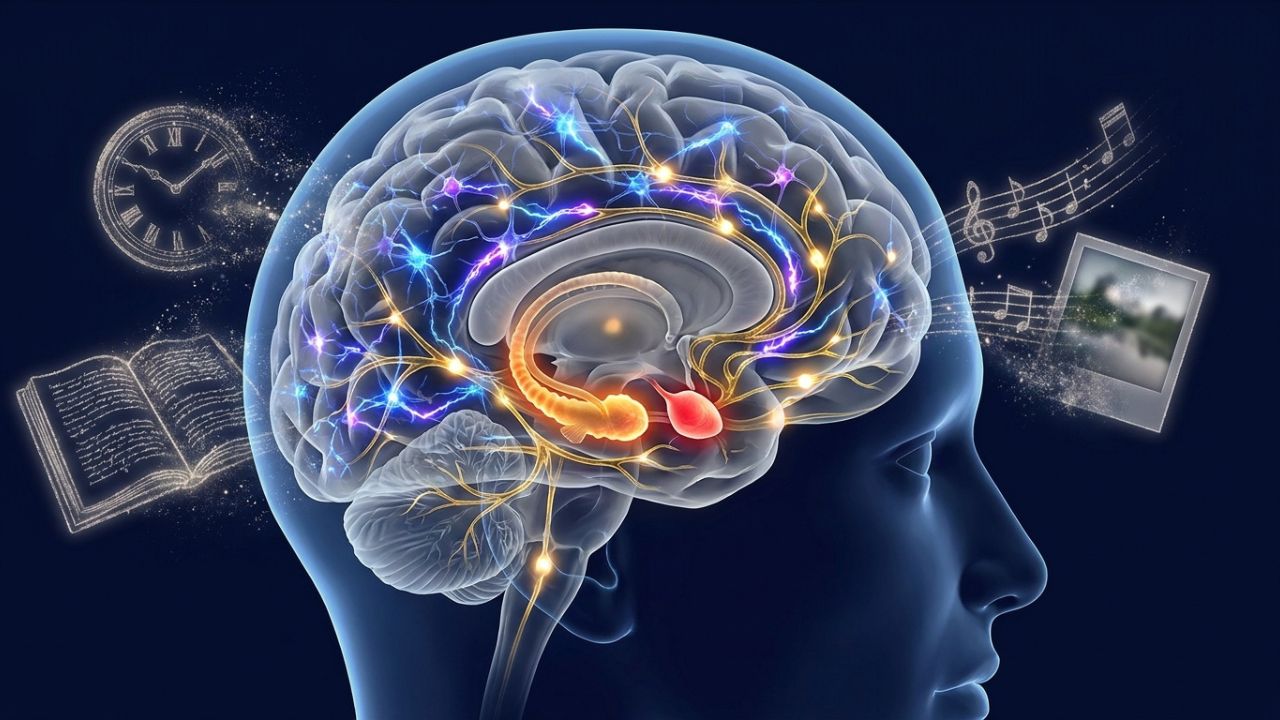
The human brain remains one of the most complex and mysterious organs in existence. Among its many remarkable capabilities, memory stands out as perhaps the most defining feature of human consciousness. Our ability to store, retrieve, and reconstruct experiences shapes who we are, influences our decisions, and connects us to our past. Yet despite decades of neurological research, memory continues to surprise scientists with its intricacies, vulnerabilities, and unexpected behaviors. Understanding how memory works is not just an academic pursuit—it has profound implications for education, mental health, legal proceedings, and everyday life. Here are ten compelling facts about human memory that reveal both its power and its limitations.
1. Memory Is Not a Recording Device 📹
One of the most persistent misconceptions about memory is that it functions like a video camera, faithfully recording events exactly as they happened. In reality, memory is far more dynamic and reconstructive. Every time we recall a memory, we are essentially rebuilding it from fragments stored across different regions of the brain. This reconstruction process is influenced by our current emotions, beliefs, and even suggestions from others. Research has demonstrated that memories can be altered each time they are retrieved, meaning that what we remember today may differ subtly or significantly from what we remembered yesterday. This malleability explains why eyewitness testimony, once considered gold standard evidence in courtrooms, is now viewed with considerable skepticism by legal experts and psychologists alike.
2. The Brain Can Store Approximately 2.5 Petabytes of Information 💾
While exact measurements remain challenging, neuroscientists estimate that the human brain has a storage capacity of roughly 2.5 petabytes—that is equivalent to 2.5 million gigabytes. To put this in perspective, if your brain were a digital video recorder, it could hold approximately three million hours of television programming. You would need to leave the TV running continuously for over 300 years to fill up all that space. This vast capacity suggests that forgetting is rarely due to lack of storage space but rather results from retrieval failures or the brain’s natural pruning processes that prioritize relevant information over trivial details.
3. Sleep Plays a Critical Role in Memory Consolidation 😴
Sleep is not merely a period of rest—it is an active state during which the brain processes and consolidates memories. During deep sleep stages, particularly slow-wave sleep, the brain replays neural patterns from the day, strengthening important connections and discarding irrelevant ones. Studies have shown that students who sleep after learning new material perform significantly better on tests than those who stay awake studying. Furthermore, REM sleep appears particularly important for procedural memory and creative problem-solving. This explains why pulling all-nighters before exams is often counterproductive—the brain needs sleep to transform short-term memories into long-term knowledge.
4. Emotional Events Create Stronger Memories ❤️
Memories associated with strong emotions, whether positive or negative, tend to be more vivid and durable than neutral experiences. This phenomenon occurs because emotional arousal triggers the release of stress hormones like adrenaline and cortisol, which enhance memory consolidation in the hippocampus and amygdala. This is why people can recall traumatic events or joyful celebrations with striking clarity years later. However, this emotional enhancement comes with a caveat—while the central details of emotional events are remembered well, peripheral details are often distorted or forgotten entirely. This selective enhancement can lead to confident but inaccurate recollections of emotionally charged situations.
5. The Brain Forgets Most Information Within Hours ⏰
Hermann Ebbinghaus, a pioneering psychologist, discovered what is now known as the forgetting curve. His research revealed that without reinforcement, humans forget approximately 50% of newly learned information within one hour and nearly 70% within 24 hours. This rapid decay occurs because the brain prioritizes efficiency, discarding information deemed unimportant for survival or daily functioning. The solution to combat this natural forgetting is spaced repetition—reviewing information at increasing intervals over time. This technique leverages the brain’s tendency to strengthen memories through repeated retrieval, making it one of the most effective study strategies available.
6. False Memories Can Be Implanted Through Suggestion 👤
Perhaps one of the most disturbing discoveries in memory research is that false memories can be created through suggestion and imagination. Psychologist Elizabeth Loftus conducted groundbreaking studies demonstrating that people can be led to remember events that never occurred, such as being lost in a shopping mall as a child or experiencing specific types of food poisoning. These false memories feel just as real and detailed as genuine ones, complete with sensory information and emotional responses. This finding has revolutionized therapeutic practices and legal procedures, highlighting the importance of careful questioning techniques that avoid leading witnesses or patients toward fabricated recollections.
7. Memory Decline Begins Earlier Than Most People Think 📉
Contrary to popular belief, certain aspects of memory begin declining as early as our twenties. While vocabulary and accumulated knowledge continue growing throughout life, processing speed, working memory capacity, and the ability to form new episodic memories show gradual deterioration starting in young adulthood. However, this decline is typically so subtle that most people do not notice it until their forties or fifties. The good news is that cognitive reserve—the brain’s resilience built through education, mental stimulation, and social engagement—can significantly delay noticeable memory problems. Activities like learning new languages, playing musical instruments, and maintaining rich social networks help build this protective buffer against age-related decline.
8. Smell Has the Strongest Connection to Memory 👃
Among all senses, smell has the most direct pathway to memory centers in the brain. Olfactory information bypasses the thalamus, the brain’s relay station, and travels directly to the olfactory bulb, which has strong connections to the hippocampus and amygdala. This anatomical arrangement explains why certain scents can trigger powerful, vivid memories from childhood or significant life events. The smell of freshly baked bread might transport you back to your grandmother’s kitchen, while a particular perfume might instantly recall a former relationship. This phenomenon, known as the Proust effect after French writer Marcel Proust who described it in his literature, demonstrates how sensory cues serve as powerful retrieval triggers for autobiographical memories.
9. Multitasking Severely Impairs Memory Formation 📱
In our modern world of constant notifications and divided attention, multitasking has become normalized. However, research consistently shows that attempting to process multiple streams of information simultaneously severely compromises memory encoding. When we divide our attention, the brain cannot fully engage the hippocampus in forming robust memory traces. This is why students who check social media while studying retain significantly less information than those who focus exclusively on their materials. The myth of the effective multitasker has been thoroughly debunked—what we perceive as multitasking is actually rapid task-switching, and each switch carries a cognitive cost that impairs both performance and memory formation.
10. Exercise Boosts Memory Function Significantly 🏃
Physical exercise emerges as one of the most powerful tools for enhancing memory and protecting against cognitive decline. Regular aerobic exercise increases blood flow to the brain, promotes the growth of new neurons in the hippocampus through a process called neurogenesis, and stimulates the production of brain-derived neurotrophic factor (BDNF), a protein essential for memory formation. Studies have found that even moderate exercise, such as brisk walking for thirty minutes several times per week, can improve memory performance in both young adults and older individuals. Perhaps most remarkably, exercise appears to increase the actual size of the hippocampus, literally expanding the brain’s memory center. This finding offers hope that lifestyle interventions can meaningfully impact cognitive health throughout the lifespan.
Conclusion 🔍
Human memory represents a magnificent yet imperfect system that defines our identity and guides our navigation through life. Its reconstructive nature means we are constantly rewriting our personal histories, sometimes accurately and sometimes not. Understanding these ten facts empowers us to work with our memory’s strengths while compensating for its weaknesses. Whether through adequate sleep, focused attention, regular exercise, or mindful awareness of memory’s suggestibility, we can optimize this extraordinary cognitive faculty. As neuroscience continues advancing, we gain deeper appreciation for the intricate dance between biology and experience that creates what we call memory—our bridge between past, present, and future.