Have you ever listened to a recording of your own voice and immediately thought, “Do I really sound like that?” If so, you are far from alone. Millions of people experience discomfort, embarrassment, or even disbelief when hearing themselves on a recording for the first time. Some avoid recording videos, refuse to leave voice messages, or hesitate to speak in public because they dislike how they sound.
The good news is that this reaction is completely normal.
Scientists, psychologists, and hearing specialists have studied this phenomenon for decades. Their findings reveal that your dislike for your recorded voice has very little to do with how attractive your voice actually is. Instead, it comes from the fascinating way your brain processes sound, your expectations about your own identity, and the psychology of self perception.
This article explores why your recorded voice sounds so different, what happens inside your ears and brain, and whether you can eventually learn to appreciate the sound of your own voice.
🔬 Your Voice Travels Through Two Different Paths
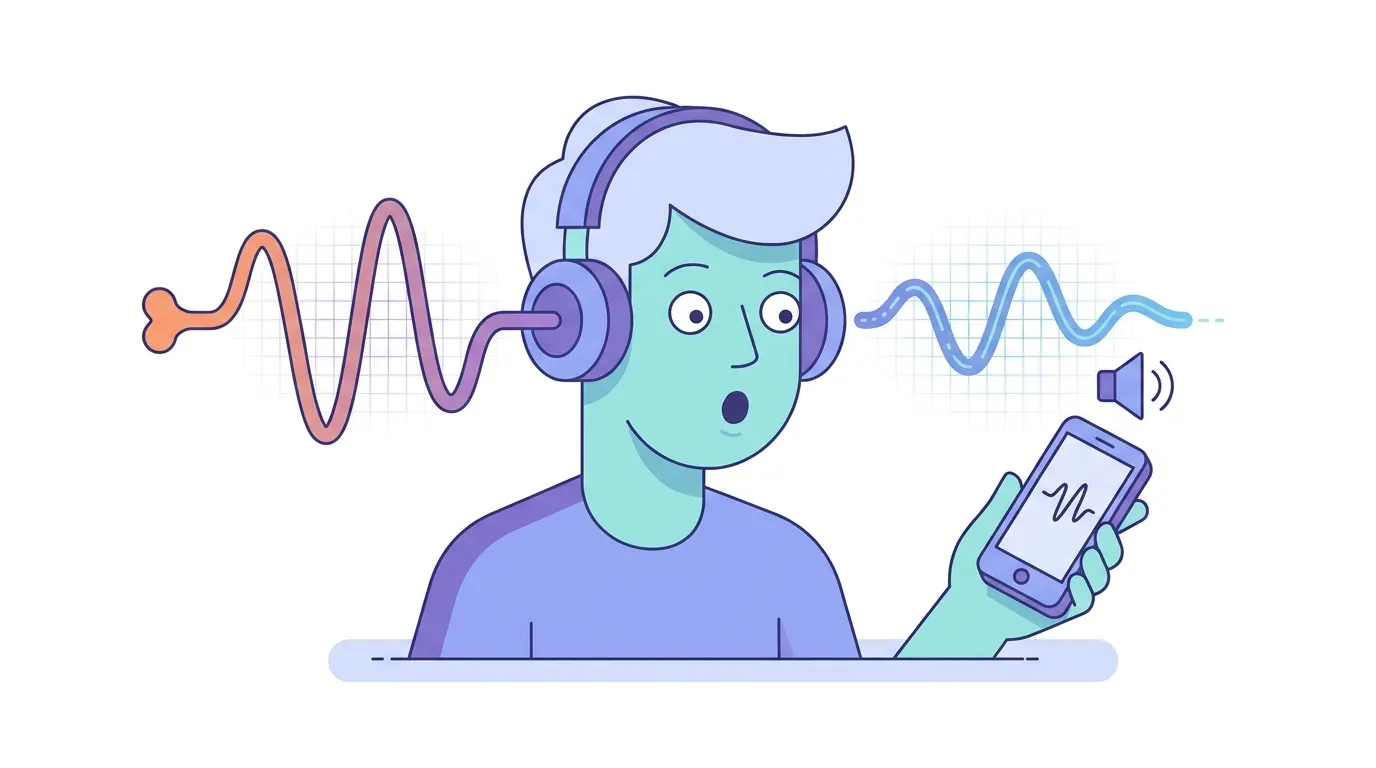
When you speak, your voice reaches your brain through two completely different routes.
| 🎧 Sound Path | Description |
|---|---|
| Air Conduction | Sound waves travel through the air into your ears, just as everyone else hears them. |
| Bone Conduction | Vibrations travel through your skull directly to your inner ear, adding lower frequencies and warmth. |
Most people never realize that they hear themselves through both methods simultaneously.
Everyone else only hears your voice through the air.
This is the biggest reason your recorded voice sounds unfamiliar.
🧠 Bone Conduction Changes Everything
Bone conduction is one of the most remarkable features of human hearing.
When your vocal cords vibrate, those vibrations travel throughout your skull before reaching the cochlea inside your inner ear.
Because bone conducts lower frequencies especially well, your brain receives a version of your voice that is:
✅ Deeper
✅ Richer
✅ Fuller
✅ Warmer
Your recorded voice removes this extra layer completely.
Instead, microphones capture only the sound moving through the air.
That makes your voice seem:
- Higher pitched
- Thinner
- Sharper
- Less powerful
The difference can be surprisingly dramatic.
🎤 Your Recorded Voice Is Usually More Accurate
Ironically, the voice you dislike is usually much closer to reality.
Friends, family members, coworkers, and strangers have always heard that version.
The voice inside your head is actually the altered one.
Many people find this surprising because they assume the opposite is true.
👂 Your Brain Is Used to One Version
Your brain has spent your entire life learning one very specific sound.
That sound includes:
- Air conduction
- Bone conduction
- Familiar speech patterns
- Emotional associations
- Personal identity
The moment a recording removes one of those components, your brain notices something is different.
Humans are naturally sensitive to unfamiliar sounds, especially when they involve themselves.
🧩 Expectation Versus Reality
Psychologists often describe this experience as an expectation mismatch.
Your brain predicts how your voice should sound.
The recording violates that prediction.
Whenever reality differs from expectation, discomfort often follows.
This is similar to seeing an unexpected photograph of yourself from an unusual angle.
You recognize yourself.
But it does not feel like the version you know.
📸 It Is Like Looking in a Non Mirrored Photo
Most people see themselves in mirrors every day.
Mirrors reverse your appearance.
Photographs do not.
Because your brain becomes accustomed to the mirrored version, a normal photograph may initially seem strange.
The same principle applies to your voice.
Your brain becomes attached to one familiar version.
Any different version feels wrong.
😨 Why Some People Feel Embarrassed
Disliking your voice is not only about acoustics.
Emotion plays an enormous role.
People often connect their voices with:
- Confidence
- Intelligence
- Professionalism
- Attractiveness
- Personality
When a recording sounds unfamiliar, they may incorrectly assume others hear them negatively.
In reality, listeners rarely judge voices as harshly as people judge themselves.
🧠 The Psychology of Self Criticism
Humans are generally much more critical of themselves than of others.
Researchers call this the self enhancement gap and the self criticism bias.
People tend to notice every tiny flaw in themselves while overlooking similar imperfections in everyone else.
That includes voices.
You may focus on:
- Every pause
- Every breath
- Every pronunciation
- Every pitch change
- Every filler word
Meanwhile, listeners simply hear someone speaking naturally.
🎬 Why Actors and Podcasters Get Used to It
Professional broadcasters, YouTubers, voice actors, singers, and podcasters often report the exact same experience when they first hear themselves.
The difference is repetition.
After editing hundreds of recordings, their brains gradually recalibrate.
Eventually, the recorded voice becomes familiar.
This process is known as perceptual adaptation.
The more often your brain hears something, the less unusual it feels.
🎵 Singers Experience This Too
Even professional singers sometimes dislike hearing themselves.
Many vocal coaches encourage students to record every practice session.
Not because their voices are bad.
Because recordings reveal details impossible to notice while singing.
Listening objectively helps improve:
🎵 Pitch
🎵 Timing
🎵 Breathing
🎵 Resonance
🎵 Pronunciation
Over time, discomfort decreases.
📱 Modern Phones Capture Voices Differently
Microphones are not perfect.
Different devices emphasize different frequencies.
A smartphone may produce a very different sound compared to:
- Studio microphones
- Podcast microphones
- Wireless earbuds
- Laptop microphones
- Camera microphones
Compression algorithms may also reduce audio quality.
This means no recording perfectly represents your natural voice.
🎚️ Room Acoustics Matter
Where you record also affects the result.
Hard surfaces reflect sound.
Soft materials absorb sound.
For example:
| Environment | Voice Characteristics |
| Bathroom | Bright, echoing |
| Bedroom | Softer, warmer |
| Office | Neutral |
| Large Hall | Reverberant |
| Recording Studio | Controlled and balanced |
Many people mistake room acoustics for changes in their own voice.
🗣️ Accents and Speech Patterns
People often become more self conscious after hearing:
- Regional accents
- Speech habits
- Fast talking
- Slow talking
- Vocal fry
- Nasal resonance
Interestingly, these characteristics are usually much less noticeable to other listeners.
😊 Most People Do Not Notice What You Notice
Imagine listening to a friend’s voice.
You probably pay attention to:
- Their message
- Their emotions
- Their personality
You likely do not analyze every tiny vocal detail.
Others extend the same courtesy to you.
People generally remember what you said, not every nuance of how your voice sounded.
🧪 Scientists Have Studied This for Decades
Psychologists have repeatedly found that people consistently rate recordings of their own voices less favorably than recordings of other people’s voices.
Researchers believe several factors combine to create this effect:
- Familiarity bias
- Bone conduction differences
- Identity expectations
- Self critical thinking
- Emotional reactions
Together, they create the strange experience almost everyone has at least once.
🎙️ Can You Learn to Like Your Voice?
Absolutely.
Many communication experts recommend gradual exposure.
Some effective methods include:
✅ Record yourself daily
Even one minute per day helps.
✅ Listen without judging
Focus on clarity rather than perfection.
✅ Compare recordings over time
Improvement becomes easier to hear.
✅ Practice breathing
Better breath control often creates a calmer, richer voice.
✅ Improve posture
Good posture supports stronger vocal resonance.
🌟 Tips for Speaking More Confidently
| Tip | Benefit |
| Speak slowly | Improves clarity |
| Stay hydrated | Reduces vocal strain |
| Breathe deeply | Produces steadier speech |
| Smile naturally | Makes your voice sound warmer |
| Pause instead of rushing | Sounds more confident |
| Practice reading aloud | Improves articulation |
🎯 Your Voice Is Part of Your Identity
No two voices are identical.
Your voice carries subtle characteristics shaped by:
- Genetics
- Anatomy
- Language
- Culture
- Experiences
- Habits
These unique qualities help people recognize you instantly.
Rather than flaws, many of the features you notice are actually what make your voice memorable.
💡 Confidence Comes From Familiarity
The more often you hear your recorded voice, the more normal it becomes.
Eventually, the surprise fades.
Professional speakers, teachers, broadcasters, and content creators rarely start out loving the sound of their own voices.
Most simply become accustomed to it through repeated exposure.
Confidence grows with experience, not perfection.
🏁 Final Thoughts
Hating the sound of your own voice is one of the most universal human experiences. It is rooted in biology, psychology, and perception rather than in the actual quality of your voice.
Because you normally hear yourself through both air conduction and bone conduction, your brain develops an internal version of your voice that no recording can perfectly reproduce. When you finally hear yourself through a microphone, the difference can feel startling.
Fortunately, this discomfort almost always fades with familiarity. As you become more accustomed to hearing recordings of yourself, your brain adapts, your confidence increases, and the gap between expectation and reality begins to close.
The next time you cringe at a voice recording, remember that everyone else has been hearing that version of you all along. Chances are, they think it sounds completely normal. Your voice is not only a tool for communication but also a unique part of who you are, and embracing it is one more step toward greater confidence in both personal and professional life.