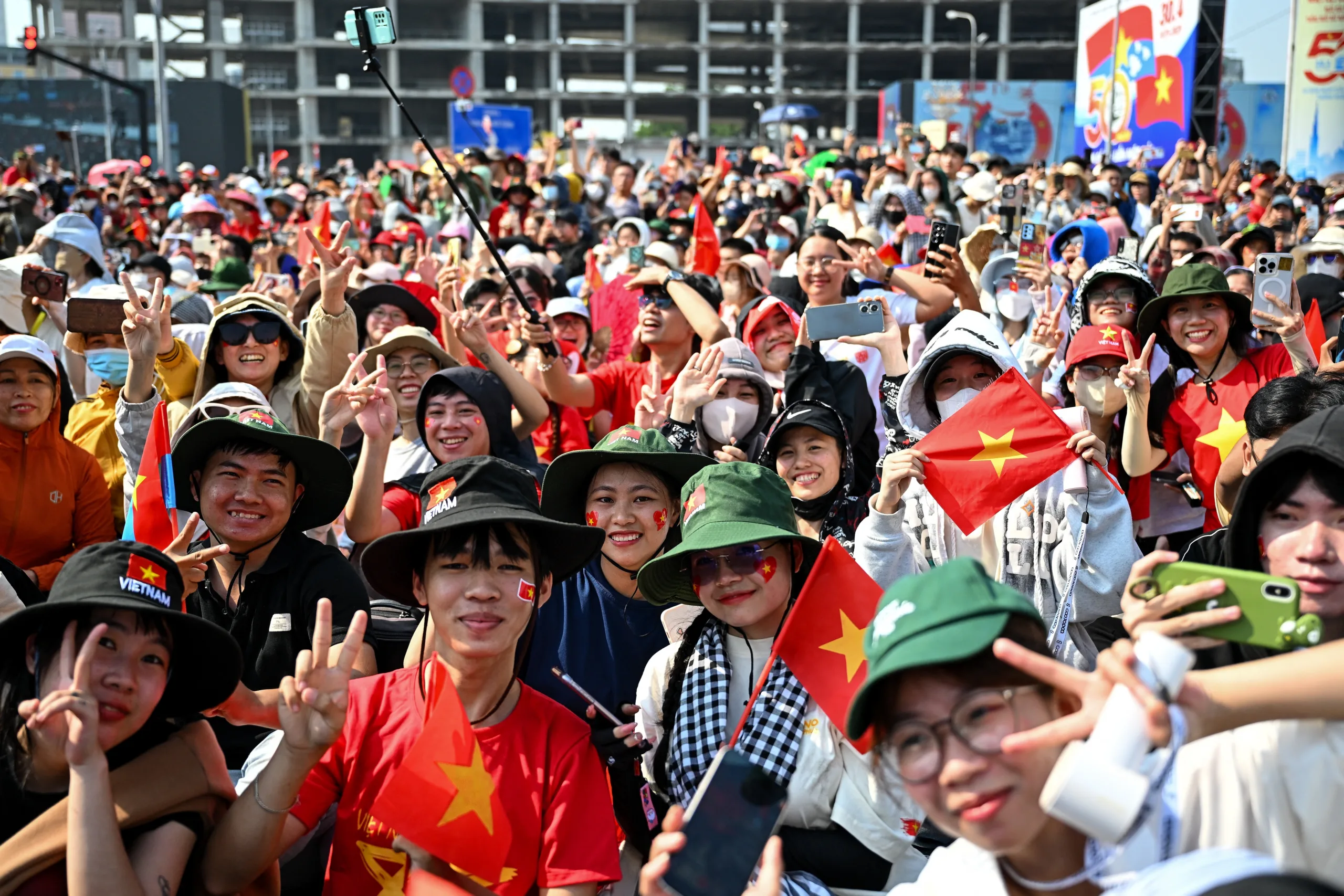
81 years ago, on September 2, 1945, in Ba Đình Square in Hanoi, the Vietnamese revolutionary Ho Chi Minh read the Vietnam Declaration of Independence. Communist forces resisted first France and then one of the largest and most brutal American military aggressions in history, which ended with the defeat of the invaders in 1975.
Today, Vietnam has one of the most accelerated social development processes in the world, having managed to reduce poverty from 58% to 4% of the population in just five decades, eliminating chronic hunger and becoming one of the largest rice exporters on the planet, according to data from the Vietnamese government and the United Nations Development Program (UNDP).
Current stability, however, has roots in a past marked by wars and Vietnamese resistance to the powers of the Global North.
France had occupied the region, including Laos, Cambodia and the Chinese city of Zhanjiang, since the late 19th century, under the name Indochina. During the Second World War, from 1940 onwards, the Empire of Japan began to co-occupy Indochina under an agreement with France. In August 1945, with the Japanese collapse, the Vietnam Independence League movement, led by Ho Chi Minh, took power in the August Revolution.
The European country did not recognize the Vietnamese declaration of independence in 1945 and the following year it began to fight communist forces led by Ho Chi Minh. The so-called “Indochina War” ran from 1946 to 1954, when Vietnamese forces defeated the French army at Dien Bien Phu.
The French military presence began to weaken only in 1954, when Paris decided to negotiate an exit from the region. From then on, the United States, which had already been significantly financing France militarily, decided to become more directly involved in the occupation of Vietnam.
In 1955, the United States boycotted the elections provided for in the previous year’s Geneva Accords to decide on reunification, as previous agreements had defined the division of the country along the 17th parallel, which cut the country practically “in half”, as a temporary measure.
The US government, under the presidency of Dwight D. Eisenhower, determined that the Military Assistance Advisory Group (MAAG), which previously supported French troops in the region, would start training the Army of the Republic of Vietnam, a US ally. This took place on November 1, 1955, which is considered the official date of the start of the so-called “Vietnam War”.
Just three decades later, on April 30, 1975, the Vietnam Liberation Army, commanded by the Ho Chi Minh government, would take Saigon, in the south of the country.
The destruction by the United States
The war of invasion promoted by the Americans against the socialist government left a disastrous result. According to official data cited by the Vietnam News Agency, in total, United States actions caused the deaths of 2 million civilians. Around 175,000 soldiers remain missing and almost 300,000 graves remain unidentified.
Among the most notable war crimes is the “My Lai Massacre”, committed on March 16, 1968. American soldiers massacred 504 civilians in the Tinh Khe commune, Quang Ngai province: 182 women, 173 children and 60 elderly people over 60 years old, according to documents preserved at the War Remnants Museum, in Ho Chi Minh City, in the south of the country. The case is one of the most documented among at least 320 crimes against civilians recorded in a 9,000-page US Army report, declassified in 1994 and cited by multiple Vietnamese sources.
Furthermore, the consequences are still felt today. The Chemical Corps of the Armed Forces of Vietnam estimates that the US army sprayed around 80 million liters of toxic chemicals over territories in southern Vietnam, of which 61% were made up of the extremely toxic material called “Agent Orange”, containing 366 kg of dioxin, according to General Ha Van Cu, commander of the Chemical Corps.
Around 4.8 million people were exposed to dioxin present in these products. Between 3 and 3.2 million are considered direct victims, suffering from cancer, congenital malformations or neurological diseases.
The effects continue to be observed until the third and fourth generations of affected families. In Nghệ An province alone, more than 600 people from the third generation of exposed ex-combatants have sequelae. The number of deaths since 1975 attributable to Agent Orange has reached nearly 1 million, according to Vietnam’s Social Security.
The United States military also dropped around 15 million tons of bombs, mines and projectiles on Vietnamese territory, according to state radio Voice of Vietnam. The country estimates that there are still 800 thousand tons of unexploded ordnance covering 20% of the country’s territory; Since the end of the conflict, this waste has caused more than 40,000 deaths and 60,000 injuries. At the current rate of mine clearance, it will take 300 years to completely eliminate them, according to the state broadcaster.
The reconstruction
In 1975, Vietnam was a completely destroyed economy, with poisoned fields and crumbling infrastructure. In 1986, the VI National Congress of the Communist Party of Vietnam approved the reforms of the Renew (“renewal”), which combined state planning with controlled economic opening. From 1990 to 2004, GDP almost tripled, with average growth of 7.5% per year, according to official data. Agriculture’s share of GDP fell from 38% to 21.7% in two decades of reforms, while industry and construction rose from 28.9% to 40.1%.
In 1993, 58.1% of the population lived in poverty. In 1998, the figure fell to 37.4%, and in 2004, to 24.1%, according to Vietnam’s General Statistics Office.
In 2024, multidimensional poverty reached 4.06%, with extreme poverty at 1.3%, according to the People’s Dailyofficial newspaper of the Communist Party of Vietnam.
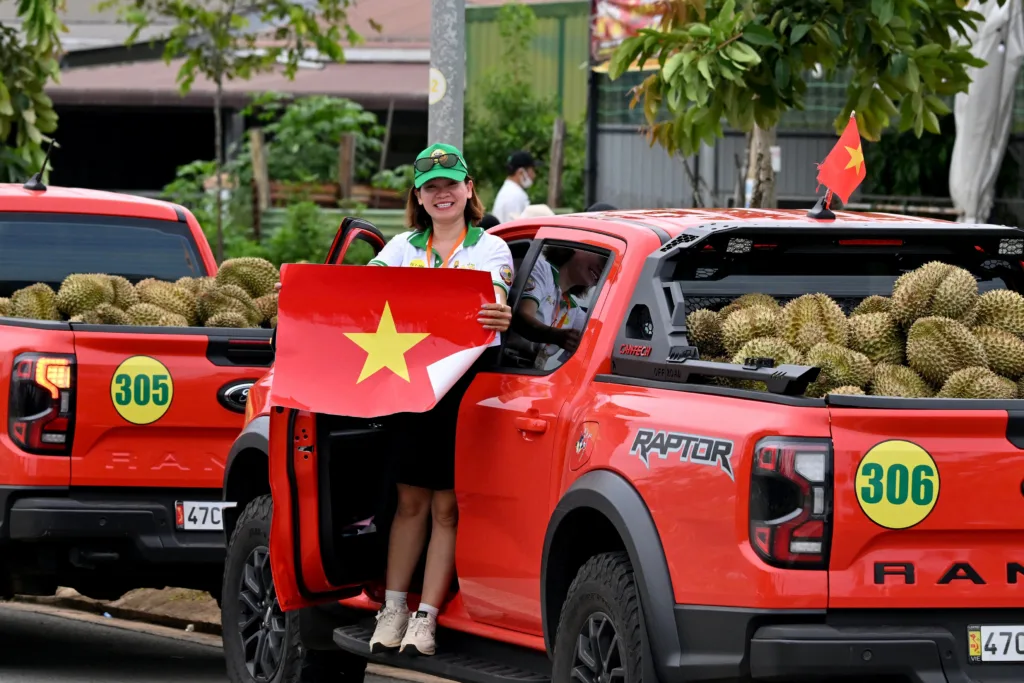
Poverty reduction was slower among ethnic minorities. In 1993, the poverty rate among minority groups was 84.6%; in 1998, it fell to 75.2%, while the ethnic Kinh population reduced poverty at a faster pace, according to Vietnam’s National Statistics Office. Inequality between the plains and mountainous provinces is still the main distributional challenge of the Vietnamese model.
In December last year, the 15th National Assembly approved 423 trillion VND (more than R$83.7 billion) of the National Target Program for New-Style Rural Areas, Sustainable Poverty Reduction and Socioeconomic Development in Ethnic Minority and Mountainous Regions for the period 2026 to 2035.
The Human Development Index (HDI) went from 0.499 in 1990 to 0.766 in 2023, an increase of 53.5% in 33 years, according to the United Nations Development Program (UNDP). Vietnam currently ranks 93rd out of 193 countries in the human development group.
The literacy rate among people aged 15 to 60 is 99.1%, and health insurance coverage exceeds 95% of the population, according to the Party. Average life expectancy reached 74.7 years, according to Vietnam’s General Statistics Office, based on the 2024 Intermediate Population and Housing Survey.
In 2025, Vietnam exported more than 8.06 million tons of rice to around 80 countries and territories, earning around 4.1 billion dollars (more than R$21.1 billion), according to the Customs Department.
Vietnam and Cuba: internationalism
Cuba was the first country in the Western Hemisphere to establish diplomatic relations with Vietnam and sent advisors and military experts to assist Vietnamese forces in resisting American aggression. Six of them even died in a US air raid on Hanoi in 1966.
Fidel Castro is remembered in Vietnam as a great friend of the country. In 1973, Fidel visited the country and declared: “For Vietnam, Cuba is willing to give its own blood.”
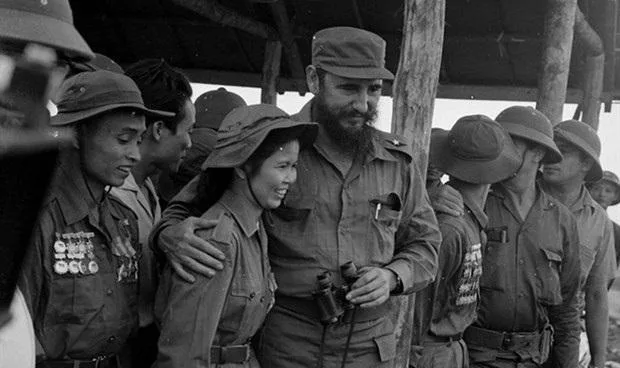
During this visit, Cuba handed over to Vietnam five socioeconomic works valued at around US$80 million: the Thang Loi Hotel in Hanoi, the Vietnam-Cuba Hospital in Dong Hoi, the road linking Son Tay to Xuan Mai, a cattle farm in Moc Chau and a chicken factory in Luong My.
Cuba also donated more than 1,000 dairy cows for the development of Vietnamese livestock farming and provided more than 6 million dollars to purchase equipment to widen the Ho Chi Minh Highway.
Historical ties remain and today, when Cuba is going through one of the worst crises in its history, Vietnam is trying to reciprocate.
In celebration of 65 years of diplomatic relations, in 2025, the Vietnam Red Cross launched a campaign with an initial target of 65 billion Vietnamese dongs (about R$12.8 million), reached in 20 days. The campaign ended with 657.5 billion dongs (more than R$130 million) delivered to Cuba in two installments, according to the Vietnam Red Cross.
In 2026, a new campaign mobilized almost 590 thousand people and raised another 537 billion dongs (more R$106 million), in honor of Fidel Castro’s centenary. The country also donated, in February 2026, 250 tons of rice, according to the Vietnam News Agency.
Furthermore, the country strengthened its commercial relations with Havana and this year implemented a joint project between the state-owned rice company of Granma, in Cuba, and the Vietnamese company Thai Binh — present for years in the island’s commercial sector —, which recently carried out its first harvest in the municipality of Yara.
The joint initiative, called TBAgri, is still in its initial phase and currently covers around 160 hectares on the flat terraces of the José Martí community. However, the plan foresees a gradual expansion until reaching 25 thousand hectares destined for rice cultivation.
The project operates under a 100% foreign capital model and uses land granted in usufruct by the Cuban State, with an estimated duration of 25 years. In a first stage, production will be destined mainly for internal consumption, with the main objective of territorial self-supply.
Source: www.brasildefato.com.br