Published 04/24/2026 11:24 | Edited 04/24/2026 11:42
The scenario of instability in the Middle East gained new diplomatic momentum this Thursday (23), with the announcement made by the President of the United States, Donald Trump, of the extension of the ceasefire between Israel and Lebanon for another three weeks. The measure, celebrated by the White House as a necessary space for diplomacy, comes up against, however, the persistent stubbornness of Benjamin Netanyahu’s government. While the world calls for de-escalation, Israel Katz, Israeli Defense Minister, raised the tone this Friday (24), stating that Tel Aviv is just waiting for a “green light” from Washington to launch new attacks against Iran’s infrastructure, with the dark promise of “returning Tehran to the Dark Ages”.
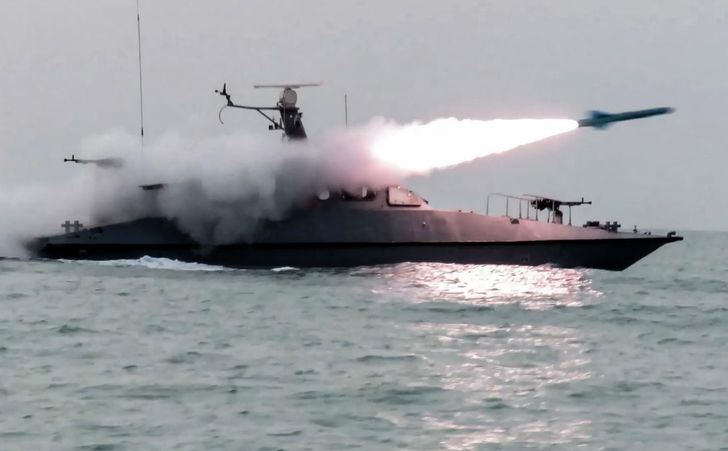
Despite the formal truce, the reality on Lebanese soil is an armed and fragile peace. Israel maintains an exclusion zone in the south of the neighboring country and has not completely halted operations that it classifies as “surgical”, ignoring UN resolutions and growing international isolation. On the other hand, the Iranian regime demonstrates resilience. Even after suffering damage to its military infrastructure in February, Tehran maintains control of the Strait of Hormuz. Last Wednesday (22), the Revolutionary Guard (IRGC) seized two commercial vessels, the MSC Francesca and the Epaminondas, on the grounds of maritime security violations. The action reinforces that, in the Persian Gulf, the regime’s defense remains active and capable of dictating the pace of global energy trade.
The economy of destruction: mass rearmament
The break provided by temporary ceasefires has served less peace and more war logistics. Countries directly involved in current conflicts are taking advantage of the momentary silence of weapons to rebuild arsenals depleted by high-intensity fighting. Consolidated data from agencies such as SIPRI (Stockholm International Peace Research Institute) indicate that the world is experiencing the biggest arms race since the end of the Cold War. In 2024, global military spending reached an all-time high of US$2.7 trillion, and projections for 2026, driven by the conflict in the Gulf, point to an unprecedented acceleration.
Shortages of precision munitions and air defense interceptors such as Patriot and Tomahawk missiles have forced powers to transition to a war economy. In the United States, the Trump administration sealed agreements to quadruple the production of elite weapons. The “replacement panic” does not only affect the great powers, but spreads across all continents, where the perception of deteriorating global security drains resources that should be destined for social development.
X-Ray of Global Military Escalation
The new wave of spending and transfers of war vectors redraws the world geopolitical map, continent by continent:
- Americas: The US leads with a budget heading towards US$1 trillion annually, focusing on missile replacement and hypersonic technology. In South America, growth is strategic; Brazil increased its budget to R$120 billion, focusing on drones and coastal defense, while Argentina invested US$800 million in F-16 fighters to rebuild its aerial capacity.
- Europe and Eurasia: It is the epicenter of Western acceleration. Arms imports rose 210%. Russia increased its spending to $149 billion (up 38%) to support its 24-hour defense industry. Eastern countries, such as Poland (4.7% of GDP) and Romania, invest billions in Patriot systems against instability that spills over their borders.
- Asia: China announced a record budget of approximately US$273 billion for 2026, focusing on naval supremacy. Japan broke decades of pacifism, approving a record budget of US$58 billion to tackle regional complexity. In South Asia, India and Pakistan maintain a technological race focused on artificial intelligence and nuclear vectors.
- Oceania: Through the AUKUS pact, Australia announced record investments of approximately US$632.5 billion (A$887 billion) until 2035, targeting nuclear submarines and long-range missiles in the Indo-Pacific.
- Africa: Growth is uneven, but total spending rose 11%. Morocco and Egypt lead investments in the North — Egypt with a US$1.8 billion contract for missiles and drones — while Nigeria and South Africa accelerate local ammunition production to ensure self-sufficiency.
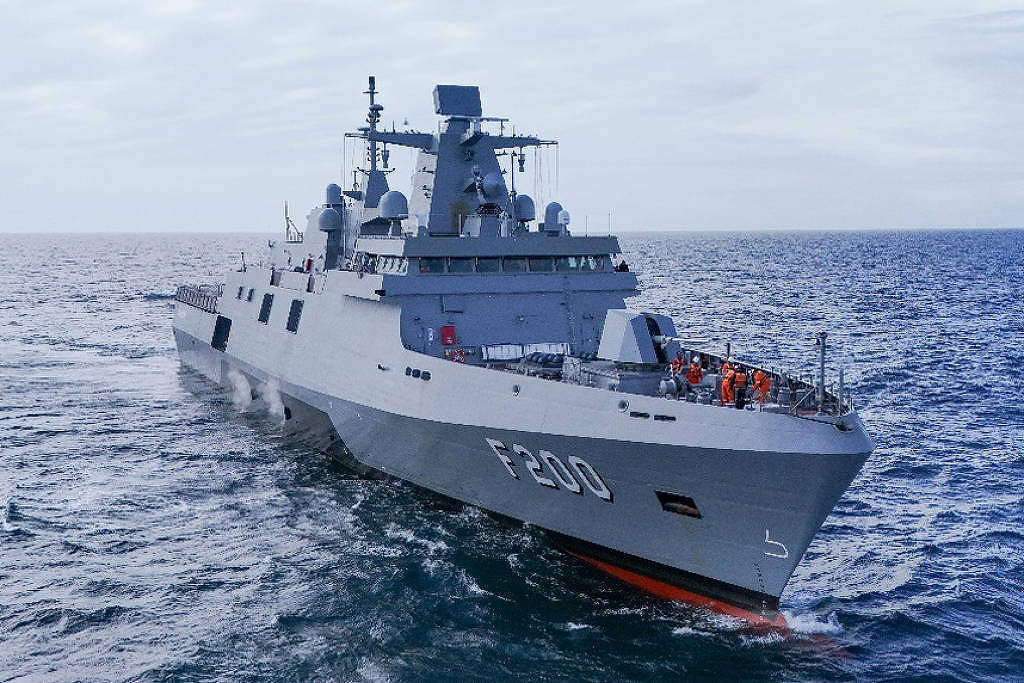
Sovereignty at sea: the new Tamandaré Frigate
In this context of global militarization, Brazil marked a significant step in its defense strategy. This Friday (24), the Brazilian Navy officially incorporates the Frigate Tamandaré (F200), the first of a class of four modern ships built on national soil through the New PAC. The ship’s arrival in Rio de Janeiro occurs at a time when the protection of Brazilian trade routes becomes critical.
The incorporation of Tamandaré is not just a response to external conflicts, but a State necessity. With more than 90% of Brazilian foreign trade transiting through the “Blue Amazon” — an area of 5.7 million km² —, the frigate provides the necessary technology to monitor critical infrastructure, such as pre-salt reserves. In addition to the military gain, the program generates around 2,000 direct jobs and promotes the transfer of technology essential for the country’s technological sovereignty. In a world that is once again investing heavily in destruction, Brazil is trying to balance the need to protect its wealth with industrial development.
Source: vermelho.org.br