Published 04/23/2026 15:42 | Edited 04/23/2026 16:00
The Iranian government confirmed, this Thursday (23), the maintenance of the Strait of Hormuz under strict and continuous control of its Armed Forces, extending the total closure of the route for another 72 hours. The measure is a direct response to the collapse of the peace plan, sabotaged by Israel’s attacks on southern Lebanon and conditioned by US pressure on Islamabad, and deepens a crisis that has already lasted almost two months.
The blockage of the road, through which around 20% of the world’s oil flows, has severe repercussions on the global economy, with direct impacts on inflation, food supply and the negative revision of economic growth forecasts for 2026.
According to information from the Iranian Revolutionary Guard Navy, the strait remains completely closed to any vessels until the naval blockade imposed by the United States on Iranian ports is lifted. In messages transmitted via radio to international maritime traffic, Tehran states that the decision results from non-compliance with commitments made by the US government during negotiations.
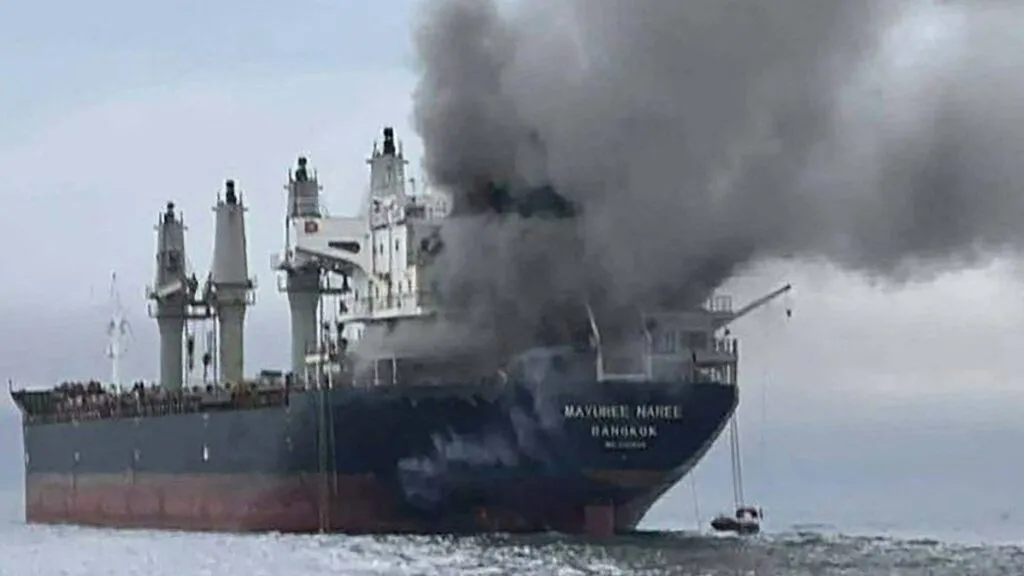
On Tuesday (21), new episodes of tension were recorded with the seizure of at least three merchant ships by Iranian units in the vicinity of the strait.
This logistical and energy bottleneck amplifies the macroeconomic crisis and deepens social fragility. In a recent report on the impact of geopolitical tensions on development, the United Nations (UN) issued a warning about the deterioration of living conditions on a global scale. “The world faces an explosive combination of unsustainable debt and geopolitical division. Some 3.4 billion people live in countries that spend more on debt interest than on health or education, and the paralysis of vital routes like Hormuz threatens to push millions more into extreme poverty”highlighted the document.
US maintains blockade and escalating rhetoric
On the other side, the White House maintains its intransigence. The naval blockade of Iranian ports, implemented on April 13 by the Central Command (Centcom), remains active. In an official note, the US government reiterated that naval forces will continue to prevent traffic entering and leaving Iran’s ports and coastal areas, applying the measure against ships of all nationalities. President Donald Trump has publicly stated that the blockade is working and that the Iranian reaction was expected.
In a statement made on Tuesday (21), Trump signaled the continuation of military pressure, stating that he could resume bombings if an agreement is not reached on Washington’s terms. Although he announced the indefinite extension of a ceasefire for land and air operations, the American president unilaterally excluded the naval blockade from the truce, to provoke an economic crisis and force Tehran into new concessions.
Impacts on the economy and Brazil
The economic consequences of this impasse are alarming and confirm the international fear of a recessive cycle. A study by the Institute of Economic Studies (IREE) highlights that military control over Hormuz strangles essential routes, putting pressure on logistics and energy costs. In Brazil, the Federation of Industries of the State of Minas Gerais (Fiemg) departs from most estimates to indicate that the maintenance of this scenario of instability could increase inflation in the country to up to 7.6% in 2026, given the impact on the price of fuel and international freight.
At the diplomatic level, the impasse persists with no immediate resolution. Tehran conditions the reopening of the strait on guaranteeing complete freedom of navigation for its own ships and the end of naval sanctions. Washington, in turn, defends the blockade, denying violations of international law. While the powers measure forces in a dispute of deterrence and siege, the global market reacts with volatility and populations face the increase in the price of basic items and the risk of energy rationing, worsening the inequality situation denounced by the UN.
Source: vermelho.org.br