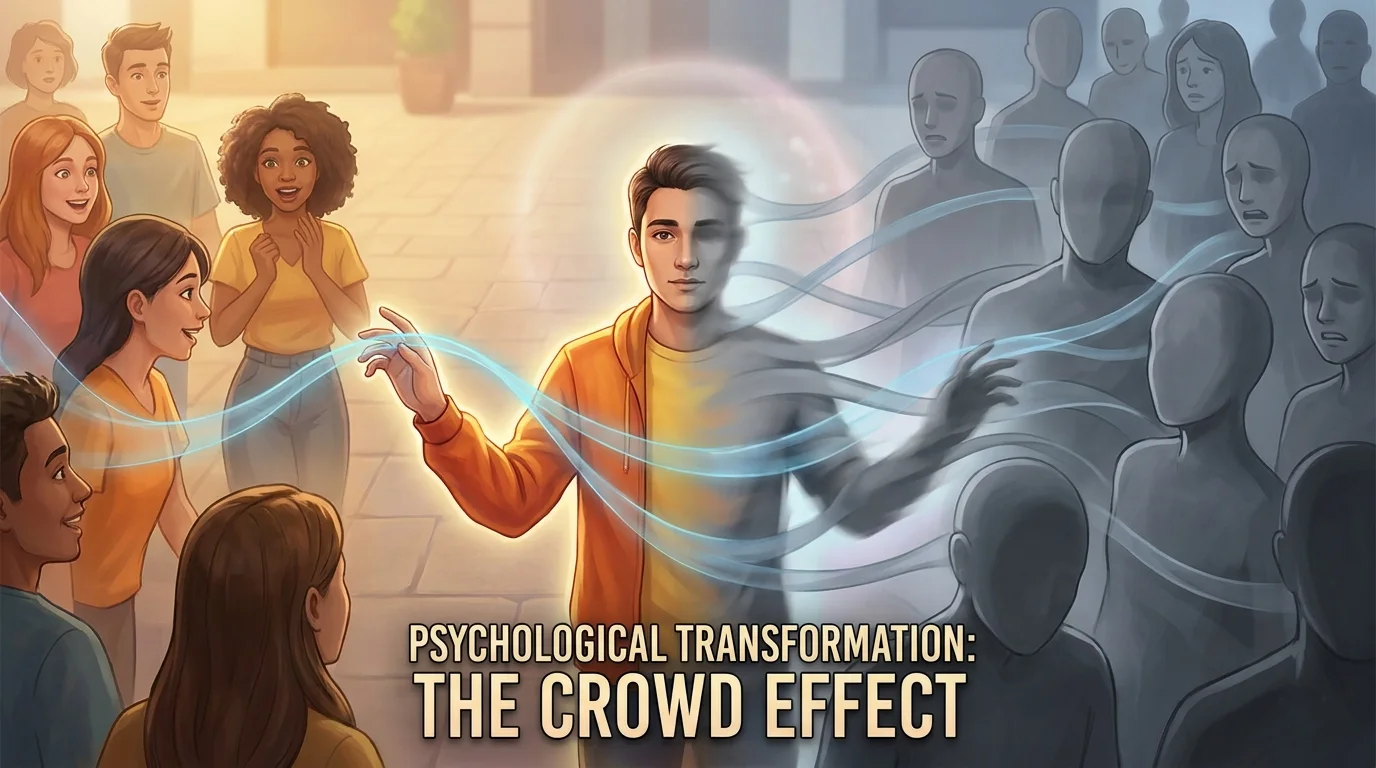
Human beings are inherently social creatures, wired for connection and community. Yet, there is a peculiar phenomenon that has fascinated psychologists, sociologists, and historians for over a century: when individuals gather in large groups, their behavior often changes dramatically. The quiet, reserved person might become boisterous. The law-abiding citizen might engage in vandalism. The thoughtful individual might make impulsive decisions they would never consider alone. This transformation is not merely anecdotal; it is a well-documented psychological reality with profound implications for society, politics, and everyday life.
The Historical Roots of Crowd Psychology 📚
The study of crowd behavior dates back to the late nineteenth century, when French social psychologist Gustave Le Bon published his seminal work, “The Crowd: A Study of the Popular Mind” in 1895. Le Bon argued that individuals in crowds lose their conscious personality and are guided by a “collective mind.” He described crowds as irrational, emotional, and easily influenced by leaders who appeal to primitive instincts. While modern psychology has refined and sometimes challenged Le Bon’s theories, his observations laid the groundwork for understanding how group dynamics can override individual judgment.
In the decades that followed, researchers like Sigmund Freud expanded on these ideas, suggesting that crowds allow individuals to regress to more primitive states, freed from the constraints of social norms and personal responsibility. Today, we understand that crowd psychology is far more nuanced than early theorists proposed, but the core insight remains valid: being part of a crowd fundamentally alters human behavior.
Deindividuation: Losing Yourself in the Mass 🎭
One of the primary mechanisms behind crowd-induced behavioral change is a concept known as deindividuation. This psychological state occurs when individuals feel anonymous within a larger group, leading to a reduced sense of self-awareness and personal accountability. When people believe they cannot be individually identified, they are more likely to engage in behaviors they would normally suppress.
Research conducted in various settings has demonstrated this effect repeatedly. In one classic study, participants wearing masks and lab coats administered significantly higher levels of electric shocks to others compared to those who were identifiable. The anonymity provided by the costume reduced their sense of personal responsibility, making aggressive behavior more acceptable. Similarly, at concerts, sporting events, or protests, individuals often report feeling “swept up” in the moment, acting in ways that feel foreign to their usual selves.
Deindividuation does not always lead to negative outcomes. It can also facilitate positive behaviors, such as increased generosity during charitable events or heightened cooperation during community gatherings. However, the loss of individual identity creates a psychological environment where normal inhibitions are weakened, making people more susceptible to both constructive and destructive impulses.
Social Contagion and Emotional Amplification 😷❤️
Another critical factor in crowd behavior is social contagion, the rapid spread of emotions, attitudes, and behaviors through a group. Humans are naturally empathetic and attuned to the emotional states of those around them. In crowded settings, this sensitivity becomes amplified, creating feedback loops that can escalate emotions quickly.
Consider the atmosphere at a rock concert. As the music builds and the crowd begins to move in unison, individual excitement feeds off collective energy. What starts as mild enthusiasm can rapidly transform into euphoric frenzy. This same mechanism operates in more concerning contexts. Panic in emergency situations often spreads through crowds not because of actual danger, but because individuals observe fear in others and respond accordingly. The result can be stampedes or chaotic evacuations that cause more harm than the original threat.
Social media has extended this phenomenon into the digital realm. Online crowds exhibit similar patterns of emotional amplification, where outrage, joy, or fear can spread virally, influencing millions of people within hours. The psychological principles remain consistent whether the crowd is physical or virtual: emotions are contagious, and individual rationality often takes a backseat to collective sentiment.
Conformity and the Pressure to Fit In 🤝
The desire to belong is a powerful human motivator, and in crowd settings, this drive manifests as intense pressure to conform. Solomon Asch’s famous conformity experiments in the 1950s demonstrated that individuals will often give obviously incorrect answers to simple questions if everyone else in the group provides the same wrong answer. The need for social acceptance overrides even basic perceptual accuracy.
In real-world crowd situations, this conformity pressure can lead to remarkable uniformity in behavior. At political rallies, attendees may chant slogans they do not fully understand simply because everyone else is doing so. During fashion trends, people adopt styles they might otherwise find unappealing because the crowd has deemed them desirable. This conformity is not necessarily conscious deception; rather, it reflects a deep-seated psychological need to align with the group and avoid social rejection.
The financial cost of this conformity can be substantial. Market bubbles provide a stark example of crowd-driven decision-making. When investors see others buying certain stocks or assets, they often follow suit without conducting independent analysis. The resulting herd mentality can inflate prices far beyond reasonable valuations. When the bubble bursts, individuals who participated based on crowd behavior rather than sound judgment face significant losses. Converting recent Brazilian market fluctuations, where values reached approximately R$ 45 billion in speculative trading, translates to roughly $ 8.2 billion in American currency, illustrating the massive economic impact of crowd-influenced financial decisions.
The Role of Leadership and Suggestion 👑
Crowds are not directionless masses; they are often guided by leaders who understand how to harness collective psychology. Effective crowd leaders use suggestion, repetition, and emotional appeals to shape group behavior. They create narratives that resonate with the crowd’s existing beliefs and desires, making their message feel inevitable rather than imposed.
Historical figures throughout history have demonstrated mastery of crowd psychology. Political leaders, religious figures, and social movement organizers have all used techniques of mass persuasion to mobilize large groups toward specific goals. These leaders understand that crowds think in images and emotions rather than logical arguments. They use symbols, rituals, and simplified messages that bypass critical thinking and appeal directly to instinctual responses.
Modern marketing and advertising employ similar strategies. Brands create communities around their products, fostering a sense of belonging among consumers. Limited-time offers and exclusive releases generate urgency and fear of missing out, triggering crowd-like purchasing behaviors even among individuals shopping alone online. The psychological mechanisms are identical: create a sense of collective participation, and individual resistance diminishes.
Positive Aspects of Crowd Behavior 🌟
While much attention focuses on the dangers of crowd psychology, it is essential to recognize its positive potential. Crowds can facilitate extraordinary acts of cooperation, creativity, and social change. Social movements throughout history have relied on crowd dynamics to challenge unjust systems and promote equality. The civil rights movement, women’s suffrage campaigns, and environmental activism all demonstrate how collective action can achieve what isolated individuals cannot.
Crowds also enable cultural experiences that enrich human life. Festivals, celebrations, and communal rituals create shared memories and strengthen social bonds. The collective joy experienced at weddings, graduations, or national celebrations contributes to individual well-being and community cohesion. Research suggests that participating in synchronized group activities, such as dancing or singing together, releases endorphins and promotes feelings of connection and happiness.
Furthermore, crowds can enhance problem-solving and innovation. When diverse individuals come together with shared goals, they can pool knowledge and resources in ways that exceed individual capabilities. Crowdsourcing platforms leverage this principle, allowing thousands of people to contribute small amounts of effort toward complex challenges, from scientific research to creative projects.
Navigating Crowd Influence Wisely 🧭
Understanding crowd psychology empowers individuals to make more conscious choices about their participation in group settings. Awareness of deindividuation effects can help people maintain personal accountability even in anonymous situations. Recognizing emotional contagion allows individuals to pause and assess whether their reactions are genuinely their own or merely reflections of surrounding energy.
Critical thinking skills serve as protective factors against unhealthy conformity. Questioning assumptions, seeking diverse perspectives, and taking time for individual reflection can counteract the pressure to follow the crowd blindly. Education about cognitive biases and social influence techniques provides tools for resisting manipulation while still enjoying the benefits of community participation.
Ultimately, crowds are neither inherently good nor bad; they are powerful forces that amplify human tendencies. By understanding the psychological mechanisms at work, individuals can harness the positive aspects of collective behavior while guarding against its pitfalls. The goal is not to avoid crowds but to engage with them consciously, maintaining individual integrity while contributing to meaningful collective action.
The next time you find yourself in a crowd, take a moment to observe your own thoughts and feelings. Are you acting from genuine conviction or swept along by collective momentum? This simple awareness can transform passive participation into intentional engagement, allowing you to benefit from the energy of the crowd without losing yourself in it.