Published 25/05/2026 13:14 | Edited 05/25/2026 13:29
The social rebellion against Rodrigo Paz’s government continues to deepen in Bolivia, with blockades in at least six departments, clashes with security forces and growing political pressure for the president’s departure.
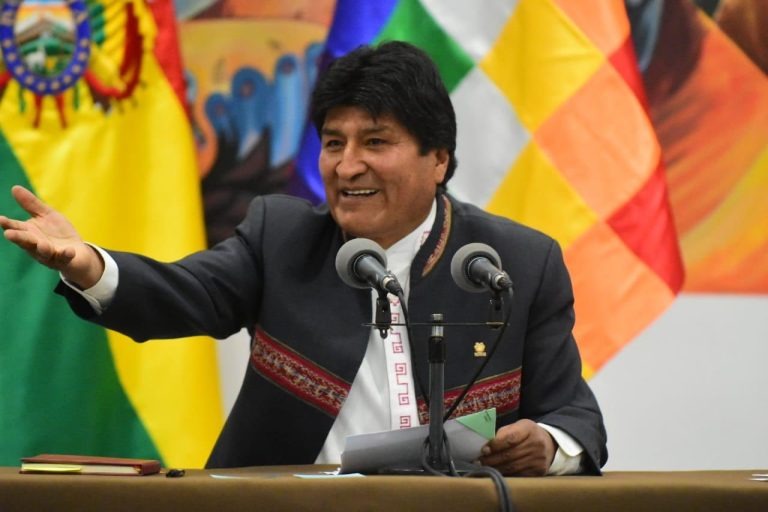
This Sunday (25), former president Evo Morales proposed calling new elections within 90 days as a way out of the crisis and warned that a possible militarization of the country would be a “suicidal decision”.
Morales stated, during his program on Radio Kawsachun Coca, that Peace “has two paths: a suicidal decision, militarization, or (…) pacification, transition and elections in 90 days”.
The former Bolivian president maintains that the mobilizations reflect the social wear and tear caused by the neoliberal measures adopted by the government since November 2025, including the end of fuel subsidies and privatization projects.
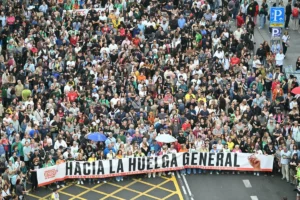
The demonstrations, which began in early May due to inflation and fuel shortages, evolved into direct demands for the president’s resignation.
In recent weeks, protests have expanded to regions such as Cochabamba, Santa Cruz, Potosí and Chuquisaca, while roadblocks have affected the supply of food, medicine and fuel in several cities across the country.
The Bolivian Workers’ Central (COB), the country’s main union entity, decided this weekend not to participate in any dialogue with the government until the arrest warrants against union leaders are annulled and workers detained during the protests are released.
Among those targeted by the arrest orders is Mario Argollo, the entity’s national executive secretary.
According to the Bolivian Road Administrator, there are currently 59 roadblocks in six of the nine Bolivian departments. On Saturday (24), a second police and military operation to free up the main road between La Paz and Oruro failed.
The so-called “Humanitarian Corridor with White Flags” operation used tractors, police and military personnel, who even used tear gas against protesters. After the official caravan passed through, the blockades were reinstalled with stones, earth and logs.
The Bolivian Senate approved this Sunday a project to eliminate the State of Exception Law, a rule created in 2020 that established limits and control mechanisms for extraordinary measures adopted by the Executive in crisis situations.
If the proposal is also approved by the Chamber of Deputies, Rodrigo Paz’s government will have fewer legal restrictions to declare states of exception and expand repressive operations.
The measure was promoted amid pressure from business sectors and civic groups linked to the Bolivian right.
The Pro-Santa Cruz Committee, one of the main opposition poles to the political cycle started with Evo Morales, publicly defended the decree of a “sectorized state of exception” to clear the roads and contain the protests.
Social organizations, unions and human rights entities warned that the initiative could further worsen the political crisis and open space for an escalation of repression.
In a joint statement, the Catholic Church, the Ombudsman’s Office and the Permanent Assembly of Human Rights of El Alto demanded an end to violence, the opening of dialogue and an “urgent, independent and transparent” investigation into reports of injuries, deaths and abuses committed during security operations.
At the same time, the COB instructed its bases to guarantee unrestricted passage for ambulances, medical brigades, health professionals and the transport of medicines at all blockade points in the country.
The entity stated that the mobilization must preserve “the health and life” of the population, even in the face of the intensification of the conflict.
The protests bring together unions, peasant organizations, indigenous people, students, teachers and transport workers, in a scenario that recalls the great Bolivian popular uprisings of the beginning of the 21st century.
The core of the mobilizations is the rejection of Rodrigo Paz’s economic program, accused by protesters of dismantling social rights, paving the way for privatizations and deepening the external dependence of the Bolivian economy.
The government, in turn, insists on holding Evo Morales responsible for the mobilizations and claims that the protests threaten the country’s institutional and economic stability. Morales rejects the accusations and maintains that the revolt is a direct result of popular discontent accumulated against the neoliberal model implemented by the current government.
Source: vermelho.org.br