Published 05/25/2026 13:59 | Edited 05/25/2026 14:23
Recent signals from Washington and Tehran indicate progress in negotiations to end the war that began in February, but both sides continue to avoid announcing an imminent agreement.
The main obstacle involves contradictory strategic interests, pressure from Israel, dispute over the Iranian nuclear program, control of the Strait of Hormuz and political instability within the United States.
This Monday (25), the spokesman for the Iranian Ministry of Foreign Affairs, Esmaeil Baghaei, stated that negotiators had reached “conclusions on most of the topics discussed”, but rejected the idea that the signing of an agreement is close.
According to him, the formulation of North American foreign policy continues to be marked by “institutionalized hesitation” and constant changes of position.
On the North American side, President Donald Trump alternates between signs of optimism and threats. In a post on social media, he stated that the agreement will be “big and significant” or “there will be no agreement at all”.
Secretary of State Marco Rubio declared that Washington will give “every possible chance to diplomacy”, but again threatened Iran with “other paths” if the negotiations fail.
Nuclear program remains the main focus of tension
The most sensitive topic in the negotiations remains the fate of Iran’s stockpile of highly enriched uranium.
According to US officials interviewed by Reuters, Iran had agreed “in principle” to reduce or eliminate this material in exchange for the end of the naval blockade imposed by the US and the suspension of economic sanctions.
The problem is that there is still no consensus on how this would be done. The Iranian government refuses to hand over the material to the United States or Russia and insists on preserving some degree of domestic nuclear capability.
Iranian authorities only defend alternatives such as diluting uranium or temporarily suspending enrichment.
Furthermore, Baghaei stated that the current talks prioritize ending the war and reopening trade routes, not a complete renegotiation of Iran’s nuclear program.
According to him, nuclear issues would be discussed later, within a new diplomatic schedule.
Strait of Hormuz became the center of negotiations
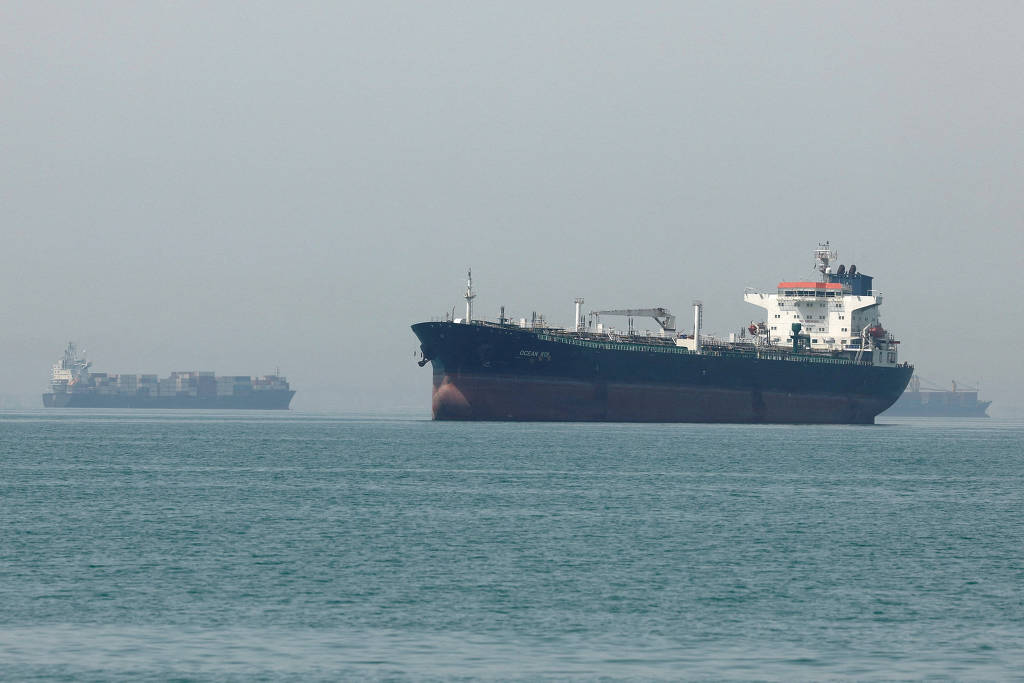
Another decisive point involves the Strait of Hormuz, a maritime corridor through which around 20% of the world’s oil normally passes.
Since the start of the war, Iran has severely restricted the movement of ships, while the US has intensified the blockade against Iranian ports.
The reopening of the sea route is considered an absolute priority by Washington, mainly because of the global economic impact of the war. The crisis raised oil prices, put pressure on international inflation and increased the costs of fuel, fertilizers and food.
Tehran says it will agree to guarantee navigation, but wants to establish a new system of maritime control and services in coordination with Oman.
The Iranian government rejects the term “toll” for foreign vessels, but admits charging fees related to navigation and environmental protection in the region.
The proposal causes concern among European countries and Gulf monarchies, who see the risk of expanding Iranian influence over one of the most important energy routes on the planet.
Israel presses against agreement with Tehran
The negotiations also face growing resistance within Israel. Iranian authorities directly accuse the Israeli government of trying to sabotage any understanding between Washington and Tehran.
According to Reuters, Israeli Prime Minister Benjamin Netanyahu admitted to allies that Israel currently has little ability to influence Trump’s decisions on the war.
Israeli opposition leader Yair Lapid classified the possible agreement as “bad for the region” and stated that Israel is experiencing a “historic minimum” of political influence in Washington.
Tension has increased because the understanding under discussion does not include measures against the Iranian missile program or against Tehran’s allied groups in the Middle East, issues that Israel considers central.
Trump tries to link agreement to expansion of the Abraham Accords
Another element that complicated the negotiations was Trump’s attempt to link the agreement with Iran to the expansion of the Abraham Accords.
The American president began to pressure countries such as Saudi Arabia, Qatar, Pakistan, Egypt and Turkey to normalize diplomatic relations with Israel as part of the post-war regional rearrangement.
The proposal faces strong resistance in the Middle East, especially because the devastation of Gaza has deepened popular rejection of rapprochement with Israel.
Diplomats and analysts interviewed by the Guardian stated that there is no real political willingness for collective adherence to the agreements defended by Trump.
Source: vermelho.org.br