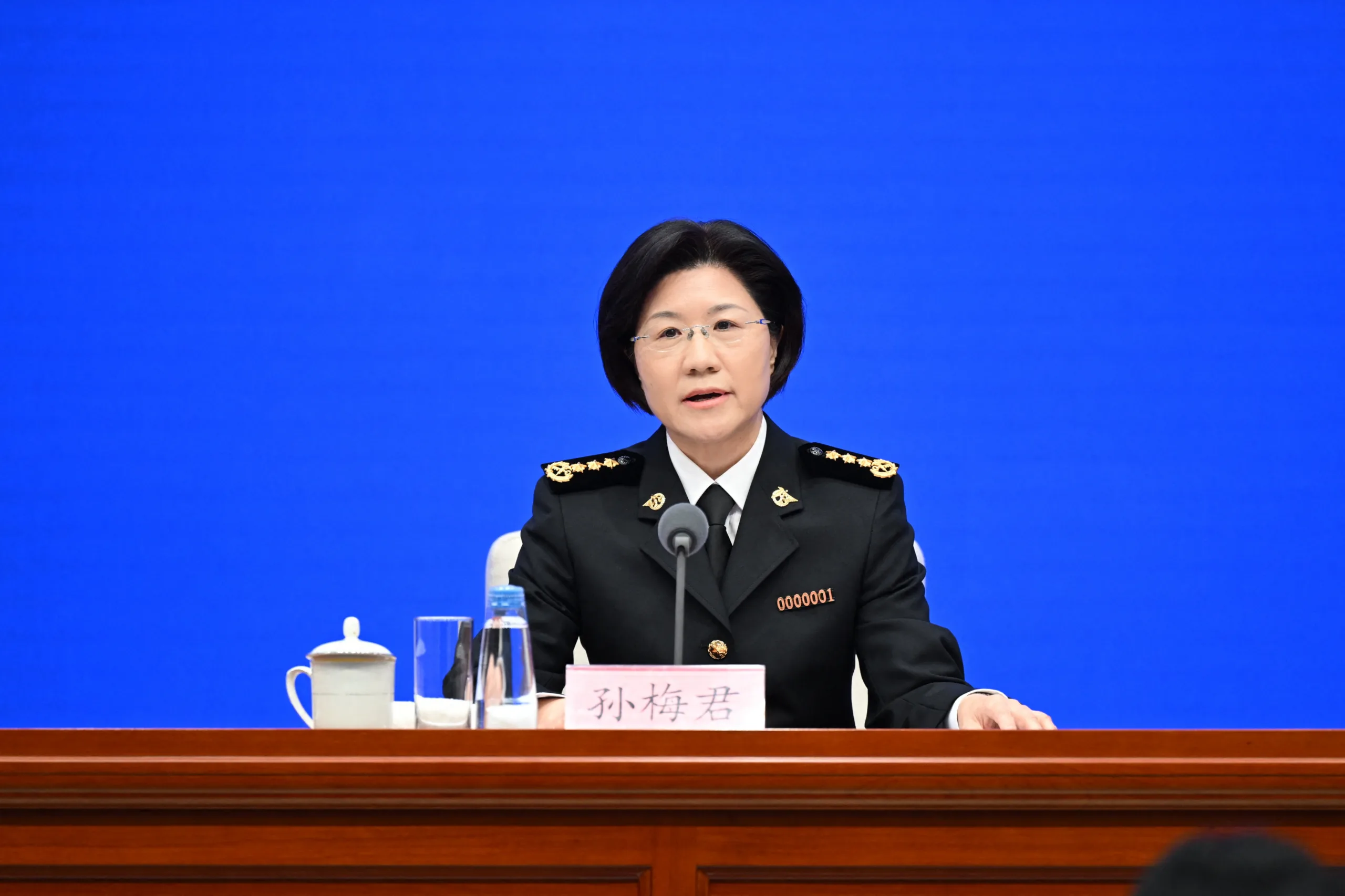
Chinese Customs detailed this Wednesday (22) the goals of the 15th Five-Year Plan for foreign trade, based on a first half of expansion.
According to data released by the agency on July 14, exports of integrated circuits (chips) grew 88.7%, those of electric vehicles, 68.7%, and those of high-technology products rose 39%. Total foreign trade increased 16.9% in the period, with an increase in both imports (22.1%) and exports (13.4%).
The organization’s director-general, Sun Meijun, highlighted the numbers, but acknowledged that “the factors of uncertainty and instability faced by foreign trade have increased significantly”.
She also lamented the “complexity and volatility of the current international scenario, with the increase in unilateralism and protectionism, the increase in tariff and non-tariff barriers”. “Protectionism has no future,” he said in response to a question about the increase in trade with African countries in the first half of the year.
US announces more tariffs
On the eve of the Chinese Customs press conference, US trade representative Jamieson Greer announced that the Trump administration is preparing new tariffs for dozens of countries under the pretext of “forced labor”. The list would include China, Brazil, Mexico and 57 other nations, with rates between 10% and 12.5%.
In an interview with Bloomberg On July 16, Greer had described China as also the target of a separate investigation into “structural overcapacity,” focusing on the semiconductor and electric vehicle sectors. He also confirmed a meeting between Trump and Xi Jinping scheduled for September.
China-USA bilateral trade had registered a decline in the first months of 2026. From April onwards, the direction was reversed, with growth in May and June.
What changes in the 15th Five-Year Plan
Sun Meijun said there are four axes in terms of Customs priorities for 2026-2030: regulatory services for foreign trade, border security, open cooperation and combating smuggling.
On the import side, Meijun announced the expansion of advanced technology sources, strategic components, energy resources and quality agricultural products. In his words, China is not only the “factory of the world” but also the “world market”.
On the commercial front, the highlight is the creation of a specific regulatory framework for exports of artificial intelligence and energy transition products, sectors experiencing rapid growth that still operate under generic rules.
Wang Jun announced three changes in e-commerce. Companies in the sector with a good compliance record can register once to operate in any port in the country, without needing separate registrations by region. E-commerce exports via cross-border land transport now operate through the TIR (International Road Transport) system, a UN treaty that allows the transit of goods under customs seal through 78 signatory countries with a single document and minimum border inspections, eliminating mandatory stops at each control point. And returns of products kept in warehouses abroad will have a simplified reimport process (the return of goods to Chinese customs territory).
Cargo that combines more than one type of transport, such as ship, train and truck, will now circulate with a single document from the beginning to the end of the journey, instead of requiring separate paperwork for each segment. The goal is for half of combined transport operations to adopt this system by 2030, according to Lü Daliang, spokesperson and director of statistics at Customs.
Source: www.brasildefato.com.br