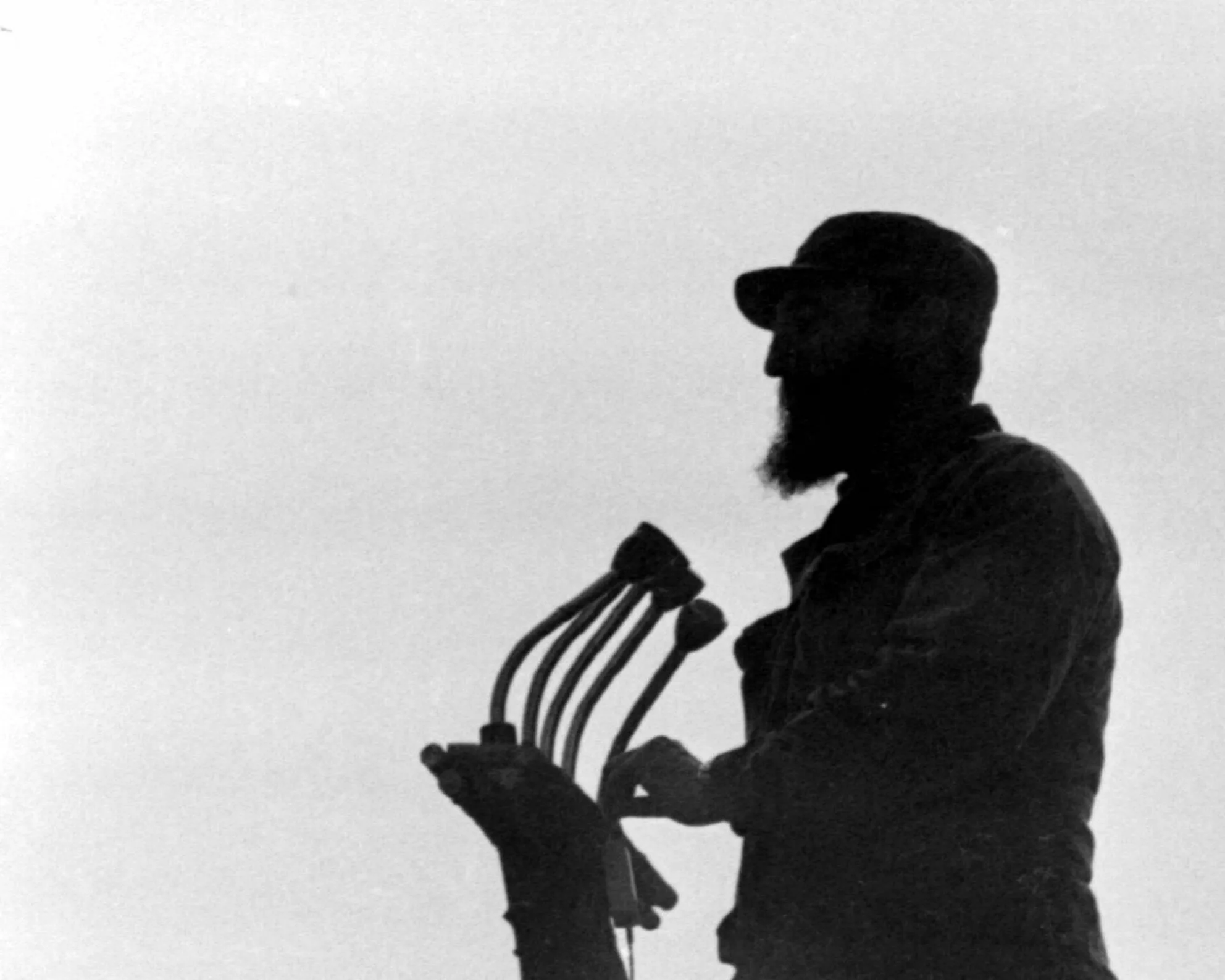
This August 13th, the day Fidel Castro would turn 100 years old, the Brazil in fact premieres the documentary “Fidel and Socialist Cuba – Burn the Skies”. Filmed mainly in Havana and surrounding cities, the production covers the legacy of the leader of the Cuban Revolution, based on the challenges currently faced by the island.
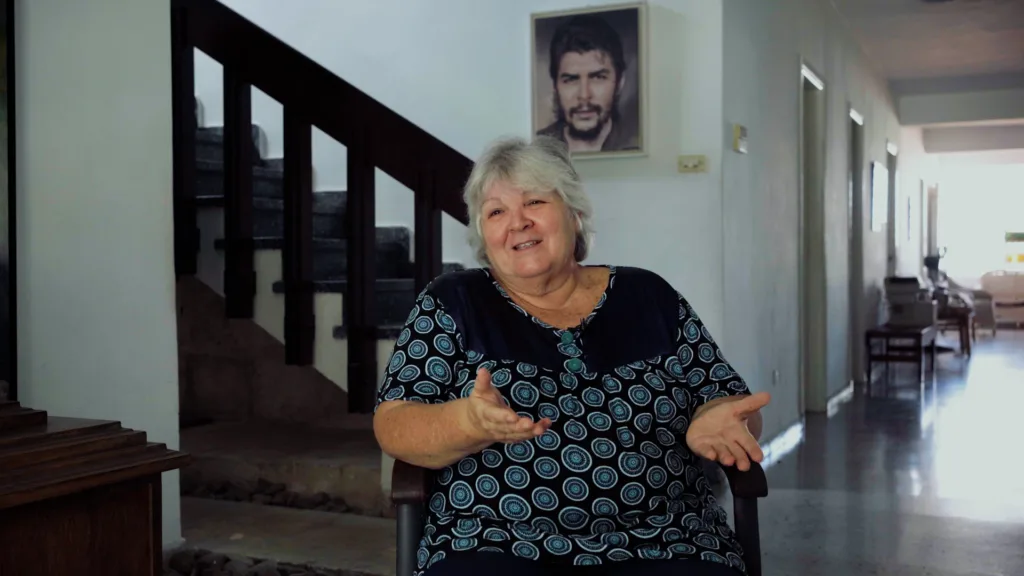
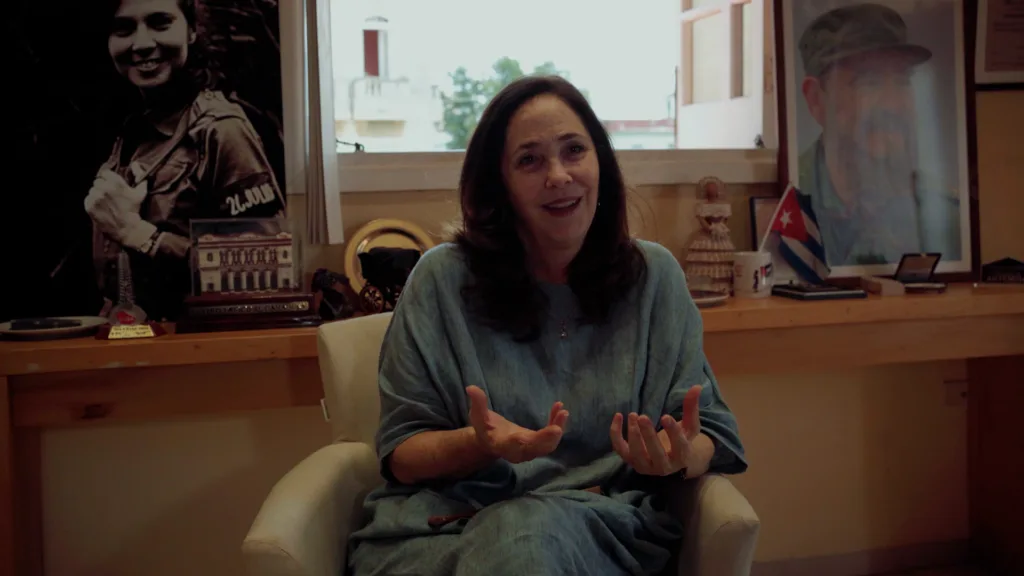
Available free of charge from 9am this Thursday (13th), on the Brazil in fact on YouTube, with subtitles in Portuguese and Spanish, the film brings together historical images and testimonies from the Cuban president, Miguel Díaz-Canel, deputy Mariela Castro, Fidel’s niece and daughter of Raúl Castro, and doctor Aleida Guevara, daughter of Ernesto Che Guevara. Workers, farmers, artists and scientists also participate in production.
The film also shows rare images of the Cuban Revolution and little-known speeches by Fidel, based on research in the newsreel archive of the Cuban Institute of Cinematographic Art and Industry. The Cuban leader’s voice helps drive the narrative, connecting different eras of his thought.
In addition to giving a historical dimension to the trajectory of Fidel, who died in November 2016, at the age of 90, the documentary starts from a question imposed by the present: how is the legacy of the revolutionary leader mobilized in the face of the challenges faced by Cuba today?
The question crosses a country impacted by the resurgence of the economic blockade imposed by the United States, which triggered a scenario of fuel shortages, blackouts and difficulties in maintaining production and daily services. At the same time, Cuba implements changes to its economic model and ways to expand production without abandoning the socialist project.
One of the voices in the film, President Díaz-Canel, explains that Fidel’s teachings serve as a guide for Cubans in building the future of the revolutionary process. “We lost Fidel physically, but Fidel is present. Fidel’s legacy is present every day in what we do, in the work of the Revolution, also as an inspiration for what needs to be done in difficult times”, he says in the documentary.
Crisis and ‘creative resistance’
One of the axes of “Fidel and Socialist Cuba – Burn the Skies” addresses the impacts of the current energy asphyxia on everyday life. The reports include the difficulty in supplying fuel, reduced transport and the impacts of power cuts on water supply, food conservation, care in hospitals, schools and economic activities in general.
In response to this scenario, the Cuban president coined the concept of “creative resistance”. For Díaz-Canel, the expression does not just mean enduring difficulties, but finding ways to produce, innovate and reorganize the country in the face of them.
“Fidel always said that crises were opportunities for us to grow as revolutionaries, they were opportunities to improve ourselves. Fidel also said that, in complex moments, one could not renounce development and creativity. And, from the connection of these two concepts, […] I tried to develop the concept of creative resistance”, he says.
In 2026, the Cuban government approved 176 economic transformation measures as part of an attempt to reactivate production and services. Among the announced objectives are strengthening state and non-state companies, expanding the autonomy of municipalities and public companies, stimulating investments and creating associations between the state, private and cooperative sectors.
The changes also provoke debates within Cuban society. Among the concerns recognized by the government are the growth of private capital, the concentration of wealth, the increase in inequalities, the role of the market and the mechanisms of popular control over transformations.
The film places in this scenario forms of organization that predate the current crisis. Cooperatives, community initiatives and popular participation appear as part of a tradition built over the decades of the Revolution, now faced with new economic demands.
“We need to invent, create, see how we can get out of the hole we are in, without ever losing the perspective of a socialist society”, summarizes Aleida Guevara, in the documentary.
Producing food is also resisting
Among the peasants heard by the Brazil in factthe relationship between Fidel’s historical legacy and the need to overcome obstacles to maintain healthy food production, even under adverse conditions, becomes evident. The documentary covers experiences of cooperative agriculture and urban and suburban production, and recovers the priority given to food production during Fidel’s government.
Amid the lack of fuel and inputs, farmers report difficulties in mechanizing work and transporting production. Amarílis Iriarte Báez, one of the voices from the agricultural sector heard in the film, relates the organization of peasants to the social transformations that began after 1959. According to her, education, health and access to professional training also changed the social position of rural families.
“If today the peasants are grateful to the revolutionary process, it was because, by triumphing in that same process, Fidel transformed us into part of civil society. He gave us study, school, healthcare, the possibility for his children and grandchildren today to be doctors, professionals, artists. And the way we have today to repay all of this is by cultivating the land, giving the best we have”, he states.
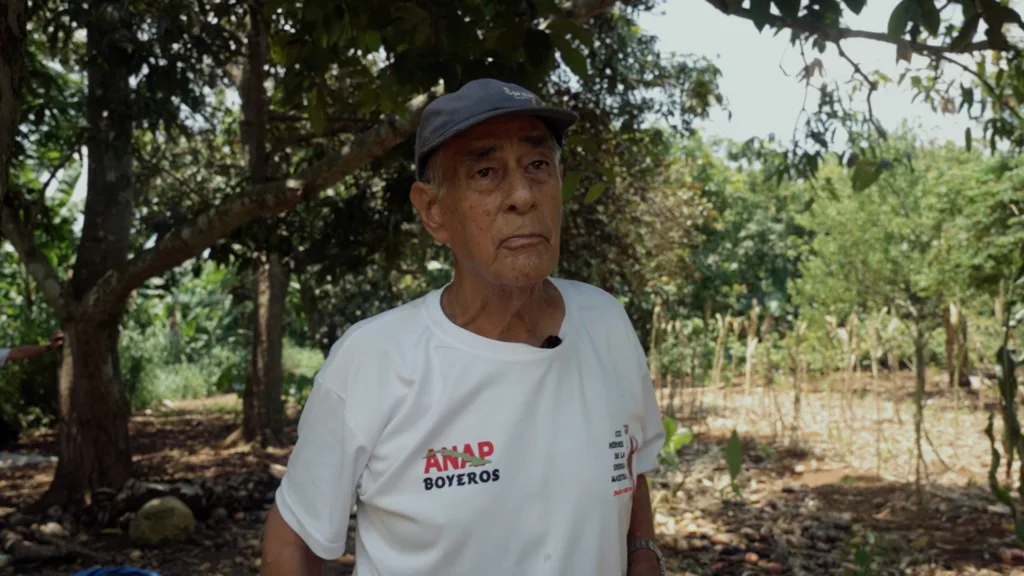
The urgency of maintaining food production to overcome the suffocation of the energy block appears even more directly in the testimony of farmer Lázaro Calixto, 86 years old. He recalls having participated in the defense of the Revolution since his youth and compares those confrontations to current work in the field.
“I defended the Revolution in Girón, fighting in Girón. I defended the Revolution in the October Crisis. I defended the Revolution in the fight against bandits and I continue defending it to this day. One way, at this moment, to defend the Revolution is to produce”, he says.
Science as a sovereignty strategy
As a reflection of the diversity and excellence of Fidel Castro’s legacy, the documentary also focuses on the Cuban experience in developing science, medicine and biotechnology. The film visits scientific centers and rescues the training of researchers as part of a strategy that began in the first decades of the Revolution. The route reaches the production of medicines and vaccines developed by Cuba against Covid-19.
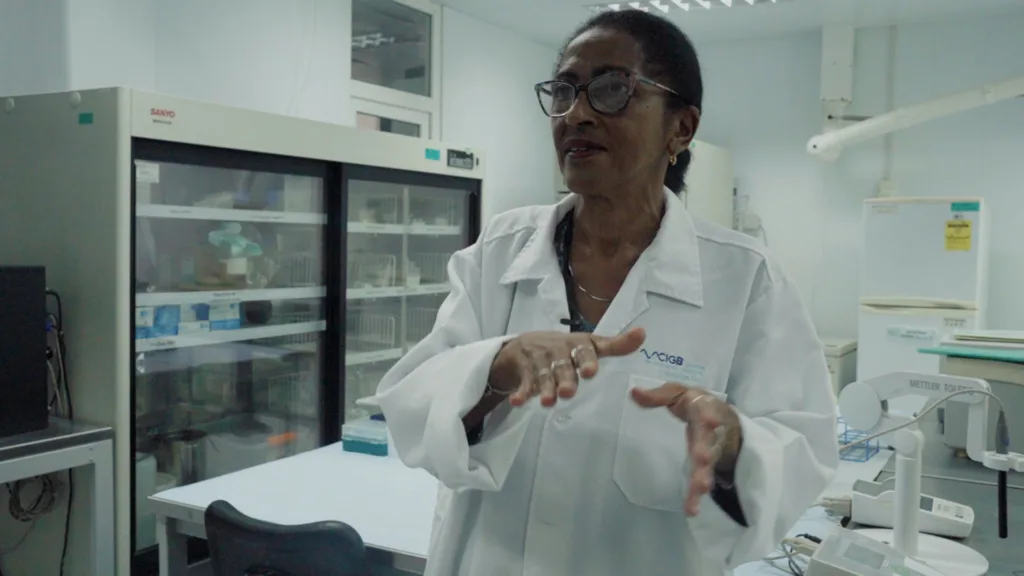
Scientist Mabel Izquierdo López states that this policy was designed from the first years of the revolutionary process. “The importance of scientists has been written since the beginning of the Revolution. Fidel identified this need. They opened universities, an academy was created, because the country needs it. Here it is not an elite science, nor to seek recognition. Here it is a science, in any sense, in favor of the development of our country”, he reports.
Mabel also mentions in the film the more than 60 patents obtained by the Center for Genetic Engineering and Biotechnology (CIGB), where she works. These are medicines incorporated into the Cuban health system and the Abdala vaccine experience during the pandemic. For the researcher, scientific work is directly related to its social results.
“We feel that we gave everything, that we gave everything in exchange for nothing, simply to see the health of a people, to see that people improve, to see that Cuba is gaining more and more space in science at a global level”, he states.
Fidel beyond the revolutionary leader
“Fidel and Socialist Cuba – Burn the Skies” also seeks a Fidel less associated with great speeches and closer to the people who lived with him.
Mariela Castro describes a leader whose relationship with the population was also built on the ability to communicate and personal contact. “Fidel is tenderness, Fidel is love. Fidel is a high sense of responsibility. Fidel is a man of culture, he is an intellectual. A man who, as Gabriel García Márquez said, took great care with his words. That’s why he communicated and wrote with great rigor. He was a communicator par excellence, the great communicator of the Revolution”, he says.
Aleida Guevara recovers the intimate memory of this coexistence. After her father’s death in 1967, she grew up maintaining a close relationship with Fidel. “From a very young age, I realized that I was at the side of an exceptional man because of the way he treated me. This is not usual for great men, to treat a child with this delicacy, with this tenderness. I was not his biological daughter. So, somehow, I began to realize the man he was”, she reports.
Aleida also remembers that, when she was about six years old and didn’t know how to write well, she dictated her first poem to her mother. According to her, her mother said that the verses were dedicated to the “two fathers”, Che and Fidel. “But actually, I did it for Fidel. It was whoever was close,” he says.
Burn the skies: the trail of Silvio Rodríguez
Music leads part of the journey between memory and present. The soundtrack has the brilliance of Silvio Rodríguez, one of the main names of Nueva Trova Cubana. And it includes songs like The Fool, The Era is Giving Birth to a Heart e Fidel’s Brave People.
It’s from The Era is Giving Birth to a Heart comes the image that gives the documentary its name. The song features the verse “burn the sky if necessary”, an expression that accompanies the idea of always seeking alternatives in the face of seemingly insurmountable limits.
This idea reappears in the final sequence, when Díaz-Canel mentions doctors and nurses who arrive at work despite transportation difficulties, teachers who hold classes during blackouts and farmers who continue producing amid a lack of fuel. These are examples that the president associates with “creative resistance”, presented throughout the film.
“There is no blackout that erases desire. There is no shortage that breaks hope”, says Díaz-Canel.
Source: www.brasildefato.com.br