Published 04/08/2026 19:44 | Edited 04/09/2026 14:26
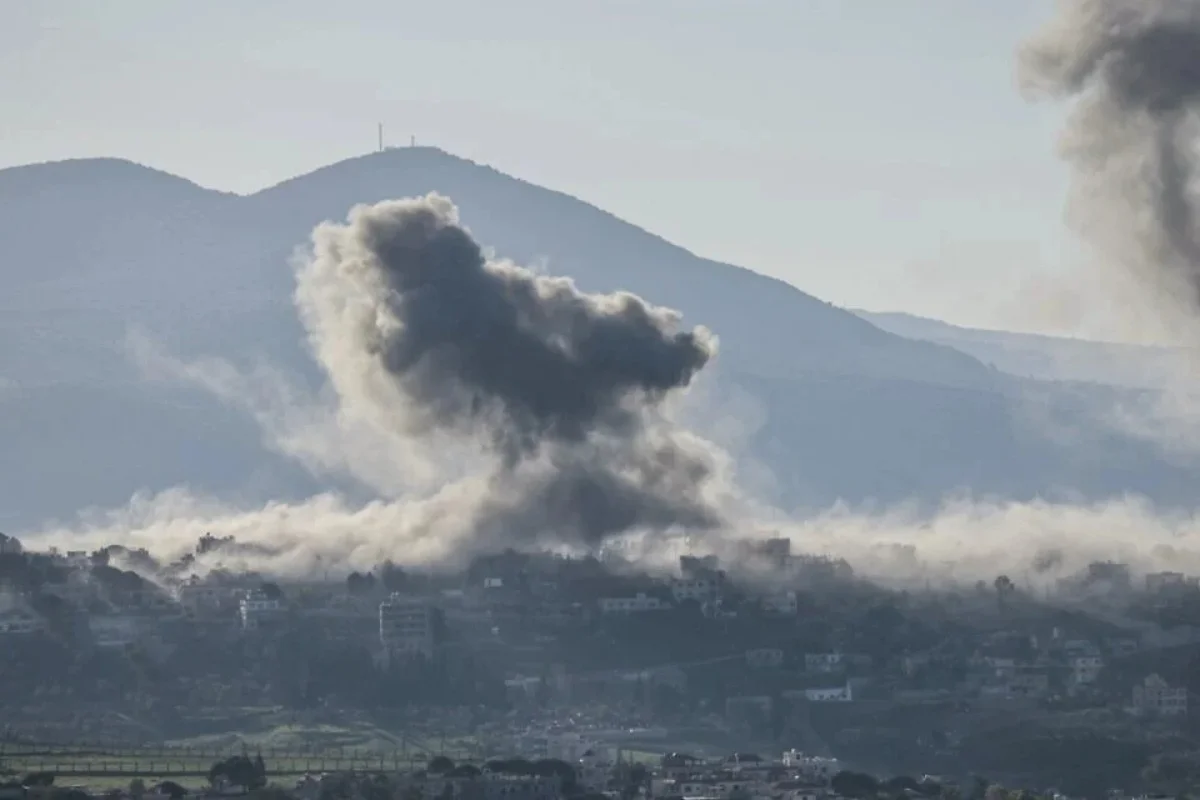
The Israeli escalation in Lebanon has clear and deliberate objectives. Just hours after announcing a partial ceasefire with Iran — mediated by Pakistan to contain direct conflict — Israel launched massive attacks against more than a hundred targets on Lebanese soil. The offensive resulted in hundreds of deaths and accelerated a population exodus that now exceeds the mark of one million displaced people. In response, Tehran threatened to abandon the agreement if Lebanon and Gaza are not integrated into the truce. Benjamin Netanyahu, however, chose to double down, declaring that the ceasefire “does not apply to Lebanon”.
For the Communist Party of Israel (PCI) and Hadash — a left-wing coalition that unites Arabs and Jews around a democratic and anti-occupation agenda — the action constitutes a “criminal massacre” that highlights the political fragility of the government. In an official statement, the PCI and the Hadash Front classify the truce with Iran as an advance that must be converted into permanent peace. At the same time, they warn that Netanyahu seeks to undermine any stability, as the cessation of hostilities would represent the end of his political legitimacy.
In an interview with Red PortalYoáv Goldring, historic leader of Maki (Communist Party) and Hadash, details the logic behind the violence. According to him, the strategy of “continuous war” is what keeps Netanyahu’s electoral base together. Goldring also denounces the genocidal intentions of sectors of the government coalition that defend the expulsion of Shiite communities south of the Litani River. “The intention is to push the entire population north of this line, repeating tactics from past decades, but now with unprecedented aggression,” he states.
Recent facts corroborate this expansionist vision. Defense Minister Israel Katz announced occupation plans up to the Litani River, covering around 10% of Lebanese territory, and prohibited the return of civilians, using a control model explicitly compared to that of Gaza. Under direct instruction from Netanyahu, the Army has promoted the systematic destruction of villages and infrastructure to consolidate a “security zone”.
Goldring points out that the political calendar also dictates the pace of bombs. The elections, scheduled for October, could be brought forward to June if popular pressure increases. “People are taking to the streets, and the center-left parties are starting to follow this movement. The police, however, are highly politicized, repressing demonstrations not because of crowds, but because of their anti-government nature”, reports the leader.
The economic factor: Saudi Arabia and energy control
The escalation also moves pieces on the global economic board. Faced with the Iranian threat to block the Strait of Hormuz, Saudi Arabia activated the East-West oil pipeline (Petroline) at full capacity. The 1,200 km structure allows the oil to be flown directly to the port of Yanbu, on the Red Sea, bypassing the choke point. According to the The New York TimesRiyadh intensified the flow immediately after tensions worsened, capitalizing on the instability of Hormuz.
Geopolitically, the conflict serves Washington’s interests. Goldring analyzes that the interruption of energy supplies to China — the USA’s biggest adversary — is one of the pillars of the war. It is an isolation strategy that targets not only Iran, but the BRICS bloc, whose expansion is seen as a direct threat to North American hegemony. Hybrid warfare, which fuses military power and energy control, serves to keep the global market under Washington’s rules.
The path of peace
For Israeli progressive forces, the solution will not come through brute force. The PCI and Hadash reaffirm that regional stability depends on the end of the occupation and the establishment of a sovereign Palestinian State, based on the 1967 borders. Goldring calls for the formation of a broad front to confront the government’s colonial logic and offer a moral alternative to the country.
As Netanyahu tries to survive politically through the massacre, southern Lebanon bleeds and the world watches the risk of an unprecedented energy crisis. For the Israeli left, any “calm” that ignores aggression on multiple fronts is illusory; real peace necessarily requires the end of the occupation.
Source: vermelho.org.br