Published 04/09/2026 13:24 | Edited 04/09/2026 18:23
The possibility of a diplomatic solution to the Israeli and North American aggressions against Iran, in the Middle East, suffers a setback this Wednesday (8). The speaker of Iran’s Parliament (Majlis), Mohammad Bagher Ghalibaf, declared that dialogue with the United States has become “irrational and unfeasible”. The central reason is Trump and Netanyahu’s refusal to include Lebanon in the ceasefire agreement, violating the terms of the 10-point proposal presented by Tehran.
In a post on his own social media profile, Ghalibaf highlighted that the exclusion of Lebanon — treated by the US as a “separate conflict” — undermines the premise of a comprehensive ceasefire. Furthermore, the parliamentary leader cited the incursion of a drone into Iranian airspace and the persistent denial of the country’s sovereign right to uranium enrichment as evidence of American bad faith.
Washington’s betrayal of the 10-point proposal
The Iranian proposal, formulated by the Supreme National Security Council, mediated by Pakistan and guaranteed by China, provides for a ceasefire on all combat fronts, explicitly including Lebanon and Hezbollah, in addition to shared control of the Strait of Hormuz and the end of economic sanctions.
Although Donald Trump even classified the document as a “viable basis”, the practice revealed the maintenance of the policy of aggression. In an interview with PBS, Trump disregarded Lebanese sovereignty by claiming that the country was left out of the agreement due to Hezbollah, referring to the ongoing massacre as a “separate confrontation”. In the same tone, Netanyahu confirmed that Israeli military operations in Lebanon would not cease.
Operation “Eternal Darkness” and the massacre in Beirut
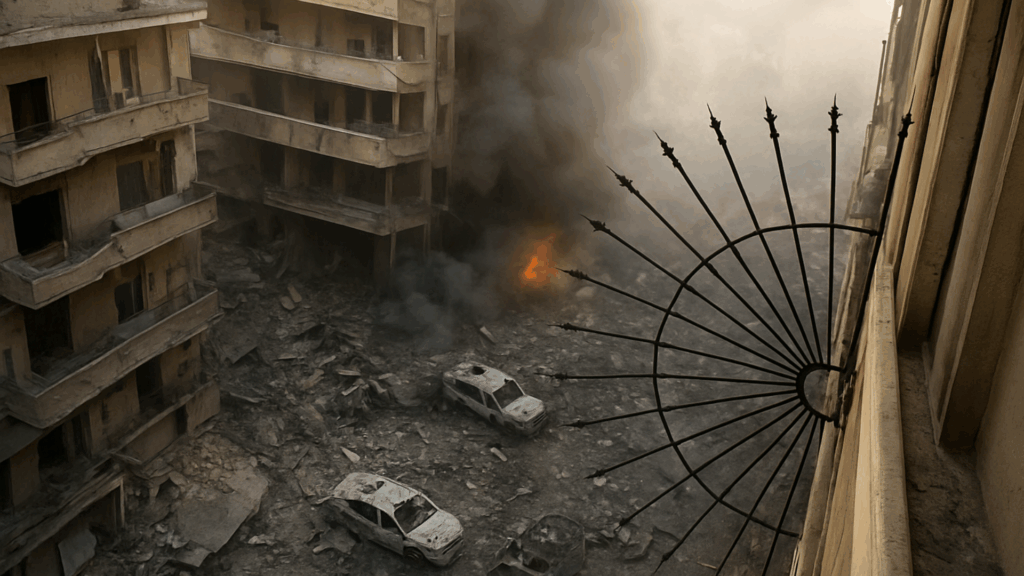
As diplomacy heads to Islamabad, the battlefield boils. On Wednesday, Israel escalated the attacks with operation “Eternal Darkness”, carrying out massive bombings against Beirut and southern Lebanon. The toll is tragic: between 180 and 300 dead and more than a thousand injured in just one day.
There are hundreds of reports and images on social media of attacks in Beirut on residential neighborhoods, which hit apartment buildings. The Red Cross has been pulling seriously injured children out of the rubble. At least 80 dead. The buildings are undergoing inspections to verify the civil structure.
Lebanese Prime Minister Nawaf Salam accused Israel of deliberately ignoring all international calls for peace. For the government of Masoud Pezeshkian and Foreign Minister Abbas Araghchi, aggression against Lebanon is a red line. The Revolutionary Guard has already promised a “forceful response” to what it considers a direct violation of the commitments made.
Regional Uncertainty and the Strait of Hormuz
The diplomatic split threatens the Islamabad Accords. The direct negotiations scheduled to begin this Friday (10), which will be attended by the US Vice President, JD Vance, are now hanging by a thread. Instability is already reflected in the global economy and logistical security. Iran has signaled that it may close the Strait of Hormuz again if the siege on Lebanon is not stopped. The world awaits with trepidation the next 48 hours, which could decide between a fragile truce or an unprecedented regional conflagration.
Source: vermelho.org.br