Published 04/27/2026 10:52 | Edited 04/27/2026 11:24
It was six o’clock in the morning when the sun began to rise over Lisbon, slowly drawing the first lights over the hills of the still silent city. There was a kind of hangover in the air from the previous night, when, throughout the city, different celebrations had taken over the streets, squares and cultural spaces. Shows, meetings, presentations, institutional sessions and street activities spread throughout Lisbon as part of what is known as the April Festivities, a calendar that spans the entire month, but which gains particular intensity on the night of the 24th, when the city starts to live simultaneously in memory and expectation.
At different points, improvised stages and organized programs brought together different audiences, while songs marked the symbolic turning point of the date, with Grândola, Vila Morena being sung collectively in more than one space, reaffirming a memory that does not just belong to the past, but is updated in the encounter between generations. There were also plays, debates, activities promoted by associations, movements and parishes, in addition to official sessions that institutionally highlighted the meaning of the revolution, making up a broad program that spread throughout the city and prepared the ground for the following day.
It was also at the same time, on that Thursday in 1974, that troops began to arrive in Lisbon, commanded by officers from the Armed Forces Movement, including Salgueiro Maia, who would lead one of the decisive columns in the occupation of the city. For many, that would be just another ordinary day at work, but, without them knowing, history was already underway, and what began as a carefully coordinated military operation would transform, over the course of hours, the lives of the Portuguese and would become part of the imagination of revolutions in the world.
Fifty-two years later, Lisbon woke up again with this memory inscribed in time, not as a repetition, but as continuity. Before the crowds, the city was already moving, with runners crossing avenues in the first races organized by the parishes, bicycles advancing in small groups, some already carrying spikes attached to the handlebars, and the first signs of occupation appearing in a dispersed manner, as if the body of the city was preparing itself for what was yet to come.
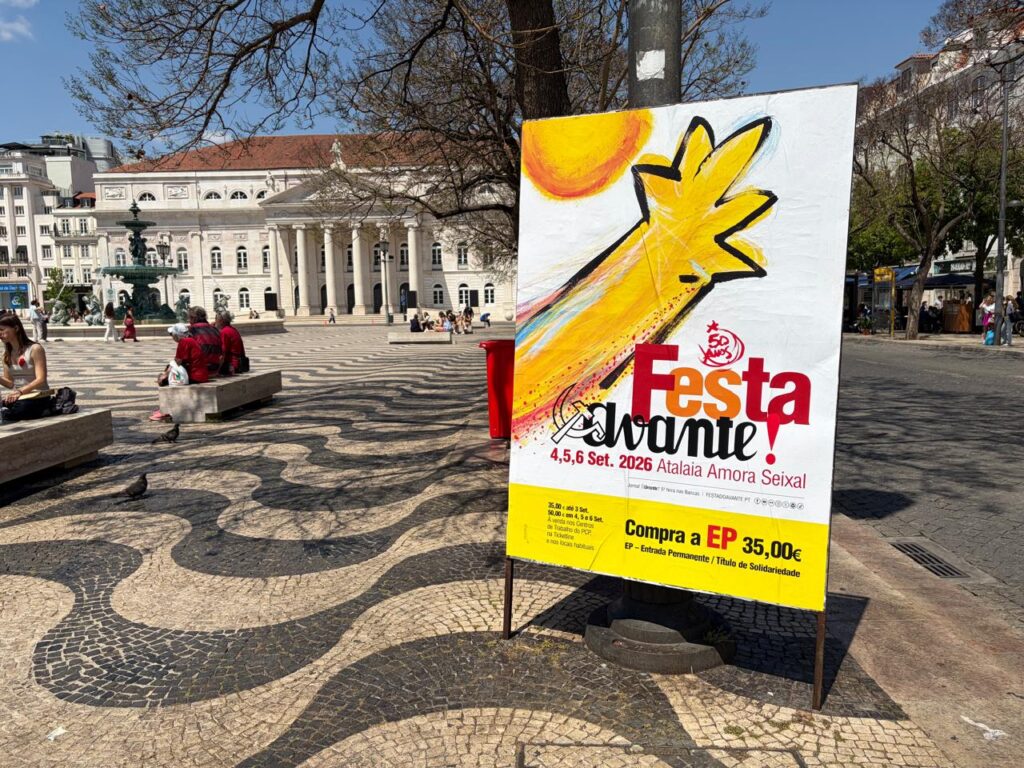
As the morning progressed, the center gained density due to the continuous presence of those who chose to start the day in memory, visiting places of the revolution such as Quartel da Pontinha, Rádio Clube Português, Largo do Carmo, the old PIDE headquarters, Terreiro do Paço and Aljube, which remained full, not as spaces frozen in time, but as living points where history circulated. People approached, listened to explanations, told stories, translating to those next to them what they experienced or learned, creating a diffuse pedagogy built on the very act of occupying the city.
Throughout the 25th, this diversity of activities continued to manifest itself, with races, cultural meetings, institutional sessions and initiatives spread across different points, keeping Lisbon moving while different audiences moved between these experiences until they converged on the great collective moment of the afternoon, when the demonstration would begin to synthesize everything that had happened since the previous night.
It was a hot afternoon in Lisbon when Avenida da Liberdade stopped being just a thoroughfare and became a collective territory, with such an intense human flow that it became difficult to identify where the demonstration began or ended, while thousands of people left Praça Marquês de Pombal and others reached Rossio, forming a continuous movement that completely reorganized the urban space.
Walking was part of the experience of the day, and along the way I crossed different sections of the avenue, following different rhythms and observing the multiplicity of presences that made up that moment, noticing how the city revealed itself in layers and how, in the midst of this dynamic, reunions happened almost inevitably.
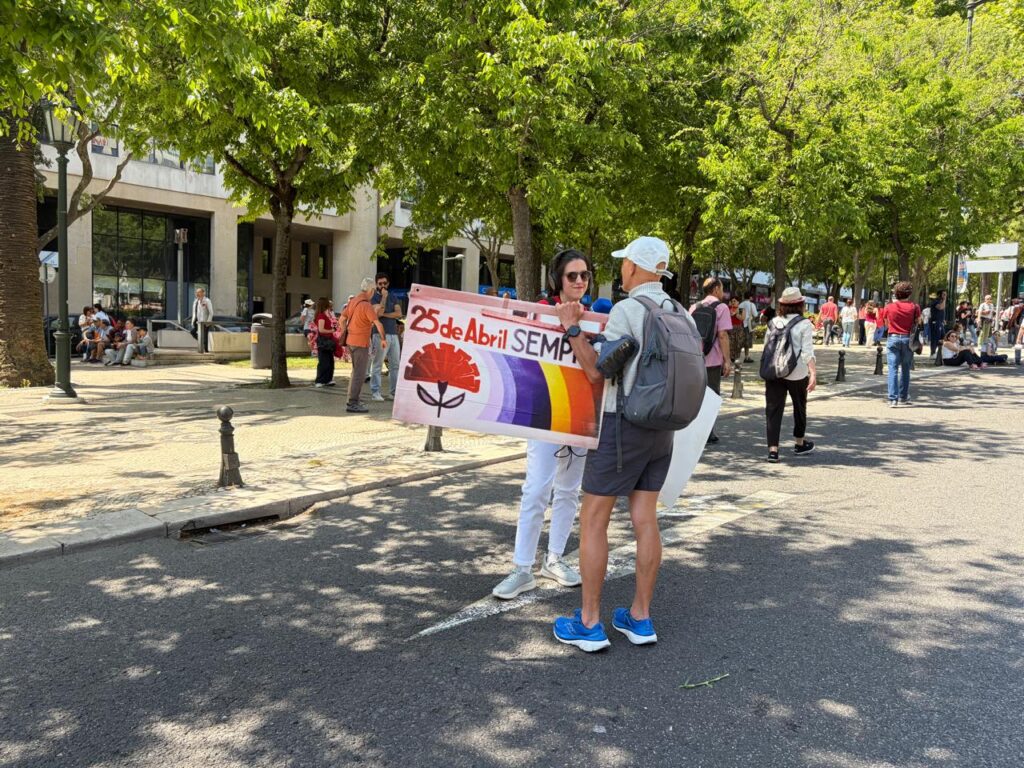
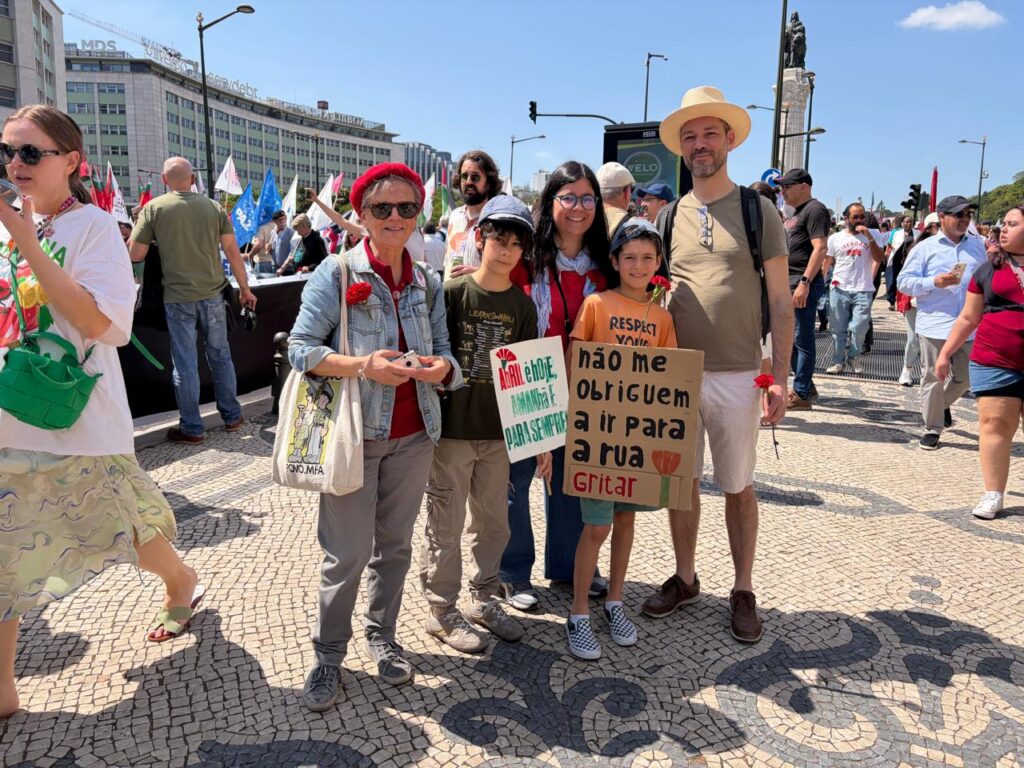
Among the organizational structures, where entities, collectives and political articulations became more visible, the so-called militancy took shape, distributing materials, organizing banners and ensuring cohesion between different groups, and it was in this space that, at different moments, I met again the comrades from the World Peace Council of Portugal, present at the demonstration between flags and posters, reinforcing an internationalist dimension that crosses the very meaning of the 25th of April and connects the Portuguese experience to other struggles around the world.
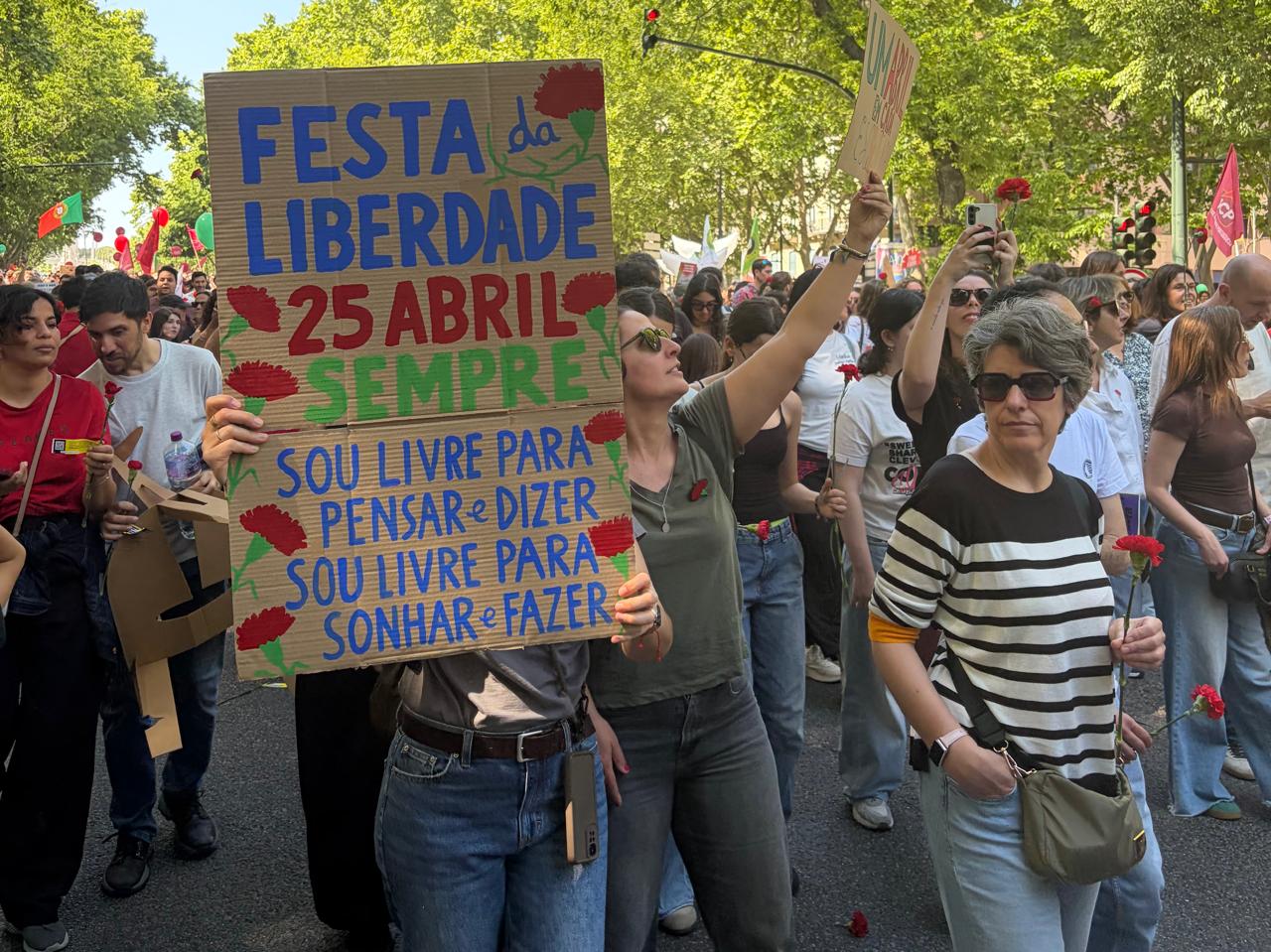
The avenue was occupied by tens of thousands of people, creating an atmosphere that brought together celebration and affirmation, with posters raised above heads, open flags and slogans that crossed the air and found an echo in the crowd, while 25th of April always, fascism was never repeated in different voices with the strength of someone who understands that that phrase does not just belong to the past, but defines a position in the present.
The diversity of presences gave shape to the deeper meaning of that meeting, with children making their way alongside their parents, holding carnations and observing everything with curiosity, representing the continuity of April, while right behind came those who lived through the revolution, including soldiers still alive from that process, bodies marked by time, but present, recognized, a visible part of a history that has not dissolved, creating together a space where different times coexist and recognize each other.
Mothers walked with their children, transforming participation into an experience of direct transmission, while collectives like Netos de Abril affirmed the historical continuity of the process and women advanced slowly, often with difficulty, but with the awareness that that effort carried meaning, reinforcing the idea that presence in that space was, in itself, a form of affirmation.
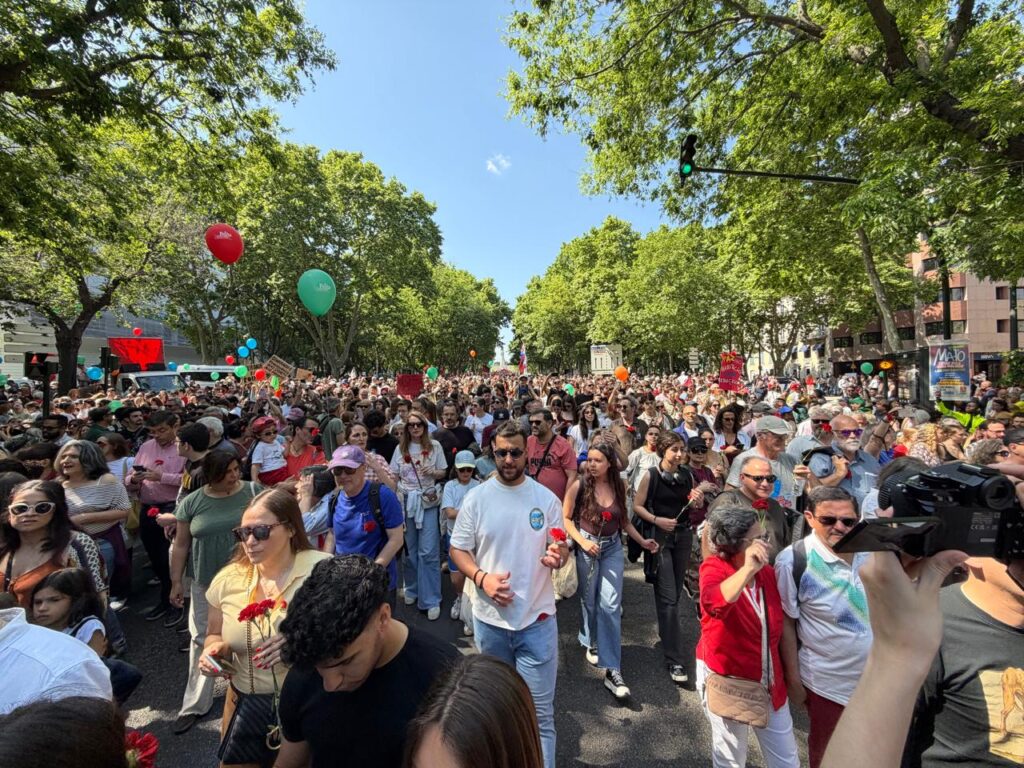
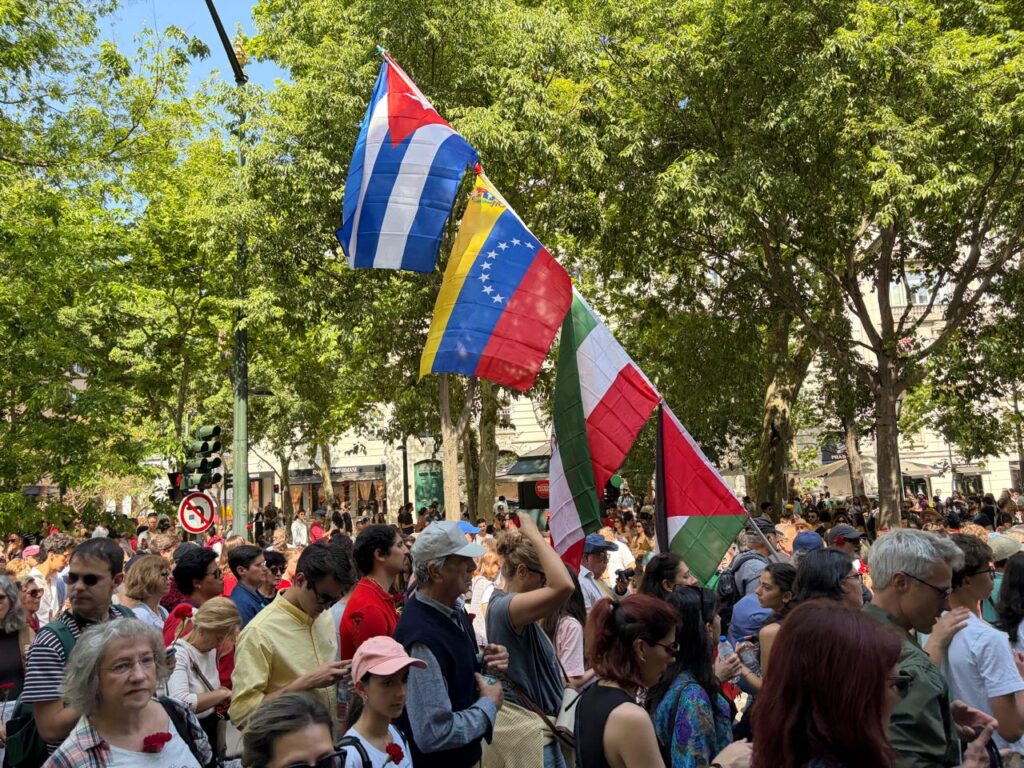
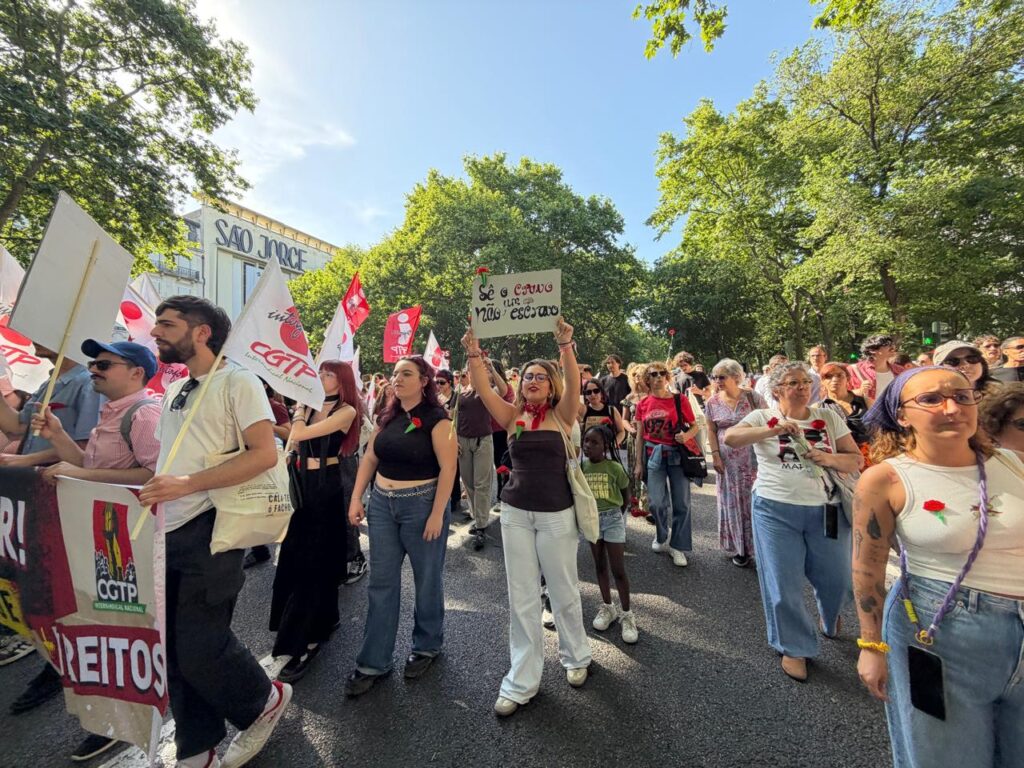
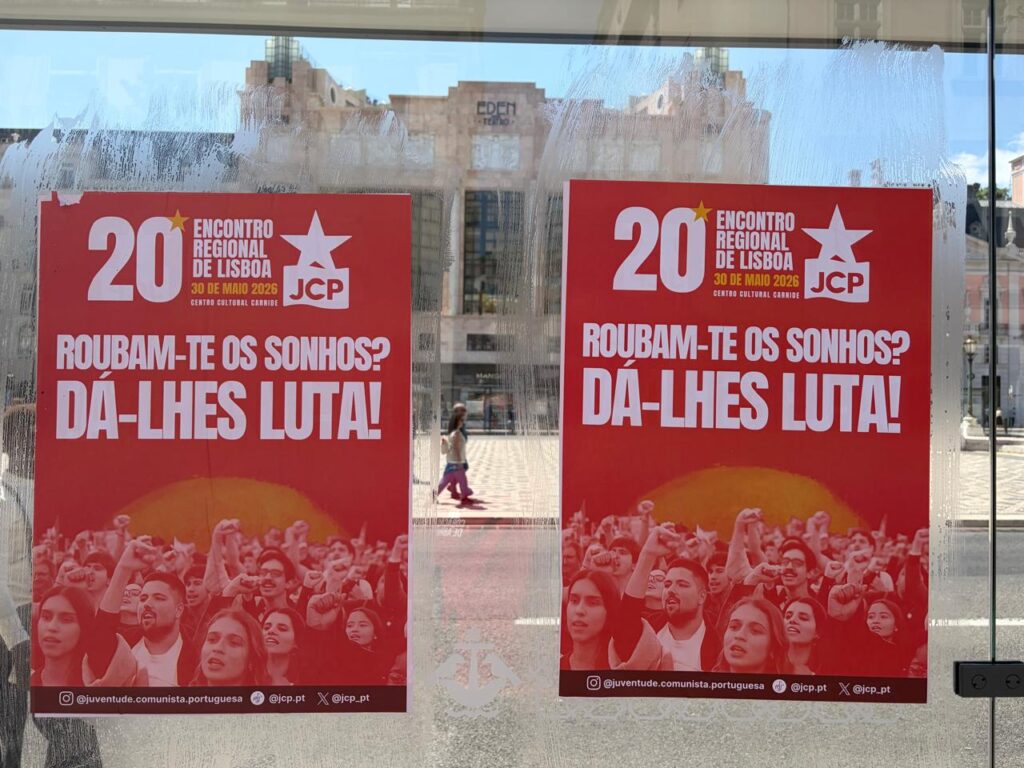
Among the blocks, the youth stood out with intensity, with the JCP occupying the avenue with its own energy, chanting slogans, organizing the rhythm of the march and dancing the Carvalhesa, the anthem of the Festa do Avante, which celebrates fifty editions this year, creating moments in which the movement assumed a rhythm that, for Brazilian eyes, was reminiscent of a carnival block, but without any loss of political density, since joy did not oppose the fight, but crossed it.
Along the avenue, spaces for concrete organization also appeared, such as solidarity tables that brought together people, materials and campaigns, offering another dimension to the demonstration and showing how politics is also expressed in the daily gesture of organizing, contributing and building collectively.
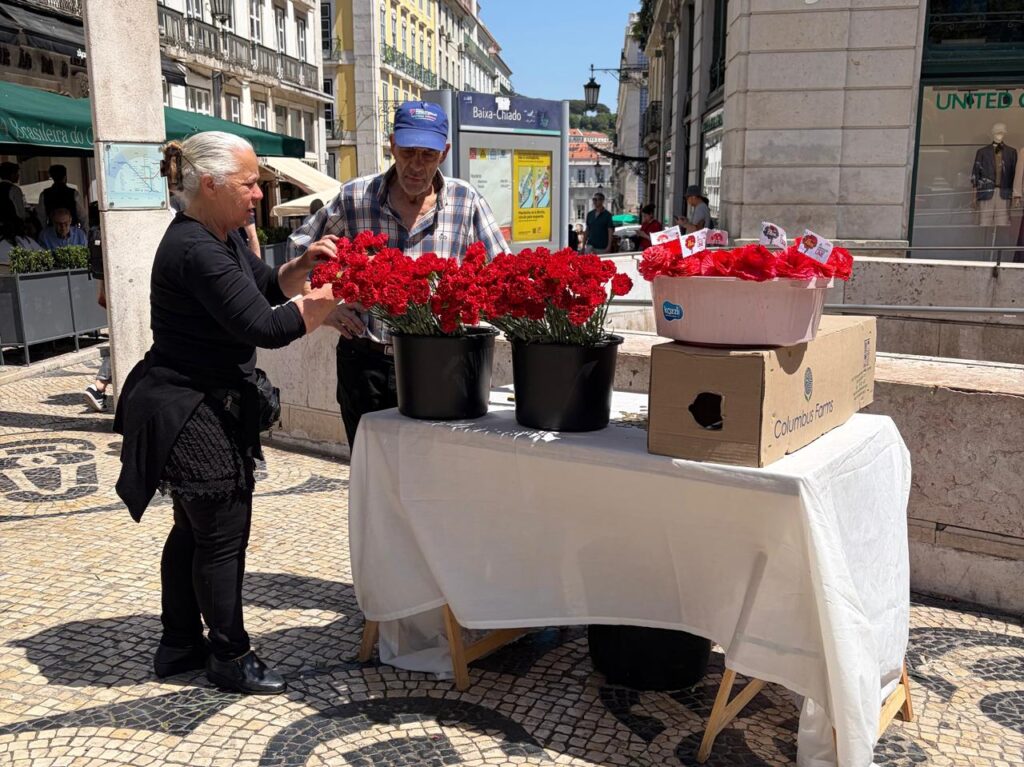
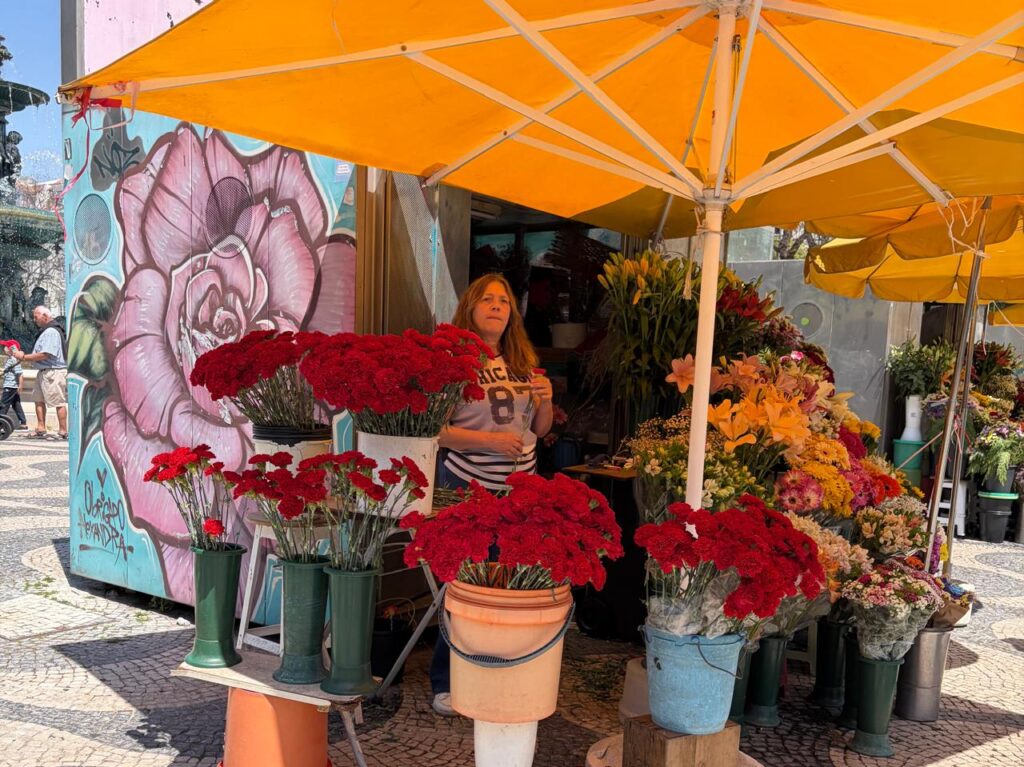
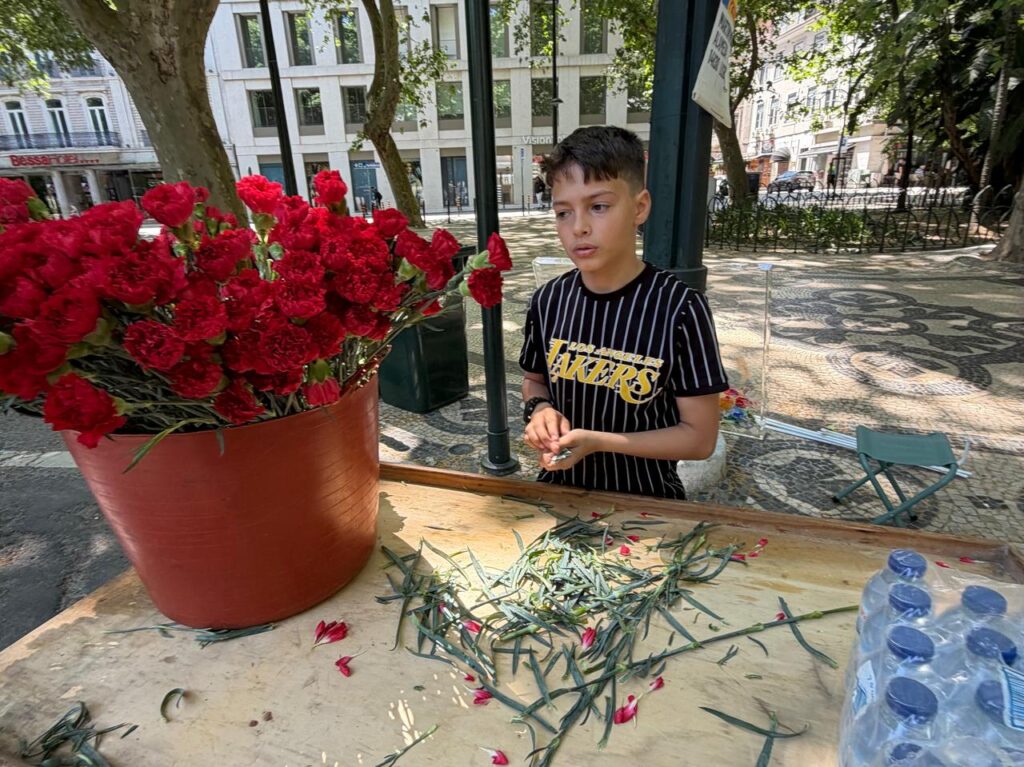
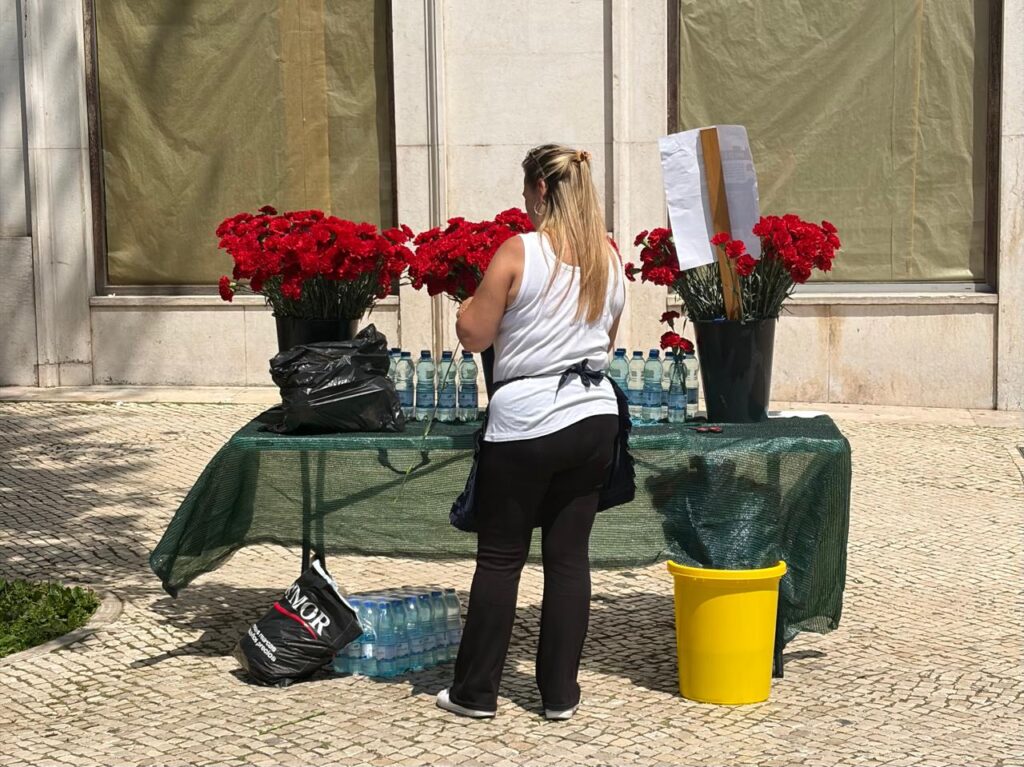
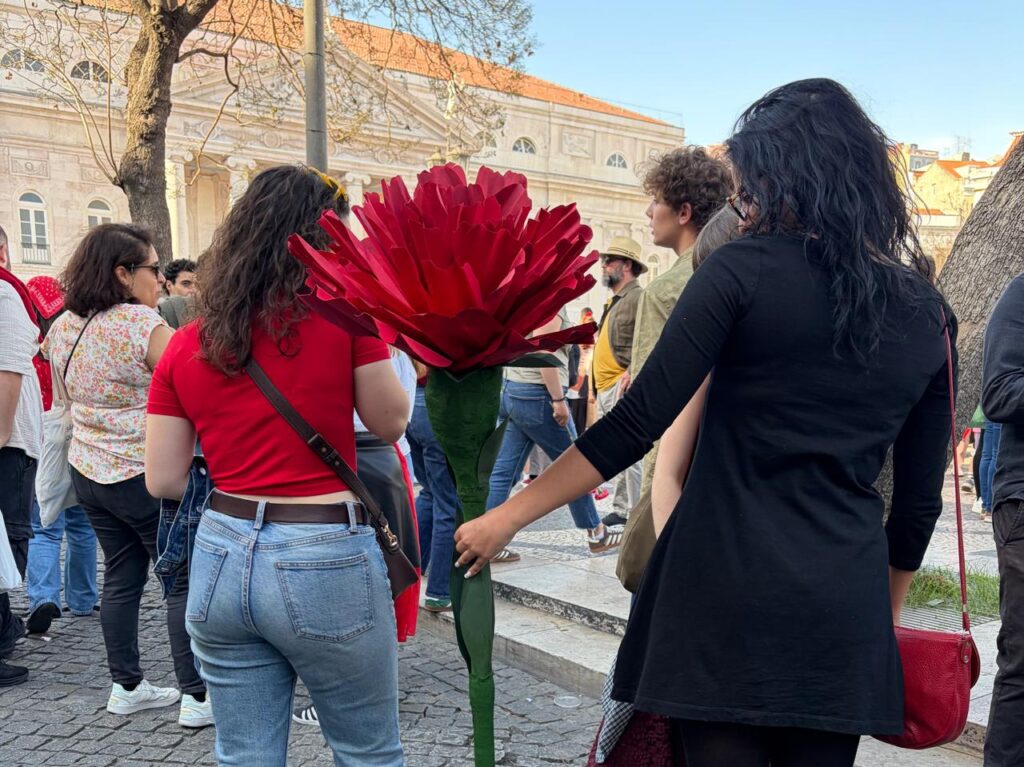
Red permeated everything, in the carnations, on the flags, on the posters and on the bodies, with red lipstick appearing on the women’s mouths and with the celestials, the flower girls who on different street corners keep alive the image that crosses generations, offering carnations that are purchased not as merchandise, but as a gesture, being distributed from hand to hand, attached to hair, clothes and bags, creating a silent network of belonging that connects strangers in a common experience.
In the middle of the crowd, baby carriages advanced along the avenue, occupying the space where decades before tanks had passed, while real tanks reappeared not as a force of intervention, but as a memory, bringing old combatants with them, composing an image in which past and present meet directly.
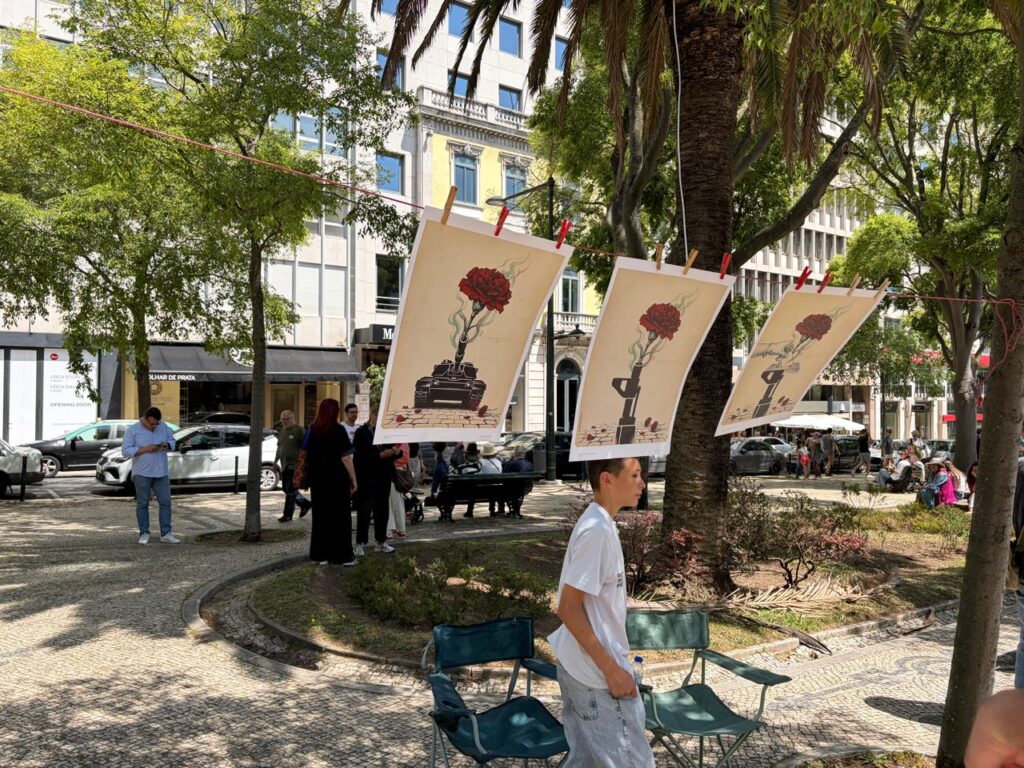
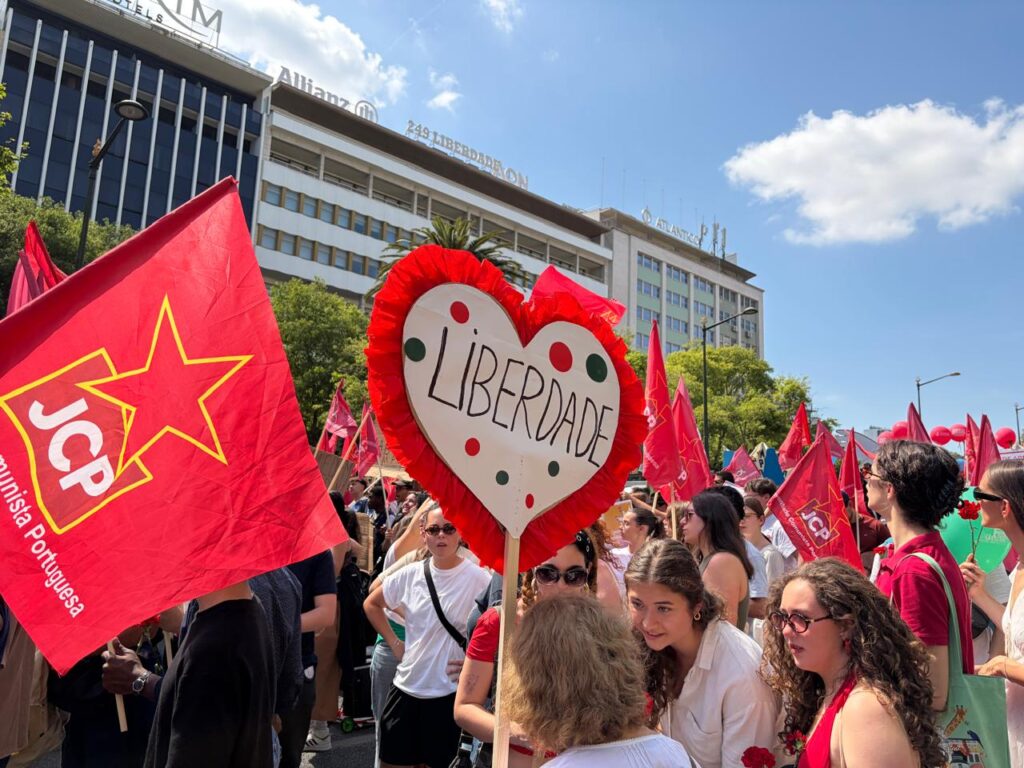
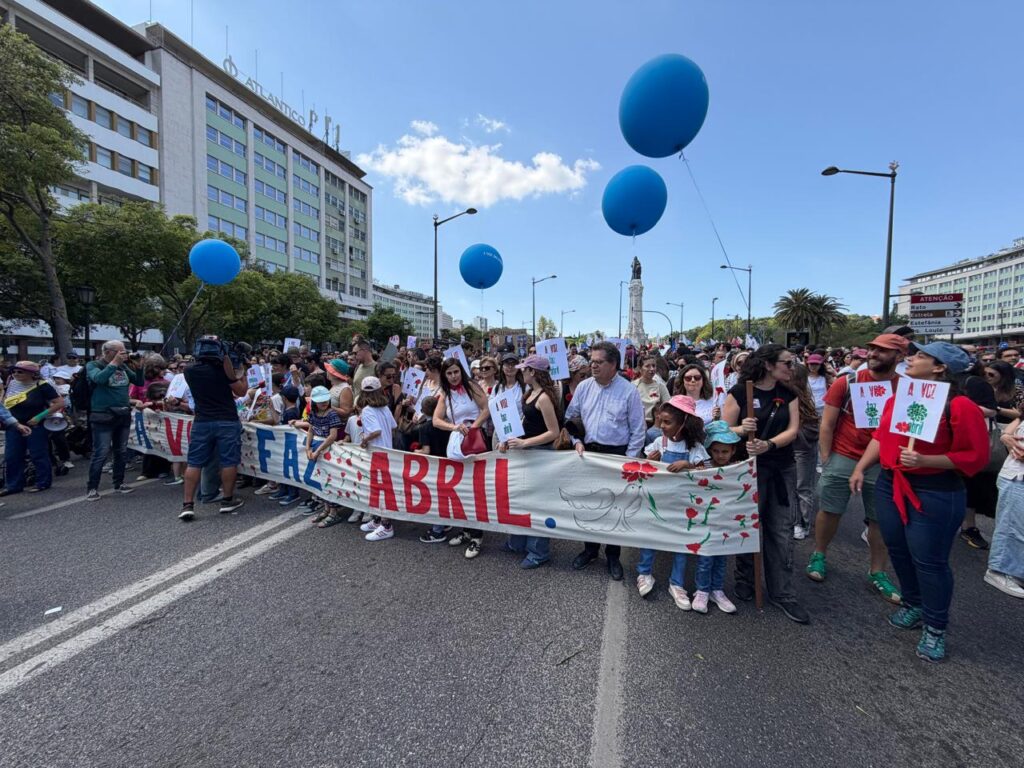
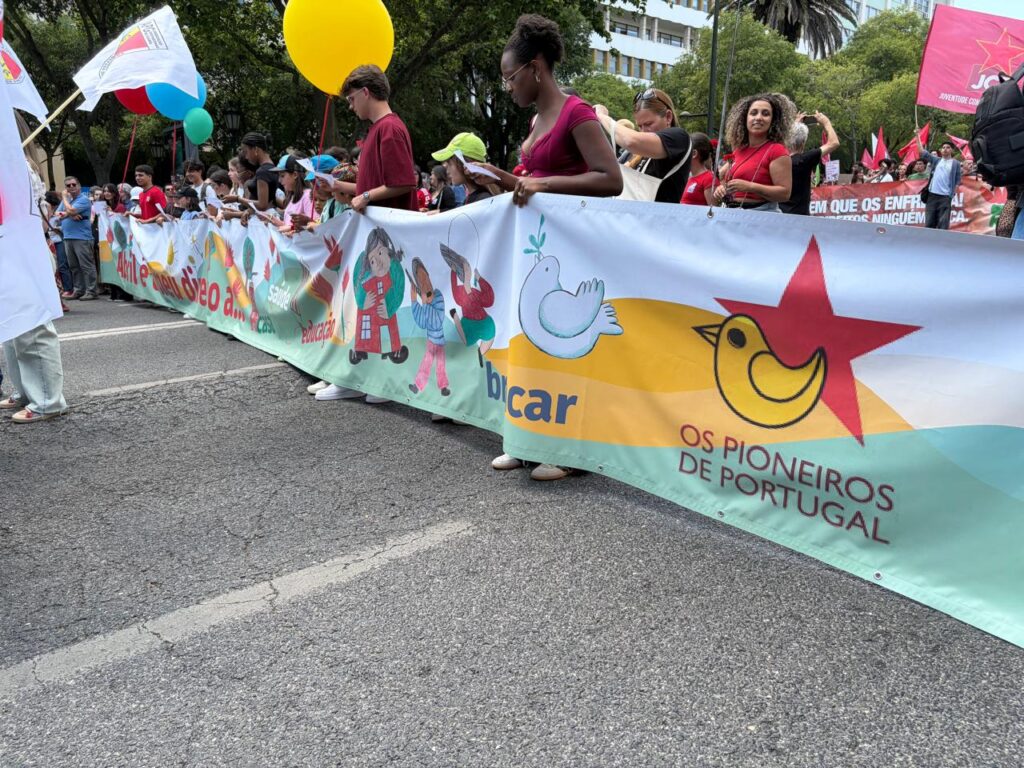
As the afternoon drew to a close, the crowd began to disperse through the downtown streets, turning into small groups and prolonged conversations, while a shared awareness remained in the air that that day was not just a celebration, but an affirmation that freedom requires presence and that democracy needs to be continually lived and defended.
April continues.
Source: vermelho.org.br