Published 18/05/2026 13:36
The Iranian government made official, this Monday (18), the creation of the Persian Gulf Strait Authority, a new government body in charge of managing, regulating and charging fees for maritime traffic in the Strait of Hormuz, one of the most strategic trade routes on the planet. The announcement was made by Iran’s Supreme National Security Council, the country’s main security body, which also works to disseminate operational updates on the region. The new structure consolidates Iranian administrative and military control over the maritime route, through which around 20% of the world’s oil and liquefied natural gas circulates.
Under the new order, all commercial vessels intending to transit the strait must obtain prior approval from the agency. The procedure requires the submission of a detailed declaration with information about the vessel, ship history, nationality of the crew, owners and full specifications of the cargo transported. Operators in the international maritime intelligence sector report that incorrect or incomplete filling of data subjects companies to passage restrictions. In addition to document inspection, the agency established the charging of fees ranging from US$1 million to US$2 million per ship, formally justified as compensation for specialized security, pilotage and nautical routing services.
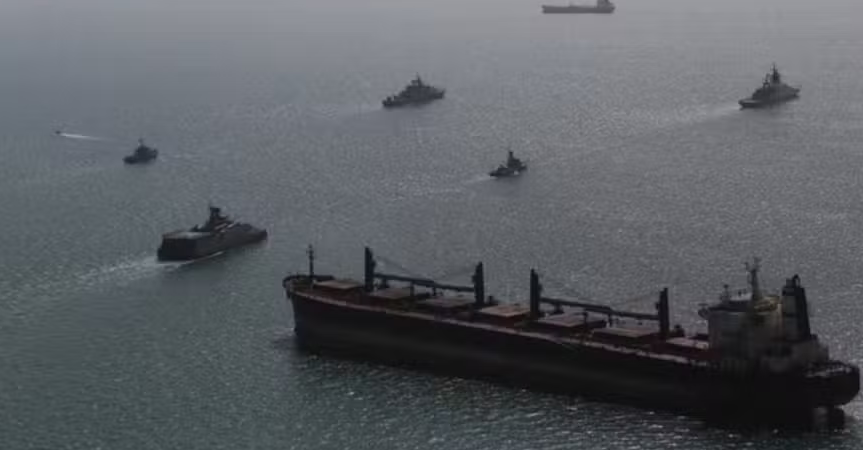
The arm implementing the new guidelines in the region is the Islamic Revolutionary Guard Corps Navy, which directs the flow of authorized ships to specific routes close to the Iranian coast, located between the islands of Qeshm and Larak. Vessels linked to the United States and Israel are denied transit permission by the new authority. The chairman of the National Security and Foreign Policy Committee of the Iranian Parliament, Ebrahim Azizi, publicly stated that the measure consists of a professional mechanism to manage traffic through designated routes, aiming to guarantee the security of international trade by collecting the necessary fees for the services provided.
The measure institutionalizes a control that had been exercised on a provisional basis since the first quarter of this year, when geopolitical tensions in the region caused the temporary closure of the road and spikes in international prices for a barrel of oil.
The position of the country’s new supreme leader, Mojtaba Khamenei, reinforces that the management of the strait is considered a permanent strategic lever to establish a new regional order and ensure economic revenue for the Iranian State, without interference from foreign forces.
The announcement comes at a time when the international community is following negotiations between Tehran and the US government, which resulted in the interruption of previous naval escort operations in the area.
The United States Treasury Department issued warnings signaling that payments made to the new entity could constitute a violation of current economic sanctions against the Iranian administration and the Islamic Revolutionary Guard Corps.
Source: vermelho.org.br