Iran attacked US military targets in Jordan and the United Arab Emirates this Monday (31), in retaliation for the US bombing of the Iranian island of Larak, in the Strait of Hormuz, on Sunday night (30). The exchange of attacks is the first between Tehran and Washington in about a month, in a conflict that began six months ago.
According to the Islamic Revolutionary Guard Corps, ballistic missiles were launched against two air bases used by US forces in Jordan: King Hussein Air Base and Al Azraq Air Base. The agency stated that the attacks hit technical and maintenance structures and areas where fighter jets were parked.
“Each shot will be met with even more devastating reactions,” the Revolutionary Guard stated.
The Jordanian Army, in turn, reported having intercepted eight missiles, but did not indicate their origin.
In the United Arab Emirates, the Iranian Army claimed to have launched “dozens of explosive drones” against the Al Minhad Air Base, south of Dubai, used by foreign forces as a logistics and air transport center. According to Tehran, the targets were areas where American military personnel and helicopters were located.
“Since early morning, the Army of the Islamic Republic of Iran has been attacking sites housing US helicopters and military personnel at the Al Minhad base in the United Arab Emirates with dozens of explosive drones,” the corporation said.
The United Arab Emirates government reported having “responded” to a drone from Iran detected in its territorial waters.
US attack on Iranian island
The Iranian offensive occurred after United States forces bombed the island of Larak, an Iranian territory located in the Strait of Hormuz, on Sunday. According to the agency Tasnimtwo people died and two others were injured.
The United States Central Command (Centcom) stated that it carried out “limited and precise” action against members of the Revolutionary Guard who, according to Washington, posed a threat in the strait.
The United States claimed that the operation sought to prevent Iran from installing new sea mines in the region. An Iranian military source heard by Tasnim rejected the justification and classified the American version as “fantasy and invention”.
In a statement, Iran’s Foreign Ministry accused Washington of violating the country’s sovereignty and territorial integrity and maintained that the attacks against US facilities were carried out in self-defense.
“In response to this military aggression and in accordance with their inherent right to self-defense, the powerful Armed Forces of the Islamic Republic of Iran carried out defensive and devastating attacks against US military bases located in Jordan, which served as a starting point and support for US military aggression against Iran,” the ministry said.
Tehran classified the attack on Larak as a violation of Article 2, paragraph 4, of the United Nations Charter, which prohibits the use of force against the territorial integrity or political independence of States. The Iranian government has called on the United Nations (UN) Security Council to hold the United States accountable.
The Ministry of Foreign Affairs also stated that the Iranian Armed Forces will continue to exercise what it considers its right to self-defense in the face of new offensives.
“Full responsibility for the consequences of the new acts of US aggression, as well as the continued naval blockade and economic warfare against Iran, rests with the US regime and all parties who, in any way, conspire or participate in the preparation and execution of illegal and illicit US measures”, says the note.
Pezeshkian says Iran does not seek war
Before traveling to Bishkek, Kyrgyzstan, where he is participating in the Shanghai Cooperation Organization (SCO) summit, Iranian President Masoud Pezeshkian said on Monday that his country does not intend to escalate the conflict, but will respond to new attacks.
“We are not seeking war, and that is a clear message that we have repeatedly communicated to the world,” he declared.
Pezeshkian, however, said that the country will not remain silent in the face of offensives against its territory and promised a “decisive” response to any new attacks.
“Instability and disturbances in the region are not in the interest of any country and will create challenges for everyone. Therefore, we must join forces and fight to ensure security, economy and development in the region,” he said.
First attacks in a month
The new escalation comes after weeks of reduced intensity of clashes. The war began on February 28, with the joint aggression of the United States and Israel against Iran. Tehran responded with offensives against American interests and Gulf countries allied with Washington.
A ceasefire in April halted nearly 40 days of intense shelling. In June, the parties reached a protocol of agreement intended to end the conflict, but hostilities resumed in July and negotiations remain at a standstill.
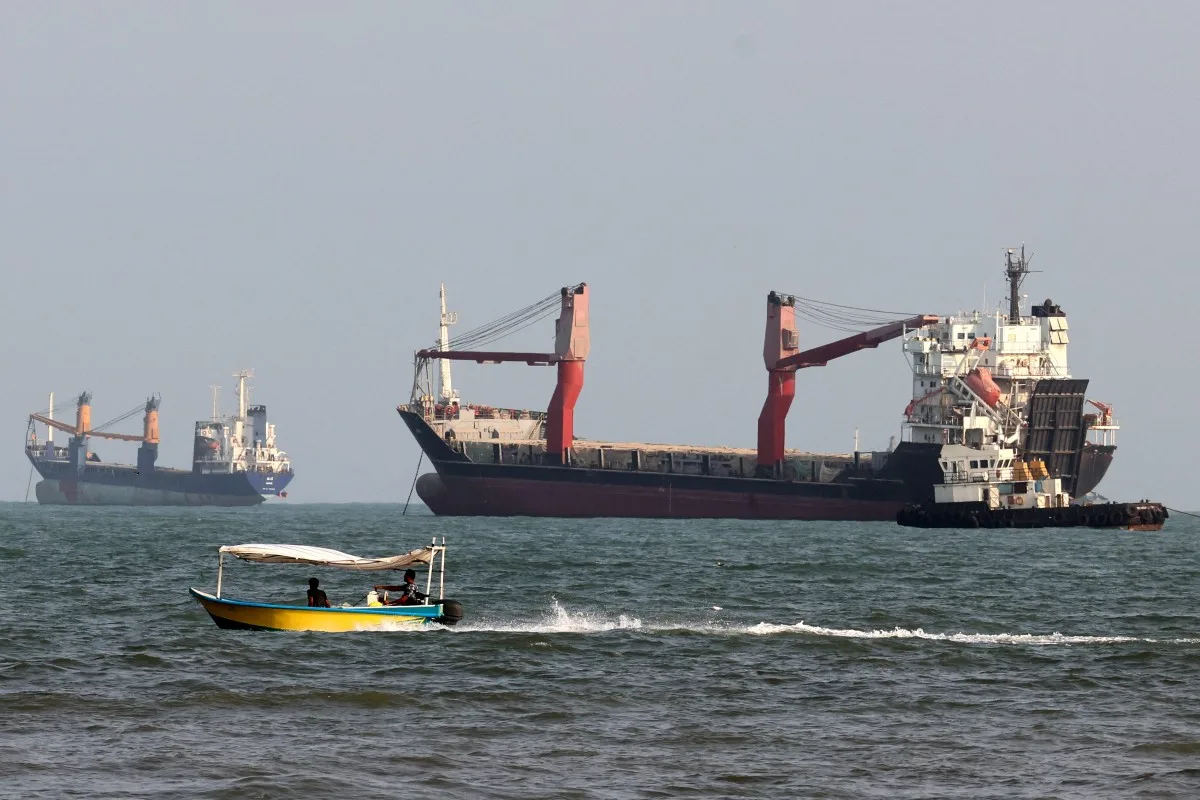
One of the main focuses of the dispute is the Strait of Hormuz, a strategic passage between the Persian Gulf and the Gulf of Oman, through which, before the war, around 20% of the world’s oil and gas exported passed through. Iran keeps the route blocked, while the United States maintains a naval blockade against Iranian ports.
The new escalation had repercussions on the international market. This Monday, a barrel of Brent oil rose 2.6%, to US$ 90.39 (approximately R$ 470), while West Texas Intermediate (WTI) rose 2.3%, to US$ 85.33 (approximately R$ 444).
Source: www.brasildefato.com.br