In 1992, a meeting marked a turning point in the history of feminist and anti-racist struggles in Latin America and the Caribbean. Amid the advance of neoliberalism, the continent’s popular movements began to articulate themselves around the mobilizations and debates sparked by the 500 years since the arrival of Europeans in America.
In this context, more than 400 women from 32 countries in Latin America and the Caribbean, all activists of African descent, met in Santo Domingo, in the Dominican Republic, with the aim of building a common agenda that would give visibility to their specific agendas and claim a political space that, until then, had been denied to them.
Although the feminist movement had already promoted several regional meetings, this meeting represented the first large meeting specifically of black and Afro-descendant women from an intersectional perspective, aimed at giving visibility to a historical experience marked by the convergence between racism, gender inequality and social exclusion.
Since then, every July 25th — the date on which that first meeting ended — International Afro-Latina, Afro-Caribbean and Diaspora Women’s Day has been celebrated, also known as Black or Afro-descendant Women’s Day.
In Cuba, where the national history is deeply marked by slavery, African heritage and emancipation processes, the debate on racism and racial inequality has gone through different stages.
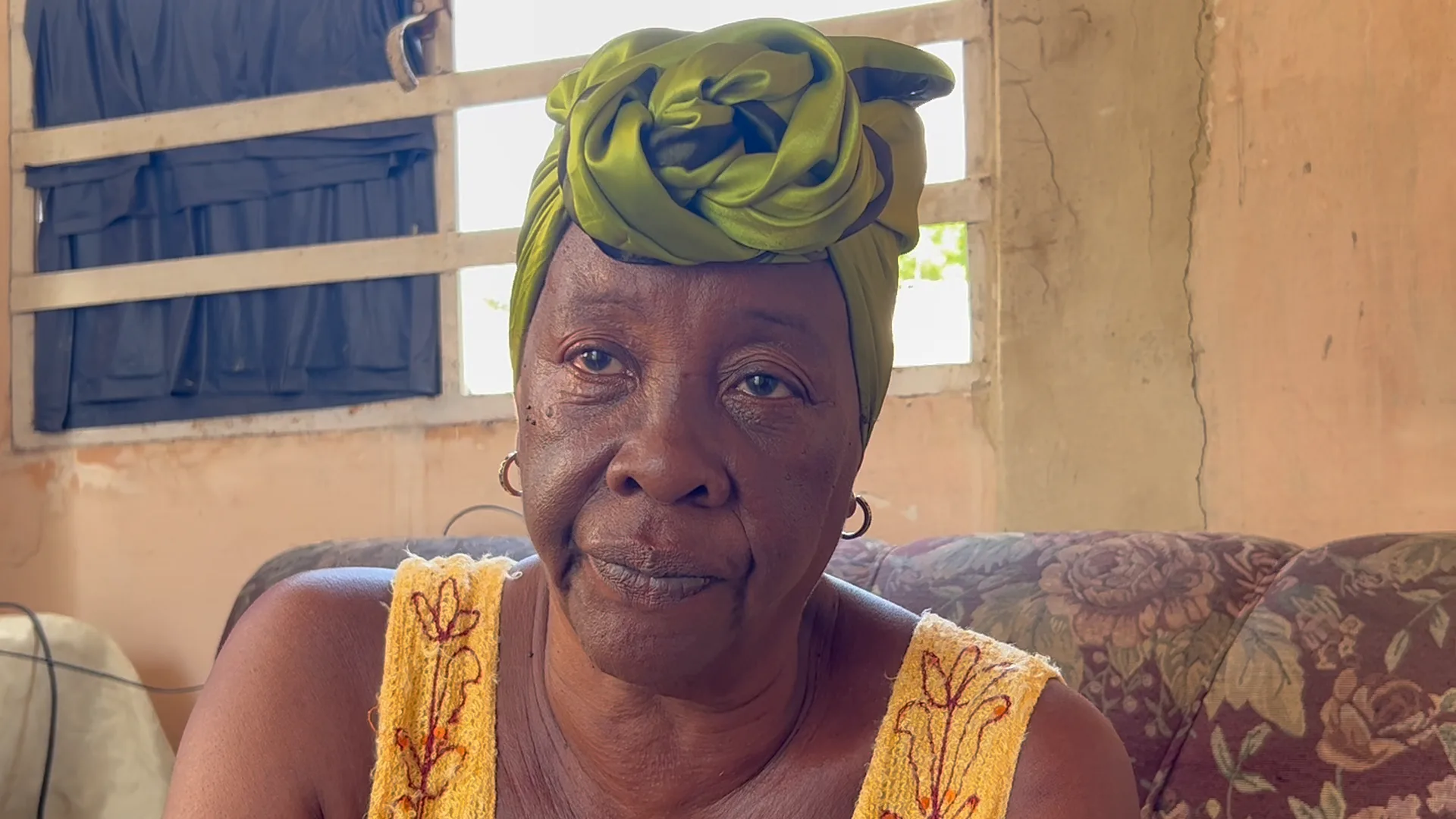
To understand this trajectory, the Brazil in fact spoke with Professor Lilian C. Milián Rosales, black Cuban activist and History professor at the Enrique José Varona University of Pedagogical Sciences, who analyzes the relationship between the anti-racist struggle and the Cuban revolutionary process, as well as the challenges that still persist today.
“When we talk about the Caribbean, we are referring to a region that, although very diverse, also shares a common history marked by colonial domination, both by Spain and England. Our people are the result of this history”, he explains.
Milián Rosales states that July 25th should be understood as a “journey of struggle”, and not as a “simple commemorative date”, although he recognizes that the day contributed to giving more visibility to the issue.
“Recognition is very important because it allows us to articulate ourselves, but, in itself, it is not enough. Nor is a date enough. Every July 25th, we must reflect on what we do during the rest of the year: in our daily lives, in our daily struggle, in each space, such as schools, workplaces, communities, families and wherever we are.”
The Revolution and the promise of equality
After the triumph of the Cuban Revolution in 1959, the new government promoted a set of social transformations aimed at reducing economic and social inequalities. Since then, public policies have had as one of their main objectives the construction of a more egalitarian society.
The elimination of institutional forms of racial discrimination in public spaces, the creation of mass women’s organizations, in addition to policies such as agrarian reform, the expansion of access to education and health and the significant incorporation of the black population into the country’s leadership spaces were some of the achievements achieved after the revolutionary process.
“Since the triumph of the Revolution, we, black women, have achieved, above all, visibility. Women in Cuba have conquered an extraordinary space and, with that, so have black women. However, there is still a long way to go. Forms and remnants of racism and machismo deeply rooted in society persist. We cannot deny this”, she states.
Blackness in the background
Milián Rosales explains that, although the Cuban Revolution promoted profound social transformations aimed at reducing inequalities — policies that, to a large extent, were successful —, for many years racial discrimination was treated from a universalist perspective of social equality.
With the triumph of the Revolution, a process of “social integration” began aimed at combating racial discrimination. However, given the difficult circumstances faced by the revolutionary process, a sector of the political leadership considered that treating the “racial issue” as an autonomous problem could compromise the unity of the nation.
Progressively, the topic no longer occupied a central place in the public debate. It was even declared the end of racism as a direct consequence of these policies. From then on, the racial issue began to be treated indirectly, through policies of redistribution, symbolic recognition and expansion of rights, without racism being recognized as a specific problem.
This perspective was so comprehensive that, even during the Battle of Ideas — a process of popular mobilization called by Fidel Castro in the late 1990s — the racial issue did not occupy a central place on the agenda, despite one of its main audiences being the historically marginalized black popular sectors.
This interpretation ended up relegating to the background the inequalities historically accumulated by the black population in Cuba. “This does not mean that the issue was ignored. From an institutional point of view, the problem was recognized. However, a dimension linked to the social disadvantages that historically affected the black population remained in the background”, he states.
A turning point
Like other activists and academics, Milián Rosales points to 2012 as a “watershed”. That year marked the centenary of the massacre of the Independents of Color, which occurred in 1912.
The date recalled one of the most tragic episodes of the republican period. After formal independence from Spain and the end of the American occupation, many Afro-descendant veterans who had participated in the wars of independence were excluded from spaces of political power, public positions and access to land.
In this context, an insurrection led by the Independent Party of Color (PIC) emerged, an organization that demanded equal access to public administration, the Armed Forces and education, in addition to the elimination of legal restrictions that prevented political organization based on racial criteria.
The government of the time, led by José Miguel Gómez, responded with violent repression that culminated in the persecution and murder of thousands of black and mixed-race people.
That centenary gave rise to a constellation of activism, activities, academic research, organizations and associations dedicated to the study of blackness and racial inequalities.
“From then on, the racial issue began to gain much more visibility and became the subject of a broader debate. There was a before and after that year and, since then, these issues have started to be treated in a much more systematic way”, he explains.
Crisis and inequality
Currently, Cuba is experiencing a period of greater coordination between institutions, researchers and social actors to face the racial issue. “Today there is greater systematicity and coordination that involves multiple actors, not only in the political sphere, but also in the social sphere”, he states.
However, the crisis faced by the country, in a context of economic suffocation imposed by Washington, brings new challenges to the activism of black women. Milián Rosales highlights that, in each period of crisis, the most vulnerable sectors are those that suffer the most intense impacts and may experience setbacks in the achievements achieved.
“In the current context, marked by a very serious crisis, the most vulnerable sectors of society, such as women, are those who suffer the most from its consequences. Although this is not always noticeable at first glance, because we all have the same rights, we do not all live in the same conditions”, he explains.
Milián Rosales states that the current challenge does not only involve recognizing the existence of racism, but also developing policies capable of facing its concrete manifestations in the midst of the crisis.
“The fact of carrying out large campaigns, in itself, does not guarantee that the expected results will be achieved. To achieve this, systematic and, at certain times, also specific work is necessary.”
Source: www.brasildefato.com.br