Published 19/05/2026 13:14 | Edited 05/19/2026 13:32
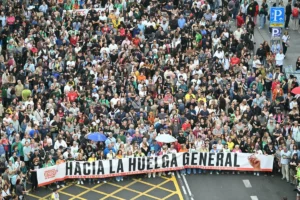
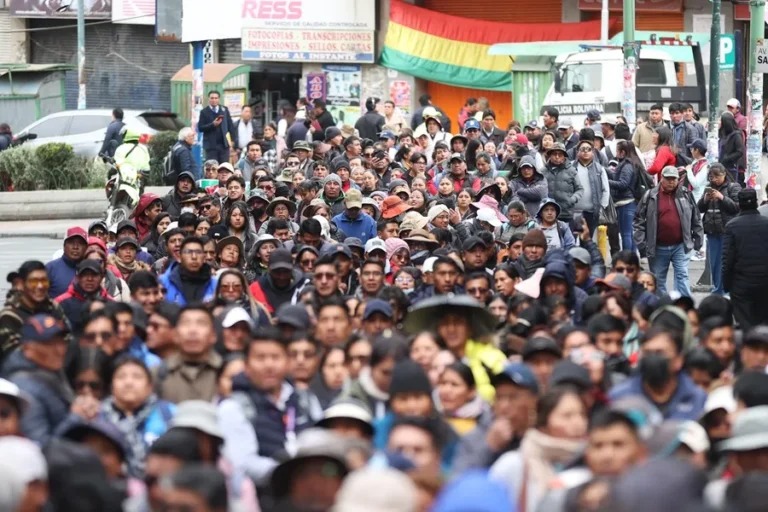
Bolivia is experiencing its biggest political and social crisis since the arrival of Rodrigo Paz’s ultraliberal right to power. For more than two weeks, marches, roadblocks and a general strike driven by the Bolivian Workers’ Central (COB), peasant unions, indigenous organizations, teachers, miners and transport workers have placed the country in a state of social upheaval.
This Monday (18), a massive march descended from El Alto to La Paz demanding the immediate resignation of the president, while the government responded with repression, arrests and militarization of access roads to the capital.
The worsening of the conflict occurs amid the rapid deterioration of the country’s economic conditions. The removal of fuel subsidies promoted by the government caused an explosion in the cost of living, increased food prices and shortages of diesel and gasoline.
Popular sectors accuse Paz of imposing an austerity program aligned with the interests of the International Monetary Fund (IMF), transnational companies and agribusiness, breaking historical commitments of the Bolivian plurinational state built during the Movement to Socialism (MAS) governments.
🇧🇴👷🏾 Miners and indigenous people mobilize in Bolivia and demand the resignation of President Rodrigo Paz (right). The Central Obrera Boliviana (COB) has been leading a general strike for two weeks that has stopped miners across the country, affected by several measures taken by the Rodrigo Paz government.
More… pic.twitter.com/PHgKMtPbKb— Rogério Tomaz Jr. (@rogeriotomazjr) May 17, 2026
At the same time, tension is growing around former president Evo Morales. His supporters denounce a political persecution operation and claim that there is a risk of arrest or even murder of the indigenous leader, in a scenario that popular Bolivian sectors associate with recent US offensives against Latin American governments and leaders.
Evo directly accuses Washington, the DEA and the Southern Command of coordinating actions with the Bolivian government.
Protests against Rodrigo Paz enter a new phase in Bolivia
The mobilizations, which have lasted more than two weeks, began with wage demands and protests against the increase in the cost of living, but quickly turned into a national movement against the government of Rodrigo Paz.
The COB, the Single Union Confederation of Peasant Workers of Bolivia (CSUTCB), the Red Ponchos, indigenous organizations and urban unions began to openly demand the fall of the government after the police and military repression in recent days.
The demonstrations gained strength especially after the operation carried out on Saturday (16), when security forces tried to unblock roads surrounding La Paz and El Alto.
In #Boliviaminers, students, workers, and peasants are mobilized as part of a mass general strike against the Rodrigo Paz administration. The clashes taking place have brought life across the country close to a complete standstill.
The government is accused of serving the… pic.twitter.com/0vwB482EVQ
— Antifa_Ultras (@ultras_antifaa) May 17, 2026
At least four protesters were killed and dozens were injured. There are also reports of more than 57 arrests during the unblocking operations.
Protests keep the country partially paralyzed. More than 70 road blockages were recorded in different regions, affecting fuel and food supplies. In La Paz, queues at gas stations, shortages of basic products and accelerated inflation increased popular dissatisfaction against the government.
COB claims that the government is trying to impose a neoliberal package that threatens workers’ historic rights and paves the way for the privatization of strategic sectors.
Union leader Mario Argollo recently declared that “we are not asking for this incompetent president to leave because we are crazy; it is because they have not presented clear solutions for the country.”
Economic adjustment, “gasolinazo” and popular revolt
The main trigger of the crisis was the so-called Supreme Decree 5503, which eliminated fuel subsidies and opened space for greater participation of foreign capital in the mining, energy and infrastructure sectors.
The measure caused increases of up to 86% in gasoline and more than 160% in diesel. The impact was immediate on food, transport and basic food prices.
Cooperative miners denounce strikes due to lack of fuel, while urban unions claim that the cost of living has become unsustainable in just a few months of government.
Another central focus of the revolt is the so-called Law 1720, nicknamed by peasant sectors as “Marinkovic Law”.

Indigenous and rural organizations claim that the rule favors agribusiness and allows small community properties to be transformed into financial assets subject to bank embargo, threatening historic territories of the peasantry and original peoples.
The mobilizations also reveal the accelerated erosion of Rodrigo Paz’s political project.
Elected promising stability, dialogue and economic reorganization without dismantling social rights, the president went on to justify the adjustment by stating that he received a “broken country”, bringing his government closer to the recommendations of multilateral organizations and the international financial market.
Government responds with repression and criminalization
The Bolivian Executive’s response deepened the conflict even further. The government classified the protests as an attempt at “destabilization” and authorized major police and military operations to unblock highways and disperse protesters.
This Monday, the Bolivian court issued an arrest order against Mario Argollo, executive secretary of the COB, accused of “public instigation of crime”, “terrorism” and other crimes.
The trade union central denounced political persecution and stated that the government is trying to silence the workers’ leadership through the criminalization of social movements.

Argollo responded by stating that “they will not bend us in the fight we undertake” and accused the government of using criminal actions to intimidate popular leaders.
The COB also denounced that the Armed Forces have been supplied with tear gas and repressive equipment while the population faces shortages and inflation.
Social organizations claim that the current repression recalls critical moments in Bolivian history, especially the conflicts of 2003, when popular protests against neoliberal policies ended in massacres and the fall of then president Gonzalo Sánchez de Lozada.
Evo Morales denounces US plan and fears capture
Former president Evo Morales became one of the main focuses of the crisis. Taking political refuge in his cocalero stronghold in Chapare and protected by supporters, Evo publicly denounced a plan coordinated between the United States and the Bolivian government to arrest or assassinate him.
According to Morales, Washington ordered Rodrigo Paz’s government to carry out a military operation with the support of the DEA and the US Southern Command.
The indigenous leader also stated that North American agents and structures linked to anti-drug repression began to operate alongside the Bolivian Armed Forces.
The accusations come amid fears among his supporters that Evo could suffer a capture similar to the recent US offensive against Nicolás Maduro and other Latin American leaders classified by Washington as strategic adversaries.
The Bolivian government accuses Morales of encouraging protests and promoting a plan to “break the constitutional order”.
Evo rejects the accusations and states that the Executive tries to transform all social mobilization into a police case by associating unions and popular movements with drug trafficking.
Meanwhile, supporters of the former president organize vigils and community protection systems around Evo’s house in Chapare, amid fears of a military operation.
US support increases geopolitical tension
The United States expressed explicit support for Rodrigo Paz’s government amid the escalation of protests. The State Department’s Office of Western Hemisphere Affairs said it supported official efforts to “restore order.”
Washington said it supported official efforts to “restore order, peace and stability.”
For Bolivian social movements, however, the US position confirms the alignment between the new Bolivian government and US strategic interests in the Andean region.
Colombian President Gustavo Petro classified the scenario as a “popular insurrection” and made himself available to mediate the crisis. Petro stated that Latin America needs to be heard “looking at the world in the face, in peace”.
Bolivia is experiencing a popular insurrection.
It is the answer to geopolitical arrogance.
Latin America is a diverse and different civilization, it cannot be homogenized from anywhere on the planet.
Latin America and the Caribbean must be heard by the world looking straight at…
— Gustavo Petro (@petrogustavo) May 17, 2026
Behind the scenes of the Bolivian crisis, there is a growing perception that the conflict goes beyond a cyclical dispute.
For unions, indigenous organizations and popular sectors, the future of the Bolivian economic model, sovereignty over natural resources and the plurinational character of the State built in recent decades under strong popular leadership is at stake.
Source: vermelho.org.br