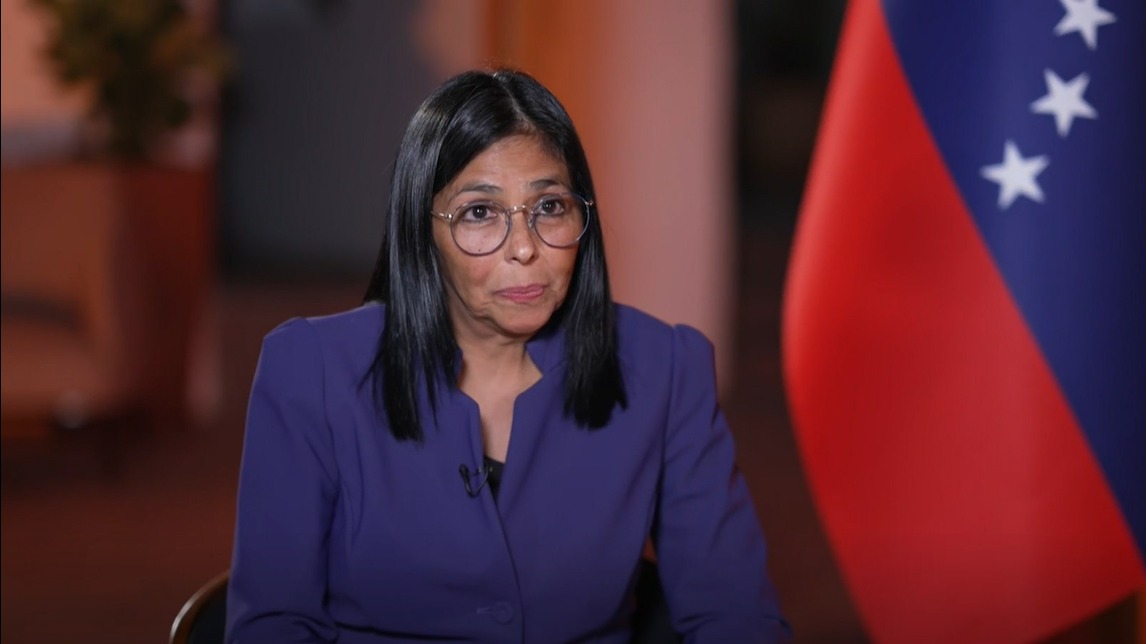
The former Cuban ambassador to Caracas, Germán Sánchez Otero, knows the history of relations between Cuba and Venezuela like few others. Still in the 1970s, he was one of the main names in the articulation made by the Cuban Revolution to continue the commitment of solidarity with the people of Latin America. For decades, he was close to names like Fidel Castro and Hugo Chávez, from whom he learned the lesson that political power relations are in permanent transformation. Therefore, he does not hesitate to recognize that the Delcy Rodríguez government, faced with the kidnapping carried out by the United States of President Nicolás Maduro, on January 3, had two options. The first would be a more direct confrontation with Washington, based on the Bolivarian principles that sustained Venezuela; the second, giving in to pressure from the White House. “It’s humiliating that they take the president and his wife the way it happened. Who am I to judge her? History will judge her”, he says, referring to the current Venezuelan president, in conversation with the Brazil in fact.
“It’s very hard, it’s very difficult for a Chavista Bolivarian to understand these decisions that were adopted. What was the other option? Oil. Do you want oil? Come and get it”, he reflects. The main problem, for Otero, is that the option of a clash with the Donald Trump government “was not tested, it was simply avoided from the first moment and, therefore, no one can say that this path was not the right one”.
The contrast with Chávez appears in the diagnosis made by the former ambassador. He remembers the former president’s speech at the UN, in which he called George W. Bush a “devil”, twenty years ago. Shortly before, in 1999, Chávez himself denied a request from Bill Clinton for US planes to fly over Venezuela in an anti-drug operation.
The intricate chess game between Venezuela and the USA
Now, Washington and Caracas have signed an agreement that provides for the handing over of “majority control” of 17 Venezuelan oil fields to the US. The amount corresponds to around 65 billion barrels of oil, or just over 21% of all proven Venezuelan reserves. The agreement establishes that the exploration will be carried out by North American Blue Energy Partners (Napeb), a company registered in Barbados, with no history of participating in operations in other countries. Giants such as ExxonMobil and ConocoPhillips were left out of the deal, and Chevron, the only American oil company operating in Venezuela, limited itself to signing a parallel agreement that provides for the expansion of its production.
For Otero, Washington’s plan is elementary: first, stabilize Venezuela under the American grammar; then create conditions for an election. This eventual election, which Otero considers should take place in the medium term, will have no other purpose than to guarantee the US “definitive control of Venezuela, in terms of protectorate”. Delcy says the country will go to the polls when it is ready. Since August, the interim government has been negotiating with the opposition, in talks sponsored by the US. According to Otero, the US is not bothered by the current government, since Caracas, in practice, would have already provided what the US was looking for.
The Rodríguez government has a justification that weighs on its survival calculation. A possible military conflict with the United States could cost the lives of thousands of Venezuelans, putting the country’s material base at serious risk. Another important nuance has to do with the fact that, by approaching the US, the Delcy government finds itself faced with the chance to open channels with countries and organizations previously opposed to Caracas’ direction. This Wednesday (29), for example, the Venezuelan president went to the UN General Assembly, having met with Trump. Meanwhile, the president of Paraguay, Santiago Peña, defended Venezuela’s return to Mercosur.
Otero does not ignore the fact that the interim government has its reasons for moving on the geopolitical board in the way it can, at this historical moment, but describes the result as an accommodation: “The existing government adapted to this score, this script, and did not put at risk the fundamental objective of the United States, which was to appropriate the oil. Therefore, a scenario of conciliations, of reciprocal acceptances, with its limits is generated”, he assesses.
US tries to strangle Cuba
The Cuban case is especially dramatic. The country is experiencing one of the worst humanitarian crises in its history, driven by the escalation of the economic war promoted by the USA, now under the leadership of Trump. Last week, Washington approved measures against the nickel mining sector and entities linked to the Cuban military-industrial complex.
Given the sanctions, thousands of containers with food, medicine and other products destined for Cuba are stuck in various parts of the Caribbean. The companies responsible for deliveries fear the possibility of being targeted by the Trump administration. Not even the World Health Organization (WHO) has been able to help the Caribbean country, and the country is facing increasing hunger.
Otero says that Havana remains willing to negotiate with the United States, a party “of respect for self-determination and sovereignty, without prior conditions”. Trump, on the other hand, has been explicit in the idea of promoting a “fundamental transformation in the situation in Cuba”, as he said in his speech given on Tuesday (22) at the UN. For Washington, there is no fear of admitting that the idea is to overthrow the Cuban government. Cuba is currently considered an “unusual and extraordinary threat” to the United States, according to an executive order signed in January.
“Cuba is a major obstacle to the concept of national security,” says Otero, converging on the idea that, fundamentally, Trump sees the efforts against the Cuban government as a way of putting an end to the main axis of resistance to the US imperialist drive.
“At this moment, they simply want the Cuban people, in the midst of so much scarcity, in the face of so much economic aggression, so many criminal acts, to rise up and provoke insubordination to generate a pretext for a change of government. This is an obvious path”, he denounces. But Cuba, according to Otero, “will not beg”. “Cuba does not walk around the world like a beggar. Cuba will always be dignified”, he points out.
Source: www.brasildefato.com.br