Published 04/29/2026 14:34 | Edited 04/29/2026 18:39
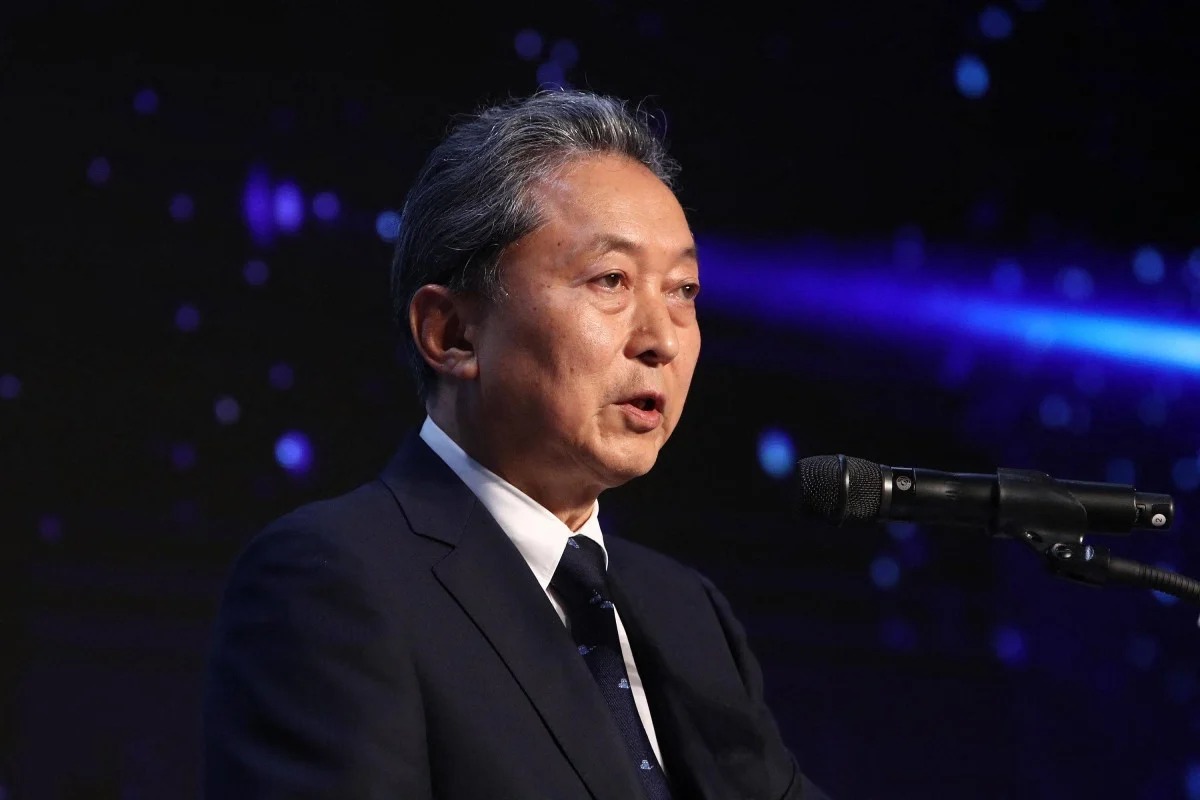
Former Japanese Prime Minister Yukio Hatoyama defended this Tuesday (28) that Japan and China work together against “US arrogance” and avoid the collapse of the world order, amid the advance of Japanese remilitarization and the alignment of the Sanae Takaichi government with Washington in the Indo-Pacific.
“I would argue that Japan and China should jointly confront a self-centered and [evitar] the collapse of the world order,” Hatoyama said at an event in Hong Kong. “To this end, expanding coalitions with diverse, like-minded countries on a case-by-case basis will increase our bargaining power.”
Hatoyama was speaking at an event organized by the University of Hong Kong’s new School of Governance and Policy. He said Japanese Prime Minister Sanae Takaichi has made reaching out to Trump a priority to ensure “Japan does not become a victim of US bullying,” but said that approach is not sustainable.
Japan is a formal treaty ally of the United States and hosts one of the largest American military presences abroad.
Under Trump, the global order has been fragmented by a series of unilateral actions, including attacks on Iran, the kidnapping of the Venezuelan leader and Washington’s withdrawal from 66 key international organizations and agreements, including the Paris climate agreement.
Hatoyama’s statements reflect his long-standing known political positions. He led the centrist Democratic Party of Japan, which was in power from 2009 to 2012 but currently has no formal party affiliation.
As prime minister, he advocated closer relations with China and a “pro-Asia” stance, aiming to balance Japan’s dependence on the US with closer ties with its neighbors.
Hatoyama’s calls, however, will not be easily adopted, given the deepening tensions between Tokyo and Beijing following Takaichi’s statements on Taiwan.
In November, Takaichi stated that if Beijing attacked Taiwan, it would constitute a “situation that threatens the survival” of Japan and would justify military intervention — the first time a sitting Japanese prime minister had made such a statement.
Beijing responded with a pressure campaign against Tokyo that includes an export ban on dual-use products linked to Japan’s military sector, a renewed ban on seafood imports and travel warnings for Chinese visiting Japan.
Hatoyama called on the Japanese government to repair relations by “explicitly reaffirming” its opposition to Taiwan’s independence when reviewing the country’s national security strategy document this year.
Beijing has also expressed concern about Takaichi’s initiative to revise the post-World War II “pacifist clause” in the Japanese Constitution. Under Article 9, Japan renounces the use of force and prohibits the maintenance of armed forces capable of war. But earlier this month, Takaichi said “the time has come” for a review.
The prime minister prioritized this constitutional review as part of her efforts to strengthen Japan’s defense, including reviewing the national security and defense strategy, increasing military spending, acquiring counterattack capabilities, and easing the export ban on lethal weapons.
Hatoyama said both governments need to tone down their rhetoric and that harsh statements from Beijing could be exploited by right-wing forces in Japan.
“The Chinese government must carefully calculate its communication with Japan,” he said, adding that Beijing’s public criticism of Japan’s constitutional amendment is counterproductive.
“Even though China intends to criticize right-wing Japanese politicians and parties, the Japanese public perceives it as if China is a scary country that interferes in the internal affairs of other nations,” he said. “Right-wing politicians exploit these public sentiments to promote a hostile policy toward China.”
Hatoyama also called on the two sides to maintain exchanges, in an apparent criticism of travel warnings issued by Beijing.
“If exchanges between people disappear, the probability of improving political relations in the future will certainly decrease,” he said.
He also called on Japan to show restraint when commenting on China.
“However, there are some things to consider,” he said. “Too often, the side that outdoes the other in the balance of power fails to recognize the anxiety of the side that has been outdone.”
In recent years, Tokyo has called China’s military activities the “greatest and most unprecedented strategic challenge” for Japan and highlighted Chinese military and economic “coercion.”
Meeting with a panel of experts on Monday to discuss revisions to Japan’s three national security documents, Takaichi said Tokyo must adapt to new forms of warfare and prepare for a possible protracted conflict, citing Russia’s war in Ukraine and the US-Israel conflict over Iran.
“To fully protect our nation’s peace and independence, we must proactively pursue a fundamental strengthening of our defense capabilities,” Takaichi said.
Source: vermelho.org.br