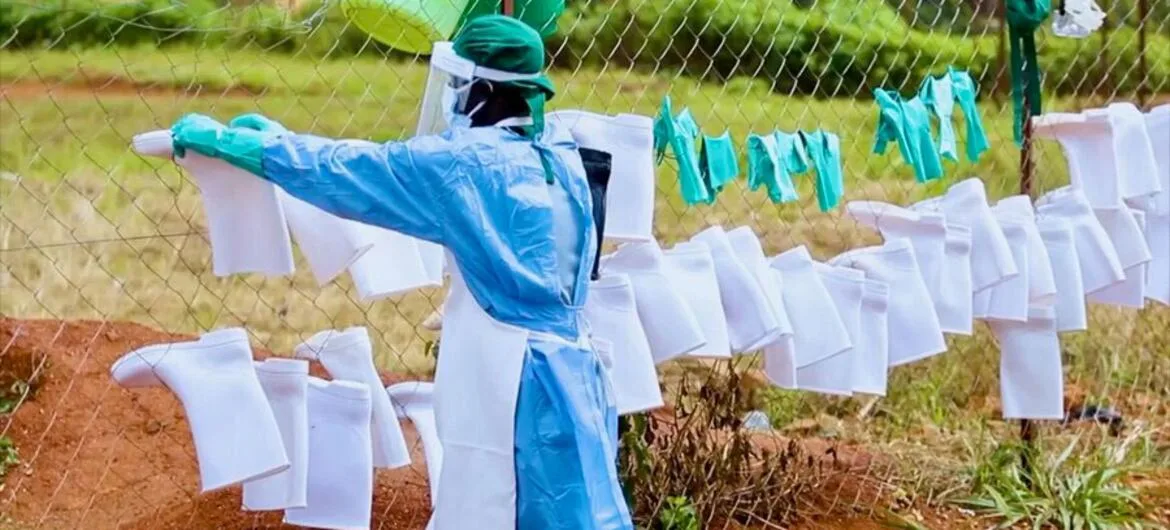
The current Ebola outbreak in the Democratic Republic of Congo is challenging health authorities and the international community with its unprecedented speed. According to the World Health Organization (WHO), the disease is spreading faster than any other Ebola epidemic ever recorded, with the number of deaths doubling in just three weeks.
To date, the outbreak has caused the deaths of at least 2,061 people, with more than 4,400 confirmed cases. WHO Director-General Tedros Ghebreyesus warned that the pace is so alarming that the current crisis could surpass the tragic epidemic that hit West Africa between 2014 and 2016, considered the largest in history.
The big difference in this outbreak is the type of virus: the Bundibugyo variant. Unlike the Zaire variant, which already has a licensed vaccine, Bundibugyo is rarer and, at the moment, there are no approved vaccines or clinical treatments to combat it, which makes controlling transmission much more difficult.
One of the most worrying data revealed by the WHO is that between 60% and 70% of deaths are occurring outside hospitals, in the victims’ own homes and communities. This indicates the existence of “hidden transmission chains”, as many of these people were not even on the health teams’ monitoring lists.
Spread and inequality
The epicenter of the crisis is in the province of Ituri, in the east of the country, which alone accounts for around 90% of all cases. The region suffers from serious infrastructure problems, precarious roads and armed conflicts with rebel groups, which makes it difficult for medical teams to reach more remote areas.
In addition to physical difficulties, healthcare professionals face an “epidemic of misinformation”. Rumors and fake news generate distrust among the population, causing many patients to avoid seeking medical help or hide their symptoms, which are often initially confused with malaria or typhoid fever.
Cultural factors also influence dissemination. The Ebola virus is transmitted through direct contact with bodily fluids from infected people. Moments of great vulnerability, such as caring for sick family members at home and traditional burial rituals, end up facilitating contagion.
To try to stop the advance, the WHO is intensifying operations on the ground. The immediate goal is to triple care capacity, reaching 3,000 beds in the next 12 weeks, and increase contact tracing to 95%. More than 21 thousand community agents have already been trained to identify suspected cases in villages and outskirts.
The head of the WHO reinforced that it will only be possible to defeat the virus if there is a real partnership with the local population, respecting their traditions and guaranteeing dignified care from the first symptom.
urgent combat
In the field of science, there is a race against time. Urgent clinical trials have begun testing three new vaccine candidates specific to the Bundibugyo variant, including mRNA technologies (similar to those for Covid-19) and viral vectors developed by the University of Oxford.
Despite the effort, the operation needs resources. The WHO estimates that US$518 million is needed for the Continental Response Plan, but only about half of that amount has been disbursed so far. The cut in international aid, such as the closure of the USAID agency in the region in 2025, worsened the financial scenario.
Even with the severity in Africa, experts consulted by the Brazil in fact explain that the risk of the Ebola virus migrating to Brazil is very low. As transmission does not occur through the air (like the flu or Covid-19) and requires very close contact, control is simpler in countries with well-structured surveillance systems, such as the Brazilian Unified Health System (SUS).
Source: www.brasildefato.com.br