Published 05/04/2026 10:27 | Edited 05/04/2026 10:52
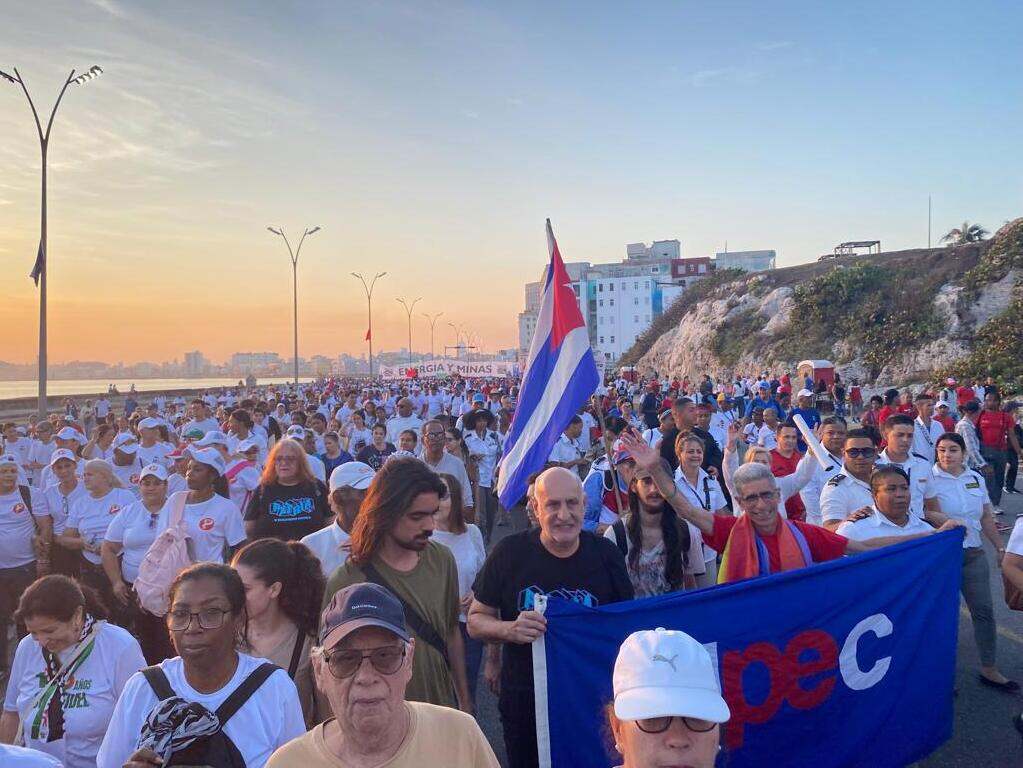
In a scenario of strong popular mobilization and extreme diplomatic tension, the government and the Communist Party of Cuba marked the 65th anniversary of the proclamation of the socialist character of the Revolution. The ceremonies, held in Havana, Matanzas and Playa Girón, recalled the memory of the 1961 confrontation to draw a direct parallel with the current situation of maximum pressure exerted by Donald Trump’s administration. The central event took place at the emblematic intersection of 23rd and 12th streets, in the Vedado neighborhood, the place where Fidel Castro, on a Thursday (16th) in April 1961, announced the country’s socialist course under the echo of the bombings that preceded the Bay of Pigs invasion.
Memory of 1961 and the birth of the siege
History records that the declaration of socialist character was not an isolated act, but a political response to direct military aggression financed by the Central Intelligence Agency (CIA). In mid-April 1961, the island was preparing to repel the mercenary invasion while Fidel Castro, in front of an armed crowd inflamed with patriotism, consolidated the break with the capitalist model. At that time, the announcement was inseparable from the existential threat that loomed over Cuban sovereignty. Shortly afterwards, on May 1, 1961, the revolutionary leadership reaffirmed that the process was irreversible, establishing a commitment with popular sectors that would become the basis of Cuban resistance in the following decades. The newspaper Granma, in its commemorative edition, highlights that that moment changed not only the destiny of Cuba, but the correlation of forces in Latin America.
The bank siege and the new sanctions of 2026
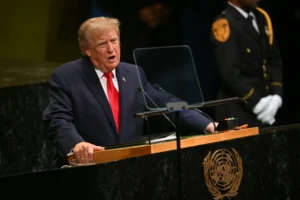
Washington’s aggressiveness reached a new level this Friday (1), when President Donald Trump signed an executive order that drastically expands the island’s financial isolation. The new decree allows the United States Treasury to punish foreign financial institutions — banks based outside of North American territory — that facilitate significant transactions for individuals or entities linked to the Cuban government. Penalties include closure of US correspondent accounts or immediate asset freezing. The White House justified the measure under the pretext that Cuba represents an extraordinary threat to national security, accusing Havana of providing a permissive environment for hostile foreign intelligence operations and of maintaining alliances with Iran.
War rhetoric and military threats
Trump’s verbal escalation has generated criticism from the international community. In recent statements during an event in Florida, the American president used an openly bellicose tone when suggesting that the United States could take control of Cuba almost immediately. Trump said that, after completing military operations in Iran, he could move the aircraft carrier USS Abraham Lincoln to the Cuban coast to force the government in Havana to surrender. “I like to finish the job,” declared the Republican in a boastful tone, conditioning action against Cuba on the end of conflicts in the Middle East. This “strangulation” rhetoric is seen by Havana as an attempt to reissue the logic of the 1961 invasion, now under the allegation of a supposed humanitarian or regional security intervention.
The impact of the energy block
If in 1961 the threat was made up of mercenary brigades, in 2026 asphyxiation takes on a devastating energetic form. Since January this year, the US government has imposed a strict blockade on oil supplies to Cuba, using the Navy to intercept cargo ships. Reports from Agência Brasil indicate that the country has already completed more than three months without receiving regular shipments of fuel, resulting in blackouts that paralyze essential services. The lack of energy has directly impacted the healthcare system, with the postponement of thousands of surgeries, including pediatric procedures. Analysts describe the strategy as a project of collective punishment designed to inflict maximum suffering on the population and foment internal discontent.
Resistance and the shield of the present
President Miguel Díaz-Canel, speaking to thousands of Cubans, linked the current challenge to the mystique of Playa Girón. According to the president, the moment is extremely challenging and calls on the people to be ready to face threats that include direct military aggression. In his speech, Díaz-Canel emphasized that the choice for socialism remains the only alternative for preserving national independence in the face of new banking sanctions. “The socialist character of our Revolution is not a phrase from the past; it is the shield of the present”, he stated, reaffirming that the sovereignty and social option of the Cuban people are not negotiable. The government insists that, just as the country resisted the initial siege 65 years ago, the social and political structure is prepared to face the isolation of 2026.
Despite pressure from Washington, Havana’s response has been accompanied by intense global diplomatic activity. At the United Nations (UN) and in forums such as the G77+China, resolutions have reaffirmed that the North American blockade violates international law and the principles of the UN Charter. The international community has organized solidarity actions and expressed deep concern about secondary sanctions against banks, which violate the sovereignty of third countries that maintain legitimate commercial relations with the island. While sectors of exile in Miami celebrate the tightening of sanctions as a path to the collapse of the system, the majority of nations call for the cessation of hostilities and respect for Cuban self-determination.
Source: vermelho.org.br